

Rising concern about possible environmental damage from the active ingredients in sunscreens could have ripple effects on public health if it causes people to use less of them.
Articles on Coral reefs
Displaying 101 - 120 of 265 articles
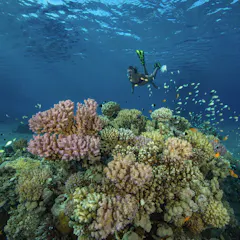
Researchers have long suspected that an ingredient in sunscreen called oxybenzone was harming corals, but no one knew how. A new study shows how corals turn oxybenzone into a sunlight-activated toxin.
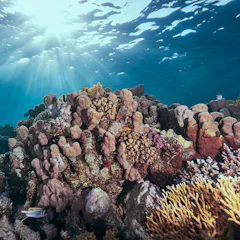
Marine heatwaves will happen so often that reefs will struggle to weather successive bleaching events.
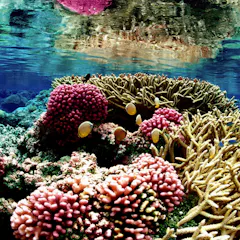
The ocean is naturally noisy. Here’s what all the buzz is about.
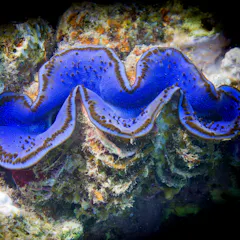
The old ways of keeping giant clam species healthy won’t work with climate change. We need new techniques - and fast.
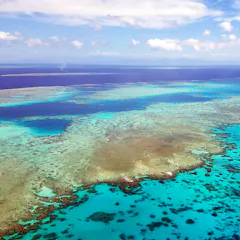
New research shows just 2% of the Great Barrier Reef remains untouched by bleaching since 1998. Its future survival depends on how much higher we allow global temperatures to rise.
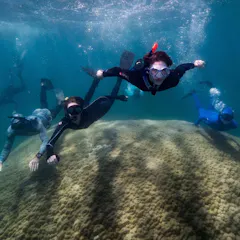
The remarkably resilient structure is in good health, for now. But work is needed to ensure it is preserved for future generations.

The Army Corps of Engineers is planning a sea wall 6 miles long and flood gates. The infrastructure might protect downtown from a hurricane storm surge, but most of the area will still be vulnerable.
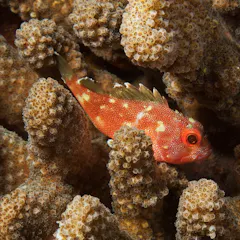
During a 2015 heat wave, scientists watched as a coral reef died before their eyes. By the end of the century, almost all the world’s corals will be gone if climate change continues at this pace.

A study of 183 coral reefs worldwide quantified the impacts of ocean warming and acidification on reef growth rates. Even under the lowest emissions scenarios, the future of reefs is not bright.
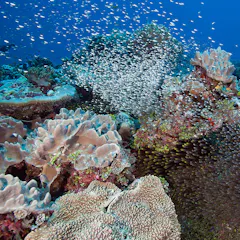
Scientists watched in real time as rising ocean heat transformed the sprawling reef. It was a harbinger for ecosystems everywhere as the planet warms.
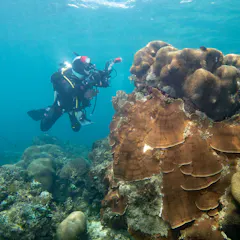
I helped survey coral reefs in Norfolk Island for the first time in eight years, and snapped marine life we didn’t expect to see there.

Untreated wastewater is responsible for the deaths of 800 children under five every day, and inflicts serious damage to the environment. Knowing where sewage ends up is vital.

But these ‘cold-water coral’ are threatened by accelerating sea currents.
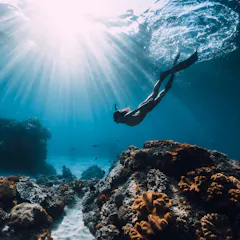
The Pacific Ocean produces oxygen, helps regulates the weather, provides food and livelihoods. It’s a place of fun, solace and spiritual connection. But its delicate ecology is under threat.
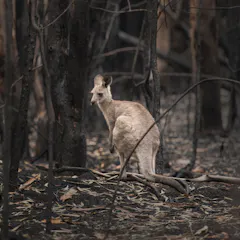
Humans have caused ecosystems to collapse on purpose for millennia, to grow food or build settlements. But unplanned collapses are a different matter.
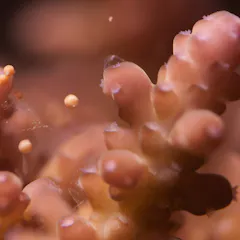
New research involving CRISPR technology has furthered our understanding of corals’ gene functions. Specifically, it has revealed a mechanism underpinning how corals withstand heat stress.
Marine wildlife rarely remain in one habitat. Most species rely on a healthy network of ecosystems to raise their young and catch their food.

Sexual reproduction helps keep coral colonies diverse and resilient. Now, scientists are doing it in a lab to restock flagging reefs.

Hundreds of organizations are working around the world to restore damaged coral reefs. New research shows that rapid ocean warming threatens these efforts.
Top contributors
-

Distinguished Professor, James Cook University
-
Professor, School of the Environment, The University of Queensland
-
Adjunct Principal Research Fellow, College of Science and Engineering, James Cook University
-
Adjunct Research Associate, Faculty of Fisheries and Marine Sciences, IPB University
-
UNESCO Chair on Climate Change Variability of Natural and Cultural Heritage and Professor in Physics, James Cook University
-
Professor of Marine Ecology, Universidad Nacional Autónoma de México (UNAM)
-
Assistant Professor, School of Energy, Geoscience, Infrastructure and Society // CEO MarFishEco Fisheries Consultant Ltd, Heriot-Watt University
-
Professor of Biological Oceanography & Head of the Coral Reef Laboratory, University of Southampton
-
Postdoctoral Research Associate in Coral Reef Ecology, Newcastle University, Newcastle University
-
Associate Professor, Coral Reef Laboratory, University of Southampton
-
Postdoctoral Research Associate in Climate Change Ecology and Evolution, Newcastle University
-
Reader in Coral Reef Ecology, Newcastle University
-
Professorial Fellow, ARC Centre of Excellence for Coral Reef Studies, James Cook University
-
DECRA Research Fellow in molecular ecology, James Cook University
-
Coral Reef Ecologist, National Oceanic and Atmospheric Administration