
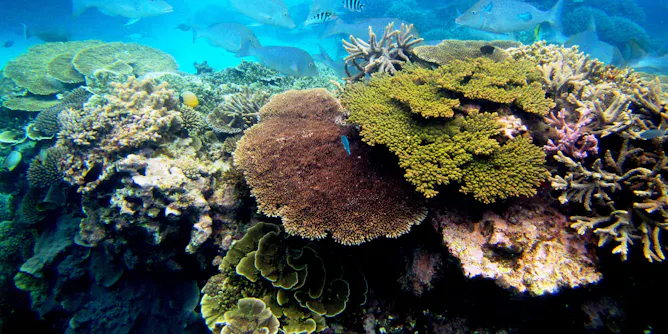
Just as the world’s zoos breed critically endangered animals in captivity to repopulate the wild, scientists are building a global effort to freeze corals for reef restoration.
Articles on Coral reefs
Displaying 61 - 80 of 265 articles
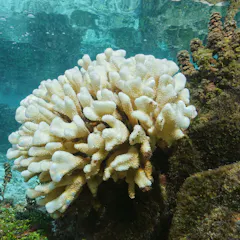
For decades, conservationists have tried to repopulate dead reefs with corals reared elsewhere.
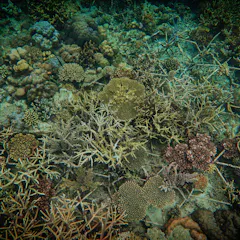
Artificial reef stars have been added to damaged coral reefs in Sulawesi, Indonesia. A new study shows that within just four years, restored reefs are thriving as much as healthy reefs.
The best strategy to protecting Earth’s coral reefs is to dramatically cut greenhouse gas emissions. But in the meantime, we must urgently make corals more resilient.

Deeper ocean habitats (30-150 metres) are a key feeding ground for critically endangered hawksbill turtles.

Our new maps show coral reefs are more extensive than we thought.
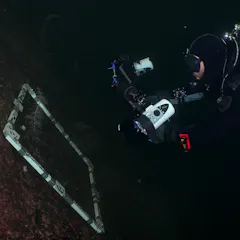
Photogrammetry, a technique where 3D information is extracted from photographs, is reducing the guesswork in counting – and understanding – the world below the ocean surface.
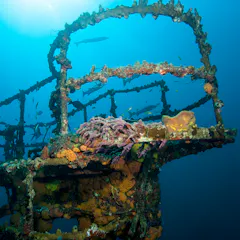
Artificial reefs are structures that humans put in place underwater that create habitat for sea life. A new study shows for the first time how much of the US ocean floor they cover.
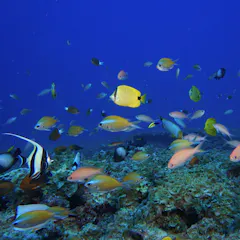
There are so many fish in the ocean that if you took them out, important habitats and food sources for many creatures would be lost.
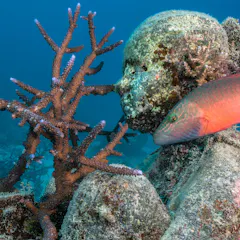
Reef sculptures are a form of artifical reef: man-made structures placed into an aquatic environment to mimic certain characteristics of a natural reef.
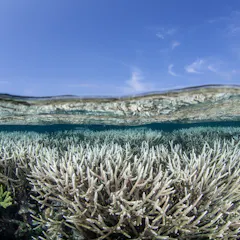
Severe bleaching is forecast to hit 12 Indonesian marine protected areas every year by 2030 – then spread to other areas. Here’s what locals, experts and the government say we need to do to save them.
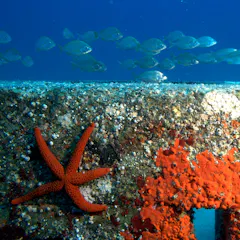
Concrete structures can recreate the complex forms of reefs, offering refuge to wildlife.
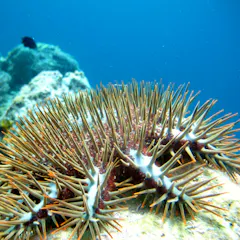
Nature’s ultimate coral predator could benefit from climate change by surviving heatwaves and lie in wait for the right moment to feast on the reef.
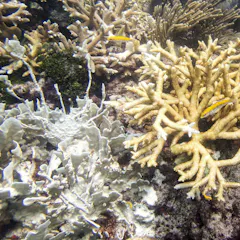
Understanding how both cloud cover and temperature work to promote coral bleaching provides valuable insight into how reefs will change over various climate scenarios.
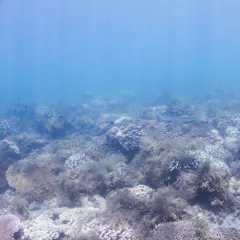
While the Great Barrier Reed needs nutrients to support the ecosystem, it is possible to have too much of a good thing.
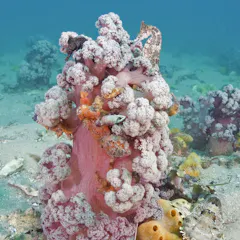
After a chance discovery in the lab, this team used IVF to make hundreds of coral babies for restoration projects in New South Wales. So far the IVF babies are doing well in the wild.
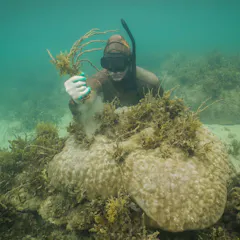
Many researchers are exploring high-tech ways to help reefs survive the climate crisis. But low-tech solutions like manually pulling out seaweed have a place too.

According to a new UN report, invasive species do more than US$423 billion in damage worldwide every year. Four articles explore examples, from mollusks to poisonous fish.
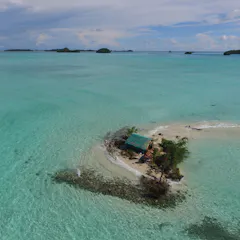
Rising seas are pushing coastal ecosystems to the limit of endurance. Now international research reveals a “tipping point” will be reached if we allow more than 2 degrees of global warming.
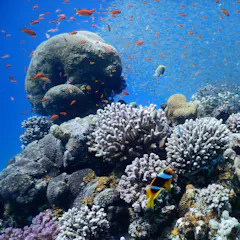
Reef corals grow vigorously in nutrient poor water – new research has found out why.
Top contributors
-

Distinguished Professor, James Cook University
-
Professor, School of the Environment, The University of Queensland
-
Adjunct Principal Research Fellow, College of Science and Engineering, James Cook University
-
Adjunct Research Associate, Faculty of Fisheries and Marine Sciences, IPB University
-
UNESCO Chair on Climate Change Variability of Natural and Cultural Heritage and Professor in Physics, James Cook University
-
Professor of Marine Ecology, Universidad Nacional Autónoma de México (UNAM)
-
Assistant Professor, School of Energy, Geoscience, Infrastructure and Society // CEO MarFishEco Fisheries Consultant Ltd, Heriot-Watt University
-
Professor of Biological Oceanography & Head of the Coral Reef Laboratory, University of Southampton
-
Postdoctoral Research Associate in Coral Reef Ecology, Newcastle University, Newcastle University
-
Associate Professor, Coral Reef Laboratory, University of Southampton
-
Postdoctoral Research Associate in Climate Change Ecology and Evolution, Newcastle University
-
Reader in Coral Reef Ecology, Newcastle University
-
Professorial Fellow, ARC Centre of Excellence for Coral Reef Studies, James Cook University
-
DECRA Research Fellow in molecular ecology, James Cook University
-
Coral Reef Ecologist, National Oceanic and Atmospheric Administration