

Corals, mangroves and seagrass habitats have been affected by extreme weather events, and some may never recover.
Articles on Coral
Displaying 61 - 80 of 124 articles
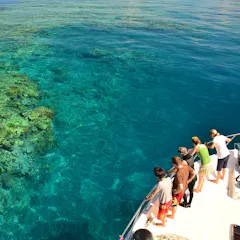
Severe coral bleaching may have been the crucial factor in bringing home the reality of climate change for many people.
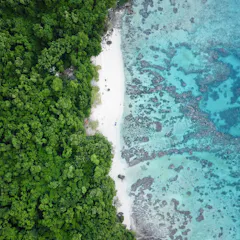
El Niño events can affect millions of people around the world, causing drought in Australia and floods in the Americas.
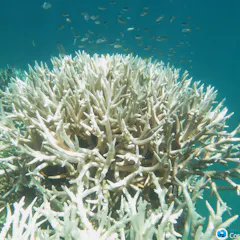
After repeated bleaching in 2016 and 2017 corals on the Great Barrier Reef are producing far fewer offspring.

As the mid-winter break draws crowds to beaches, tourists may be wondering if their sunscreen is toxic to coral reefs.
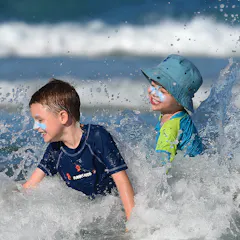
Despite bans around the world, there’s no empirical evidence sunscreens cause coral bleaching.
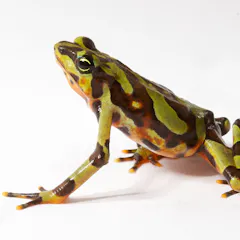
A look at new research published in 2018 on fossa, deepsea corals and tropical frogs developing resistance to a deadly fungus.
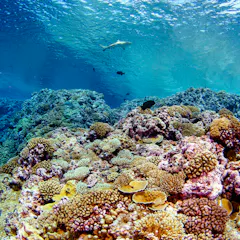
Field samples, satellite measurements and isotopic data have shed new light on corals’ eating habits.
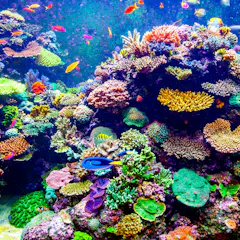
Researching the most resilient corals could help us find ways to better protect reefs in the future.
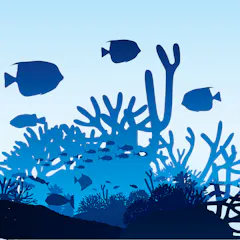
Coral reefs are in crisis around the world, and may disappear entirely. 3D printing is a new idea to help them – but it won’t be a cure all.
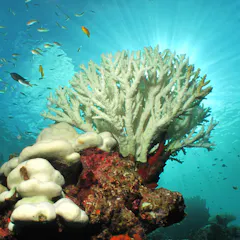
Scientists have used ‘tree rings’ in coral to identify centuries of stress.
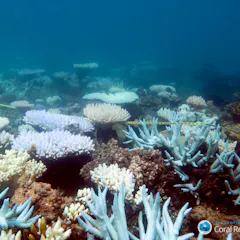
The 2016 bleaching event resulted in 30% mortality on the Great Barrier Reef, with many corals dying of the heat before they bleached and the loss of branching corals creating less complex reef structure.
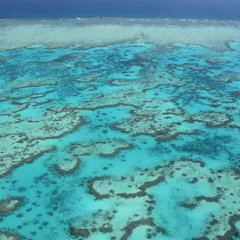
Ocean acidification poses an increasing threat to the sediments that form the framework of coral reefs - within around 30 years, these carbonate sands may no longer be able to form.
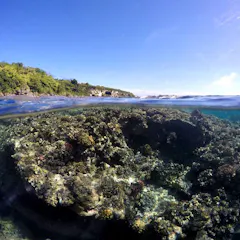
If researchers shared their data, we could take a big step towards saving the world’s coral reefs.

A new study identifies dozens of individual reefs on the Great Barrier Reef that are especially important for coral larvae dispersal and which could help the entire ecosystem bounce back.
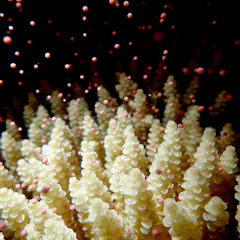
Every year buoyant bundles rise from a spawning coral, giving the impression of an upside-down snowstorm.
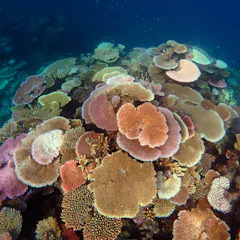
Corals on the Great Barrier Reef that are tolerant to warmer waters can be used to help repair other parts of the reef damaged by recent coral bleaching events.
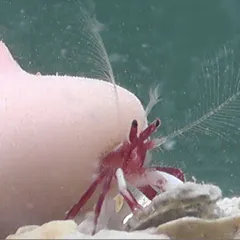
Scientists have just discovered an unusual symbiotic relationship between crabs and living corals.
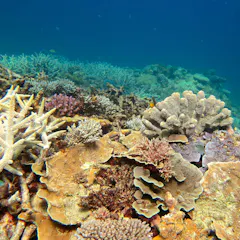
Tropical coral reefs can be saved from climate change and other pressures, but the window of opportunity is closing. And reefs are guaranteed to be markedly different in the future.
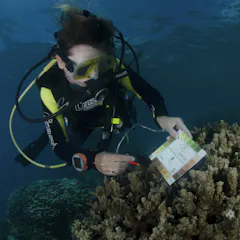
As the Great Barrier Reef suffers a second wave of mass bleaching, there is a way to get involved.
Top contributors
-

Associate Professor, Marine Ecology, School of Molecular and Life Sciences, Curtin University
-
Distinguished Professor, James Cook University
-
Professor, School of the Environment, The University of Queensland
-
Research Program Director, Australian Institute of Marine Science
-
Professorial Fellow, ARC Centre of Excellence for Coral Reef Studies, James Cook University
-
Adjunct Research Associate, Faculty of Fisheries and Marine Sciences, IPB University
-
Reader in Coral Reef Ecology, Newcastle University
-
Adjunct Associate Professor in Marine Science, James Cook University
-
Postdoctoral Research Associate in Coral Reef Ecology, Newcastle University, Newcastle University
-
UNESCO Chair on Climate Change Variability of Natural and Cultural Heritage and Professor in Physics, James Cook University
-
Associate Professor, Coral Reef Laboratory, University of Southampton
-
Marine Scientist, James Cook University
-
Professor of Biological Oceanography & Head of the Coral Reef Laboratory, University of Southampton
-
Research Fellow, Marine Biology, Lancaster University
-
Adjunct Assistant Professor, Faculty of Science and Engineering, Southern Cross University