
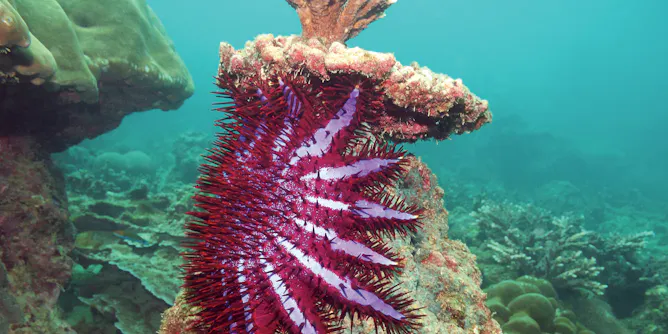
New research has uncovered a whole new way to combat the devastating crown-of-thorns starfish, by decoding the pheromones that they use to communicate.
Articles on Coral
Displaying 81 - 100 of 124 articles
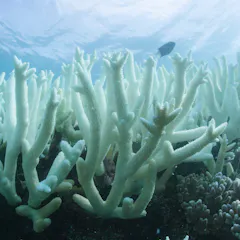
The Great Barrier Reef is bleaching again. Without greater action on climate change and water quality, its World Heritage status could be listed as “in danger”.
The British overseas territory faces an environmental crisis.

Months after record breaking coral bleaching, research teams are taking stock of the damage on the Great Barrier Reef.
Once upon a time dead coral was something to be celebrated on the Great Barrier Reef.
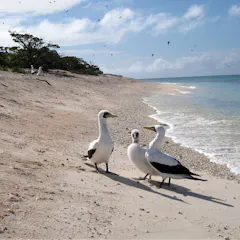
The marine reserves review has recommended major changes to the Coral Sea, but not for the better.
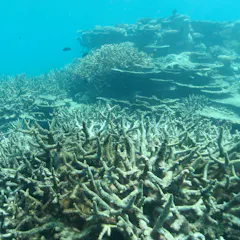
Member of the Climate Council this week returned to one of the areas of the Great Barrier Reef that was worst affected by this year’s coral bleaching. What they found was far from encouraging.

Just like humans, corals live with myriad microscopic organisms. We are just starting to understand this unseen world.
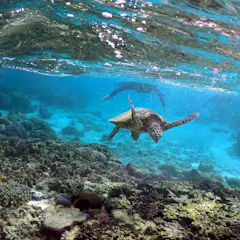
A new study provides insight into coral-dwelling microbial communities and how they react to pollution, overfishing, and climate change. What does it mean for the Great Barrier Reef?

The Coalition has ramped up the race to fund the Great Barrier Reef’s protection. All three major parties have promised hundreds of millions of dollars, but where from, and what will they be spent on?
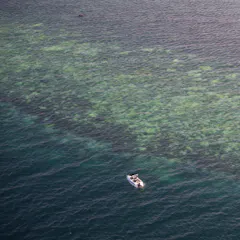
Warm seas are causing coral ‘bleaching’ in one of the world’s biodiversity hotspots.
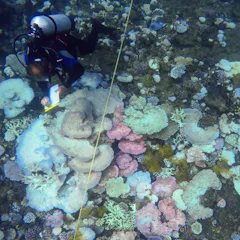
Bleaching has hit a huge swathe of the Great Barrier Reef, with many corals in the reef’s remote northern reaches now expected to die as a result of warm waters linked to this summer’s El Niño.
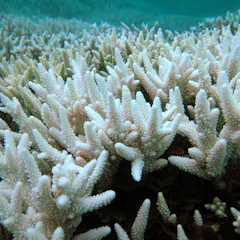
Authorities have moved the Great Barrier Reef onto its highest alert level in response to widespread coral bleaching. Months of monitoring will now be needed to assess the ongoing damage.
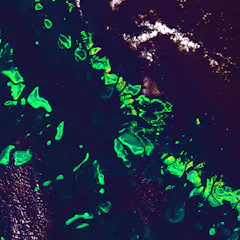
Ocean acidification will hurt some parts of the Great Barrier Reef more than others.
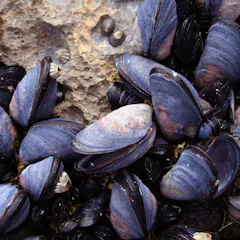
Shellfish will have more brittle shells as oceans get more acidic – making them more vulnerable to predators. New research gives a fascinating glimpse into how they will adapt.

Africa has a number of excellent scuba diving sites, but these must be maintained sustainably to keep attracting different divers.

There are solar-power sea slugs, so why haven’t humans mastered the art of photosynthesis?
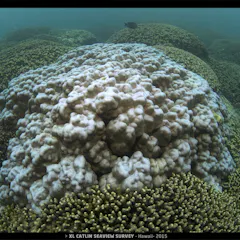
Many corals can’t make it through the bleaching events caused by warming ocean waters. But some can – and scientists are trying to learn more about the sources of their resilience.
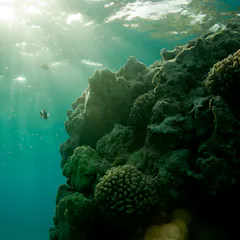
Corals are experiencing only the third global bleaching event in recorded history, caused by warming seas. But worse is yet to come.
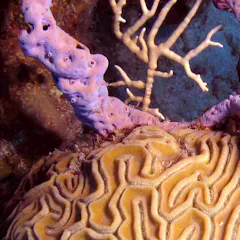
With their natural predators removed, sponges are free to take over coral reefs.
Top contributors
-

Associate Professor, Marine Ecology, School of Molecular and Life Sciences, Curtin University
-
Distinguished Professor, James Cook University
-
Professor, School of the Environment, The University of Queensland
-
Research Program Director, Australian Institute of Marine Science
-
Professorial Fellow, ARC Centre of Excellence for Coral Reef Studies, James Cook University
-
Adjunct Research Associate, Faculty of Fisheries and Marine Sciences, IPB University
-
Reader in Coral Reef Ecology, Newcastle University
-
Adjunct Associate Professor in Marine Science, James Cook University
-
Postdoctoral Research Associate in Coral Reef Ecology, Newcastle University, Newcastle University
-
UNESCO Chair on Climate Change Variability of Natural and Cultural Heritage and Professor in Physics, James Cook University
-
Associate Professor, Coral Reef Laboratory, University of Southampton
-
Marine Scientist, James Cook University
-
Professor of Biological Oceanography & Head of the Coral Reef Laboratory, University of Southampton
-
Research Fellow, Marine Biology, Lancaster University
-
Adjunct Assistant Professor, Faculty of Science and Engineering, Southern Cross University