

If Australia wants to maintain the world-heritage status of the Great Barrier Reef – indeed, if it wants to preserve the reef at all – we must act now to prevent more coral deaths.
Articles on Coral
Displaying 21 - 40 of 124 articles
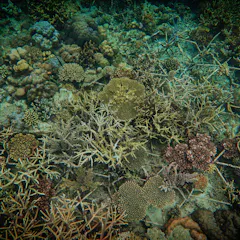
Artificial reef stars have been added to damaged coral reefs in Sulawesi, Indonesia. A new study shows that within just four years, restored reefs are thriving as much as healthy reefs.
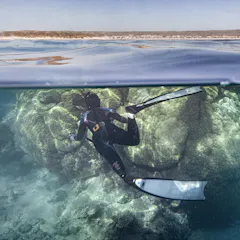
The best strategy to protecting Earth’s coral reefs is to dramatically cut greenhouse gas emissions. But in the meantime, we must urgently make corals more resilient.

Our new maps show coral reefs are more extensive than we thought.
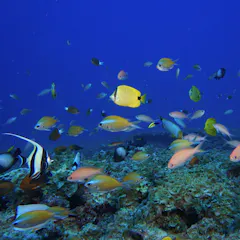
There are so many fish in the ocean that if you took them out, important habitats and food sources for many creatures would be lost.
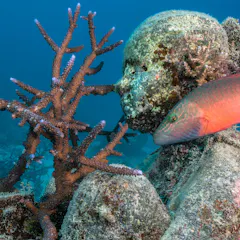
Reef sculptures are a form of artifical reef: man-made structures placed into an aquatic environment to mimic certain characteristics of a natural reef.
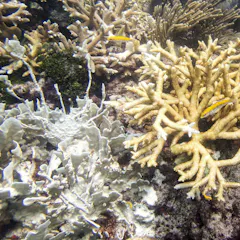
Understanding how both cloud cover and temperature work to promote coral bleaching provides valuable insight into how reefs will change over various climate scenarios.
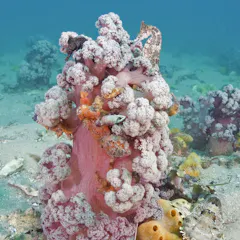
After a chance discovery in the lab, this team used IVF to make hundreds of coral babies for restoration projects in New South Wales. So far the IVF babies are doing well in the wild.

Coral has been incorporated into traditions, art and even religion in communities around the world.
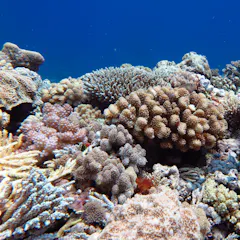
We used to focus just on protection of vital ecosystems like the reef. But as climate change and other threats accelerate, we need to actively help nature get ready for the heat.

This knowledge is particularly important if we want to help reefs recover devastating events such as mass bleaching and cyclones.
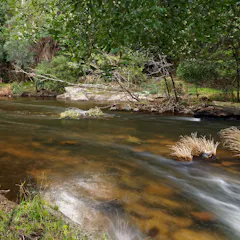
Last year was great for plant growth and river flows. But Australia is still on the brink of losing a slew of plant and animal species.
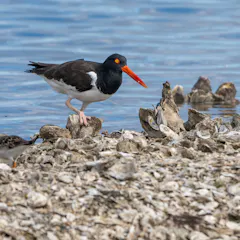
Climate change is making oceans more acidic globally. Now, scientists are finding that large storms can send pulses of acidic water into bays and estuaries, further stressing fish and shellfish.

Jordan is planning a major desalination plant on the Gulf of Aqaba – but will it damage nearby marine ecosystems?
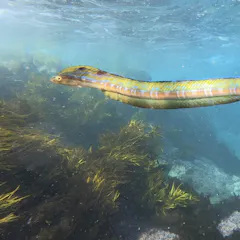
The photographs show how climate change is disrupting our marine ecosystems – sometimes in ways previously unknown to marine scientists.
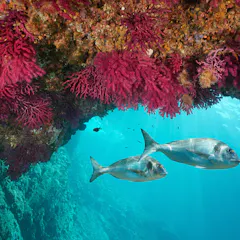
While official data is yet to be released, this year’s Mediterranean marine heatwave will likely have devastating ecological consequences.
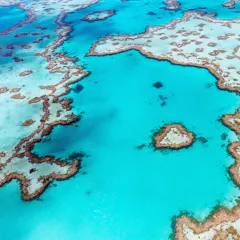
New data shows coral cover in the Great Barrier Reef is at a record high, despite a disturbing decade of marine heatwaves, cyclones and floods. While the data is robust, it can be deceptive.
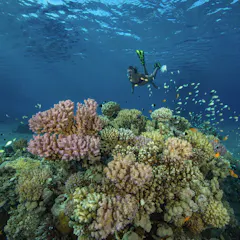
Researchers have long suspected that an ingredient in sunscreen called oxybenzone was harming corals, but no one knew how. A new study shows how corals turn oxybenzone into a sunlight-activated toxin.
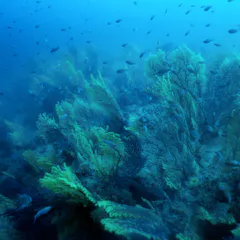
Forming tightly woven populations, these bush-like corals offer a refuge to a myriad of marine species.
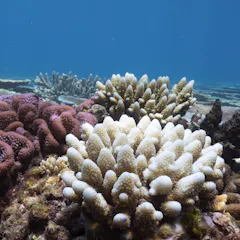
Coral reefs that suffer widespread bleaching can still recover if conditions improve, but it’s estimated to take up to 12 years. And that’s if no more bleaching events occur.
Top contributors
-

Associate Professor, Marine Ecology, School of Molecular and Life Sciences, Curtin University
-
Distinguished Professor, James Cook University
-
Professor, School of the Environment, The University of Queensland
-
Research Program Director, Australian Institute of Marine Science
-
Professorial Fellow, ARC Centre of Excellence for Coral Reef Studies, James Cook University
-
Adjunct Research Associate, Faculty of Fisheries and Marine Sciences, IPB University
-
Reader in Coral Reef Ecology, Newcastle University
-
Adjunct Associate Professor in Marine Science, James Cook University
-
Postdoctoral Research Associate in Coral Reef Ecology, Newcastle University, Newcastle University
-
UNESCO Chair on Climate Change Variability of Natural and Cultural Heritage and Professor in Physics, James Cook University
-
Associate Professor, Coral Reef Laboratory, University of Southampton
-
Marine Scientist, James Cook University
-
Professor of Biological Oceanography & Head of the Coral Reef Laboratory, University of Southampton
-
Research Fellow, Marine Biology, Lancaster University
-
Adjunct Assistant Professor, Faculty of Science and Engineering, Southern Cross University