

The ability of queen bumblebees to breathe and survive underwater could play an important — and previously overlooked — role in the resilience of threatened bee populations.
Articles on Bees
Displaying 21 - 40 of 296 articles

Queen bees typically imported from regions with warmer climates are not well-suited to cold Canadian winters and exhibit higher rates of diseases like chalkbrood.
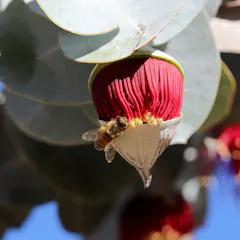
The next jar of Australian honey you buy may just be doing more good than you realise.
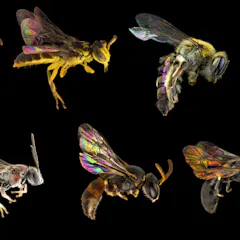
A new paper provides the first statistically derived estimate of bee species richness around the world. But this is about more than bees.
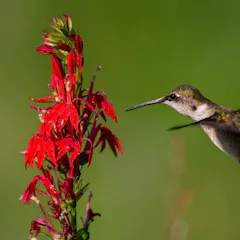
Birds and bees see the world in different ways – and some flowers have evolved to take advantage of the gap in their perspectives.
Humans and bees can both work with mathematics. Could aliens do the same?
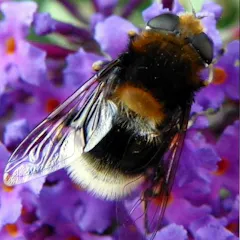
When you’re an animal undercover, sometimes it’s not enough just to look like someone else
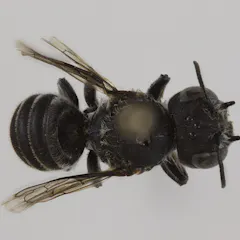
The discovery of a horned native bee that pollinates a rare plant highlights how little we know about Australian pollinators.

The wild cousins of beehive honeybees are disappearing – here’s why that matters.
Birds aren’t the only creatures that fly south for the winter.
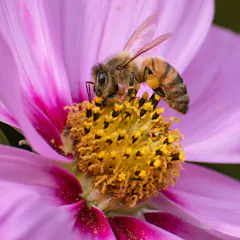
The tropi mite spreads faster, kills colonies more quickly, and is harder to control with existing methods.
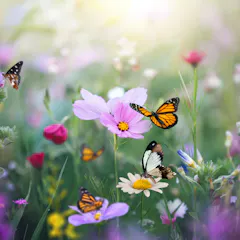
Uniquely colored flowers with big blooms might make for an aesthetically pleasing garden, but they can be unhelpful to pollinators. Careful consideration can help you plan a colorful and eco-friendly garden.
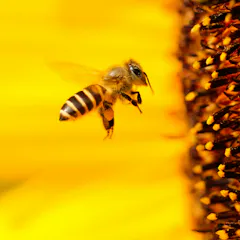
Listen to biologist Scarlett Howard speak in defence of ecologically irrelevant experiments on The Conversation Weekly podcast.

Traditional methods for controlling Varroa mites are becoming less effective, but AI-enabled non-invasive methods could help improve detection and keep bees safe.
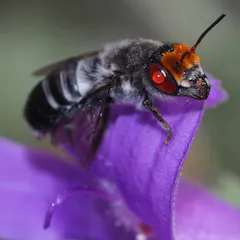
A researcher left 1,000 artificial bee nests in a forest devastated by bushfire … and then began an anxious wait.
Why do researchers care if a bee can learn to recognise a human face? When we push animals outside familiar territory, we can learn a lot about intelligence.

From sending more pollen airborne to breaking up pollen grains, which lets them penetrate deeper into your lungs, the wind is not the allergy sufferer’s friend.
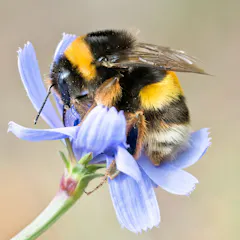
Fast-rising temperatures can change how plants and animals behave and disrupt the delicate timing of pollination.
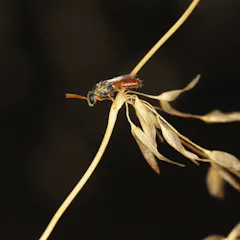
The findings of a new study have important implications for native bee conservation, particularly in urban and agricultural areas.

Varroa mites and small hive beetles are threatening Australian honey producers. Here’s how backyard beekeepers, and everyday honey lovers, can help.
Top contributors
-

Associate Professor, Department of Physiology, Monash University
-
Research Fellow, School of Biological Sciences, Monash University
-
Lecturer in Ecology, University of New England
-
Researcher and analyst, Monash University
-
Senior Research Associate in Entomology, Lancaster University
-
Adjunct Research Fellow, Curtin University
-
Lecturer in Biological Sciences, University of Wollongong
-
Associate Professor in Entomology, University of Sydney
-
Lecturer, School of Life and Environmental Sciences, University of Sydney
-
Professor, School of Natural Sciences, Macquarie University
-
Centre Manager & Industry Liaison Officer ARC ITTC Centre for Fruit Fly Biosecurity Innovation, Macquarie University
-
Senior Ecologist, University of Sydney
-
Professor of Quantum Physics and Australian Research Council Future Fellow, RMIT University
-
Emeritus Professor of Apiculture, University of Sussex
-
Professor of Biology (Evolution, Behaviour and Environment), University of Sussex