
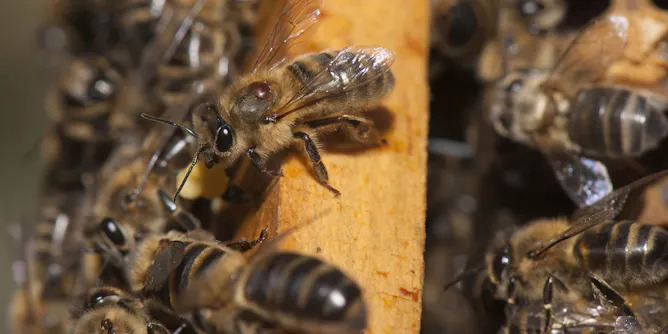
Australia is the last continent to be invaded by the dangerous honey bee parasite, and has an opportunity to be the first to eradicate it.
Articles on Bees
Displaying 81 - 100 of 296 articles

The optimal trade-off between restoring habitat and crop production hinges on pollinators. A new study shows giving pollinators more natural habitat on the farm leads to big increases in production.
We all know bees are vital pollinators. But they’re also art critics, social learners, dancers and so much more.

As we approach the start of gardening season, it’s a good time to ask some questions about what to plant and who gets to plant.

Scientists are learning amazing things about bees’ sensory perception and mental capabilities.

Instead of focusing their limited time, energy and finances in effective interventions in their gardens, many individual gardeners are falling prey to greenwashing.
Before you reach for the weed killer, spare a thought for struggling pollinators.
From New York to Tokyo, Melbourne to Venice – honeybee hives have revealed the unique genetic signatures of cities, even providing insights into human health.

The waggle dance is performed by forager bees to convey important information about food sources.
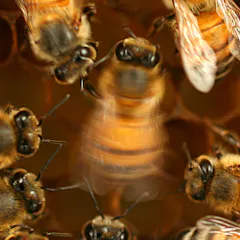
Honeybees possess one of the most complex examples of nonhuman communication. New research suggests that it is learned and culturally passed down from older to younger bees.

Our lives are intertwined with animals, insects and birds – we should consider them more when we design our cities.
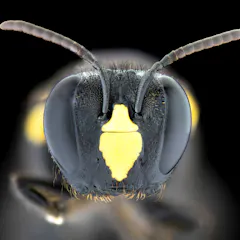
New research provides insights into the evolution and ecology of Australian bees. The capricious masked bee employs female nest guards in a cooperative social structure. Meanwhile, fussy feeders abound.
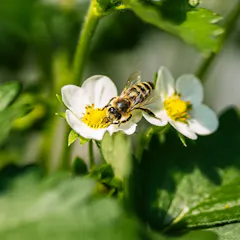
Bees and other pollinators are key to food production, but they’re hard to keep an eye on. Now, AI software is helping track these essential farm workers.
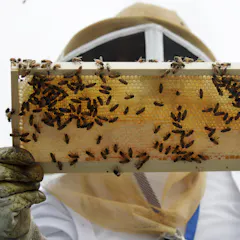
A vaccine for bees may evoke images of teeny hypodermic needles, but this product works in a sophisticated way that reflects the social structure of honeybee colonies.

The report results could help explain honeybee colony deaths.
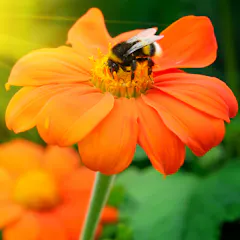
Seventy-two per cent of native bumblebee species in North America are cutting their winter hibernation short by timing their emergence to earlier spring onsets.

Honey bees, wild and native bees face threats from parasites, pesticides and habitat loss. Shorter winters, more extreme weather and more habitat destruction won’t help.

Recent studies suggest that the mind of a bee is far more sophisticated than once believed.

Honey bees have what it takes to pollinate blueberries, boosting the quality and quantity of the popular fruit.
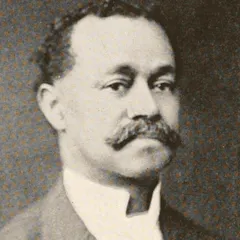
The son of a formerly enslaved mother, Charles Henry Turner was the first to discover that bees and other insects have the ability to modify their behavior based on experience.
Top contributors
-

Associate Professor, Department of Physiology, Monash University
-
Research Fellow, School of Biological Sciences, Monash University
-
Lecturer in Ecology, University of New England
-
Researcher and analyst, Monash University
-
Senior Research Associate in Entomology, Lancaster University
-
Lecturer in Biological Sciences, University of Wollongong
-
Adjunct Research Fellow, Curtin University
-
Associate Professor in Entomology, University of Sydney
-
Professor of Quantum Physics and Australian Research Council Future Fellow, RMIT University
-
Professor, School of Natural Sciences, Macquarie University
-
Lecturer, School of Life and Environmental Sciences, University of Sydney
-
Centre Manager & Industry Liaison Officer ARC ITTC Centre for Fruit Fly Biosecurity Innovation, Macquarie University
-
Senior Ecologist, University of Sydney
-
Professor of Biology (Evolution, Behaviour and Environment), University of Sussex
-
Associate Professor in Ecology, Northumbria University, Newcastle