
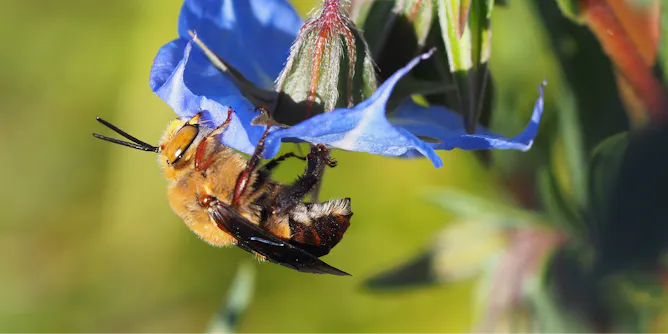
Native bees pollinate many of Australia’s unique plants and help entire ecosystems thrive.
Articles on Bees
Displaying 1 - 20 of 296 articles
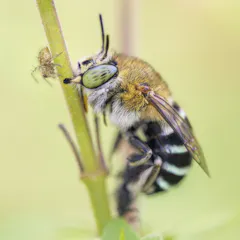
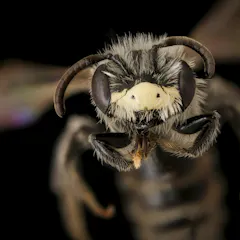
Some of the most impressive visual performances measured in a new study came from rarely studied, solitary species.
In an early childhood program, everyday encounters remind participants that acknowledging land is something we live through relationships and responsibilities.

The honeybee-killing Varroa mite is marching across the country, as two experts explain.

Researchers were surprised to find how widespread this magnetic property was, not only across families of bees but also beetles, wasps and flies.
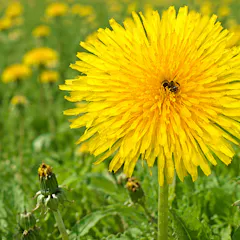
Human-made carbon dioxide emissions threaten the very survival of our larger pollinators.

Bumblebees are being affected by heat and other factors this summer.
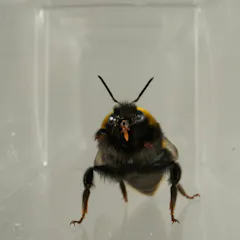
A new study builds on a wave of new work that is daring to suggest insects might have a form of consciousness.
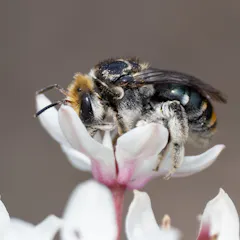
Scientists don’t know enough about the food habits of less social bees. Here’s why that urgently needs to change.
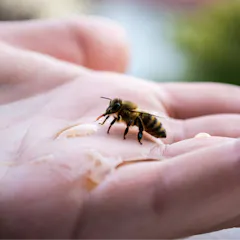
Current pesticides are already failing – but science points to a way forward.
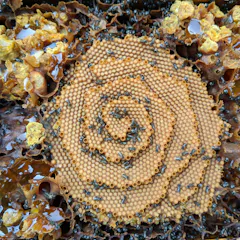
Surprisingly, the species that are the most tolerant to heat, are also the most vulnerable to future warming.

Scientists are working on some innovative projects to help tackle life in hot climates.
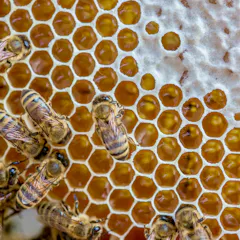
When honey bees get sick, their beekeepers turn to the nation’s premier bee research and disease diagnosis lab for help. That crucial resource is now disappearing.
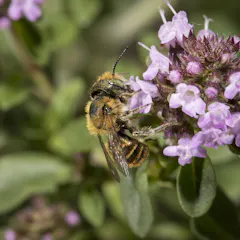
Sperm activity in bees dropped after being exposed to heatwave conditions.
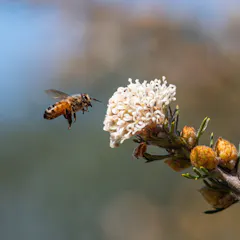
Bees may have tiny brains but they can make rapid and accurate choices.

Medieval Irish bees had a legal status because they were classified as domestic livestock.
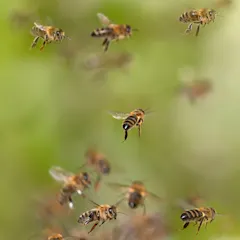
Ahead of world bee day on May 20, the author looks at how other animals rely on bees for food and shelter and even transport.
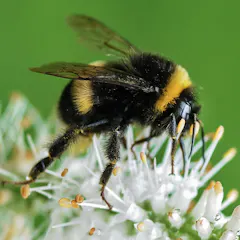
The accusations you might have heard about nonnative honey bees aren’t backed up by evidence. In fact, there are plenty of ways bees make the world a better place.
Turns out humans are not alone in mastering rhythm.

Many insects in Africa are likely to face dangerous levels of heat stress, with serious consequences for ecosystems.
Top contributors
-

Associate Professor, Department of Physiology, Monash University
-
Research Fellow, School of Biological Sciences, Monash University
-
Lecturer in Ecology, University of New England
-
Researcher and analyst, Monash University
-
Senior Research Associate in Entomology, Lancaster University
-
Lecturer in Biological Sciences, University of Wollongong
-
Adjunct Research Fellow, Curtin University
-
Associate Professor in Entomology, University of Sydney
-
Professor of Quantum Physics and Australian Research Council Future Fellow, RMIT University
-
Professor, School of Natural Sciences, Macquarie University
-
Lecturer, School of Life and Environmental Sciences, University of Sydney
-
Centre Manager & Industry Liaison Officer ARC ITTC Centre for Fruit Fly Biosecurity Innovation, Macquarie University
-
Senior Ecologist, University of Sydney
-
Professor of Biology (Evolution, Behaviour and Environment), University of Sussex
-
Associate Professor in Ecology, Northumbria University, Newcastle