
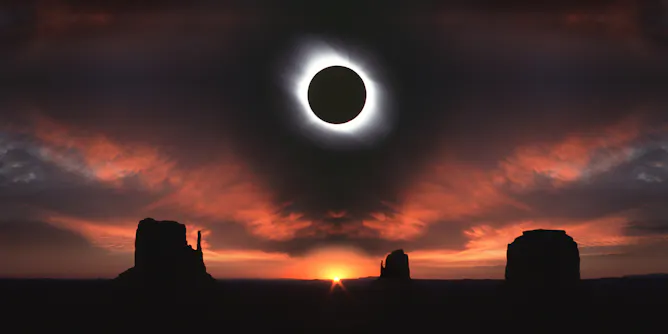
With a solar eclipse and several meteor showers coming up, an astronomy professor shares travel tips for viewing astronomical phenomena.
Articles on Astronomy
Displaying 281 - 300 of 989 articles
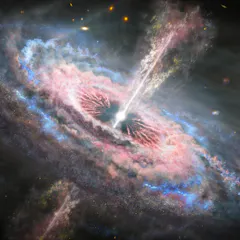
Bright, flickering galaxies called quasars were thought to pose a problem for our understanding of the cosmos – but new research shows Einstein was right yet again.
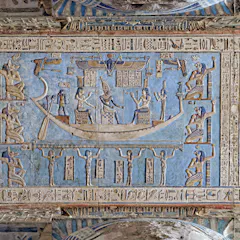
Some time measurements, like months and years, use the movements of the moon and sun, respectively. But other time measurements, like the hour, aren’t clearly connected to astronomical phenomena.
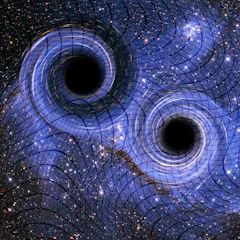
Astronomers have for the first time detected the background hum of gravitational waves likely caused by merging black holes.
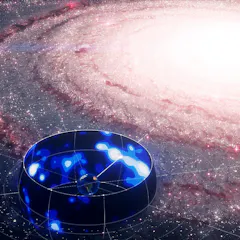
Neutrinos are some of nature’s most elusive particles, but new research has used them to create an image of our own galaxy.
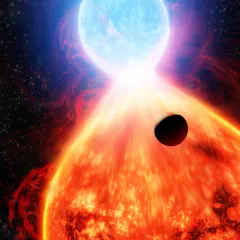
The planet Halla looks like it should have been devoured by its host star, a red giant called Baekdu – but a secret in the star’s past may hold the answer to the planet’s present.
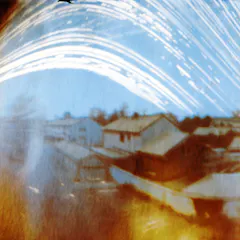
The longest and shortest days of the year are marked by the Sun’s position in the sky – but the seasons lag behind.

Among the expert witnesses in our justice system, astronomers play a surprising role. This astronomer provides evidence to several cases per week.
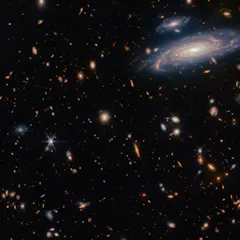
The darkness of the night sky seems so obvious as to need no explanation – yet it has intrigued and baffled scientists for centuries.
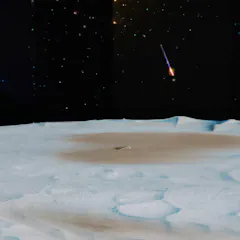
There are suspicions that our solar system could harbour another large planet much further away than Pluto.
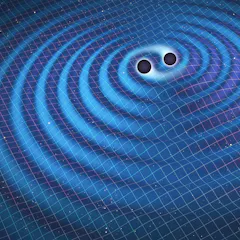
Upgrades to the hardware and software of the advanced observatory should allow astrophysicists to detect much fainter gravitational waves than before.
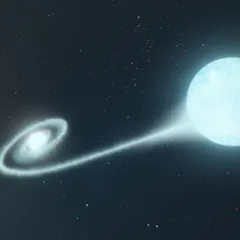
Our Sun will likely go out quietly – but not all such stars do. A new radio detection of a supernova can help us better understand these cosmic cataclysms.
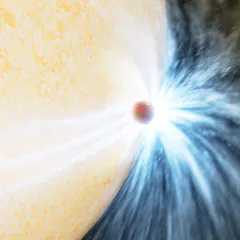
Stars begin to expand when they run out of fuel and can become thousands of times larger, consuming any planets in the way. For the first time, astronomers have witnessed one such event.
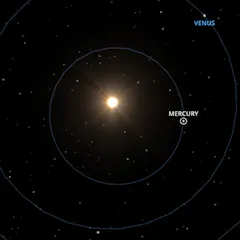
There’s nothing weird happening with Mercury. In fact, most days of the year there’s at least one planet in retrograde.
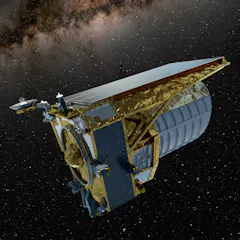
A spacecraft set to launch this year will throw a spotlight on the mysterious ‘dark side’ of the universe.
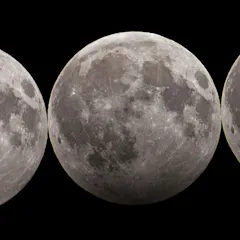
Not all lunar eclipses are alike. An astronomer explains the science behind the slight dimming of the Moon on May 5, 2023.
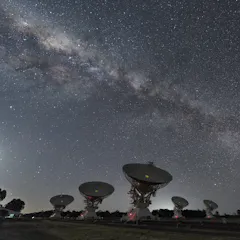
Artificial intelligence tools are making waves in almost every aspect of life, and astronomy is no different. An astronomer explains the history and future of AI in understanding the universe.
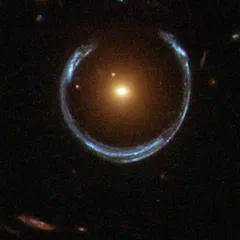
For decades physicists have argued over the nature of the elusive dark matter that pervades the Universe. A clever new study uses gravitational lensing to bring new evidence to the debate.

The current race to the Moon is opening up opportunities for lunar astronomy.
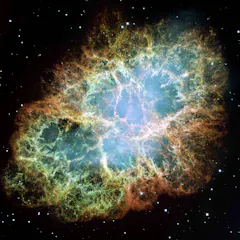
An asteroid ‘the size of 33 armadillos’ might be a flight of fancy, but real astronomers measure celestial objects with units that are just as strange.
Top contributors
-

Professor (Astrophysics), University of Southern Queensland
-
Senior Curator (Astronomy), Museums Victoria Research Institute; The University of Melbourne
-
Associate Professor in Astronomy, Monash University
-
University Distinguished Professor of Astronomy, University of Arizona
-
Associate Professor, School of Physics, The University of Melbourne
-
Professor of Astrophysics, University of Sydney
-
Professor, Radio Astronomy, University of Sydney
-
Pro Vice-Chancellor Flagship Initiatives, Swinburne University of Technology
-
Honorary Fellow, Space and Astronomy, CSIRO; Western Sydney University
-
John Curtin Distinguished Professor (Radio Astronomy), Curtin University
-
Postdoctoral Researcher in Radio Astronomy, University of Sydney
-
Lecturer in Astronomy, Nottingham Trent University
-
Senior Lecturer in Physics, Nottingham Trent University
-
Associate Dean of Innovation and Engagement, Swinburne University of Technology
-
Associate Professor, Astronomy, University of Regina