
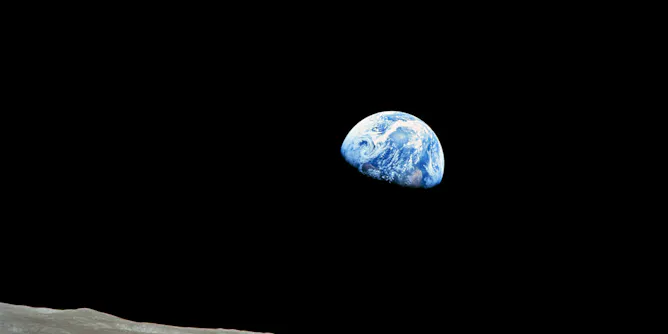
The Earth isn’t permanent, but it was here for four billion years before humans arrived and should be here for several billion more.
Articles on Astronomy
Displaying 301 - 320 of 989 articles

Calculating when and where exactly we can watch an eclipse in its full glory can be surprisingly hard.
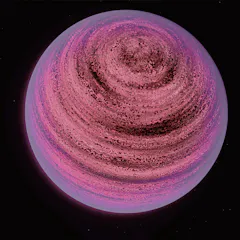
Astronomers are hot on the search for new exoplanets – planets that lie beyond our Solar System – which might show potential for sustaining life.
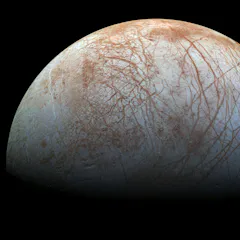
Europa Clipper and the Jupiter Icy Moons Explorer missions will arrive at Jupiter in the 2030s and provide researchers with unprecedented access to the moons orbiting the gas giant.

History might give you the impression astronomical discoveries were only done by men. But women were participating in scientific expeditions of eclipses too, even though it wasn’t easy.

Medieval monks recorded hundreds of lunar eclipses. Centuries later, their descriptions are helping scientists unravel the role of volcanoes in historical climate change.
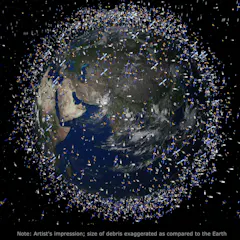
How might the space industry reduce its ecological footprint and better manage the debris it leaves in its wake?
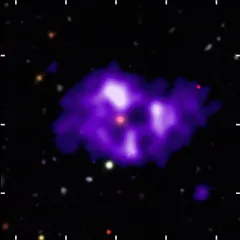
Machine learning is becoming an indispensable tool in astronomy by sorting through enormous datasets from telescopes.

A US-led coalition and China are both planning to establish bases on the Moon. How the two nations will navigate actions on the Moon and how other countries will be involved is still unclear.

Tens of thousands of satellites orbiting Earth will hamper astronomers’ efforts to study the Universe and spot dangerous asteroids, as well as brightening the sky and hiding stars from the rest of us.
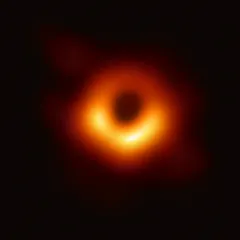
Beyond just looking at black holes, the next-generation Event Horizon Telescope collaboration is the first to bring together perspectives from across the sciences and humanities.
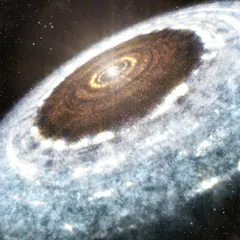
Astronomers have long known where water is first formed in the universe and how it ends up on planets, asteroids and comets. A recent discovery has finally answered what happens in between.
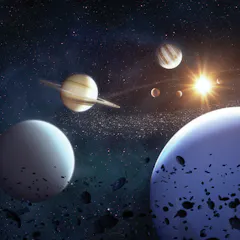
It all starts with a cloud of gas and dust.
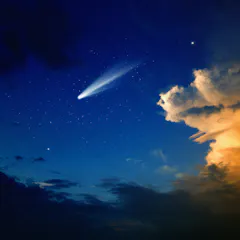
The newly discovered comet C/2023 A3 Tsuchinshan-ATLAS is anticipated to be spectacularly bright late next year. But it’s important to temper our expectations.
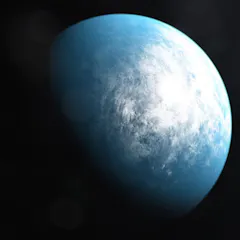
With more than 5,000 known exoplanets, astronomers are shifting their focus from discovering additional distant worlds to identifying which are good candidates for further study.
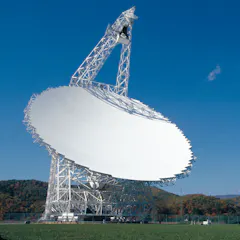
Many telescopes use the radio spectrum to learn about the cosmos. Just as human development leads to more light pollution, increasing numbers of satellites are leading to more radio interference.
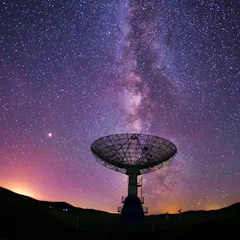
To date, we have not heard from any aliens. Nor have we seen any – but here are the fascinating projects working to change that.

With the help of thousands of citizen scientists, a new study measured exactly how much brighter night skies are getting every year.
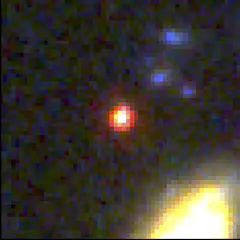
The discovery of massive, early galaxies could force scientists to rethink how the first galaxies formed after the Big Bang.
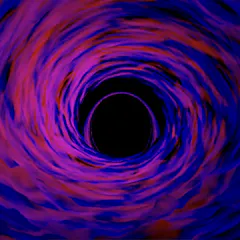
Astronomers have found that mysterious dark energy may originate in black holes.
Top contributors
-

Professor (Astrophysics), University of Southern Queensland
-
Senior Curator (Astronomy), Museums Victoria Research Institute; The University of Melbourne
-
Associate Professor in Astronomy, Monash University
-
University Distinguished Professor of Astronomy, University of Arizona
-
Associate Professor, School of Physics, The University of Melbourne
-
Professor of Astrophysics, University of Sydney
-
Professor, Radio Astronomy, University of Sydney
-
Pro Vice-Chancellor Flagship Initiatives, Swinburne University of Technology
-
Honorary Fellow, Space and Astronomy, CSIRO; Western Sydney University
-
John Curtin Distinguished Professor (Radio Astronomy), Curtin University
-
Postdoctoral Researcher in Radio Astronomy, University of Sydney
-
Lecturer in Astronomy, Nottingham Trent University
-
Senior Lecturer in Physics, Nottingham Trent University
-
Associate Dean of Innovation and Engagement, Swinburne University of Technology
-
Associate Professor, Astronomy, University of Regina