
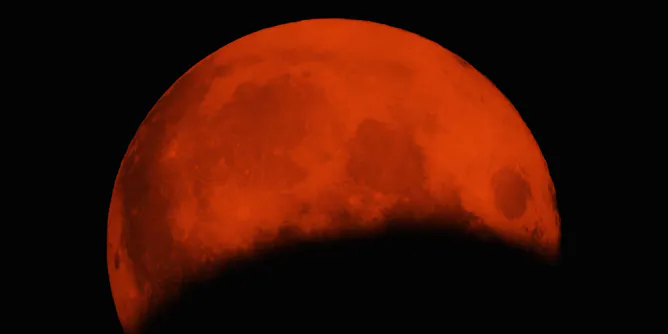
People across Australia and New Zealand will be able to catch the blood moon. Here’s how to get the best view.
Articles on Astronomy
Displaying 341 - 360 of 989 articles
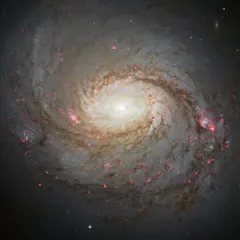
The IceCube telescope near the South Pole has received a first glimpse into the core of the galaxy NGC 1068.
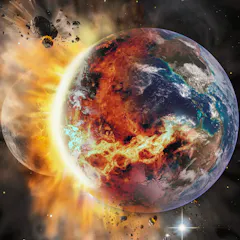
Believe it or not, this sort-of happened before in Earth’s history – and now we have the Moon.
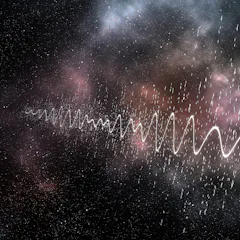
The technology of an advanced alien civilization is likely to produce many signs that could be detected across the vastness of space. Two astronomers explain the search for technosignatures.
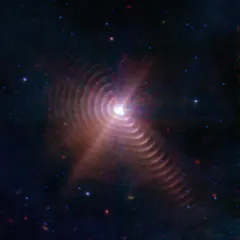
The binary star WR140 is surrounded by an astonishing array of nested shells of dust swirling into space.
In some African countries, astronomical research is quite developed.
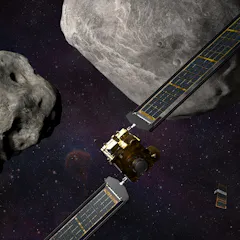
The first ever planetary defence test is about to take place 11 million kilometres from Earth. All we can do is wait and see.
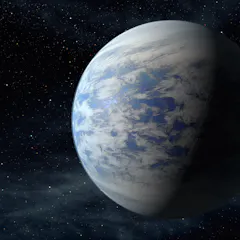
Newly discovered super-Earths add to the list of planets around other stars that offer the best chance of finding life. An astronomer explains what makes these super-Earths such excellent candidates.
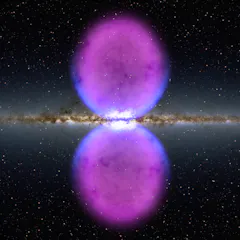
A glowing blob in the sky known as “the cocoon” may be caused by pulsars in the Sagittarius dwarf galaxy.
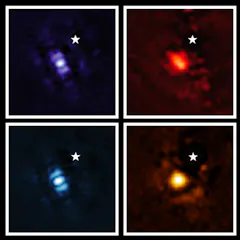
The James Webb Space Telescope just released its first-ever exoplanet image. Here’s what’s so exciting about it, and what we can stand to learn.
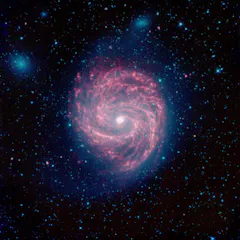
A comparison of star-forming galaxies suggests, surprisingly, that dark matter and visible matter do interact – taking us closer to understanding what keeps the galaxies together.
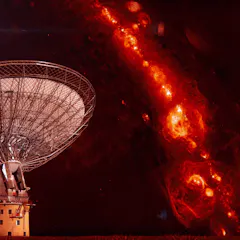
Listening for events like black hole collisions is important in astronomy research – and the technology is only getting better.
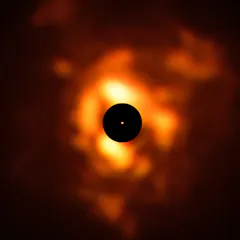
Humanity has a front-row ticket to astronomical history in the making – the death of Betelgeuse.
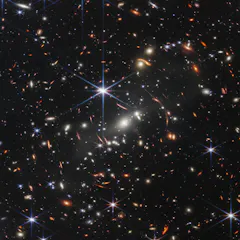
James Webb has spotted extremely distant galaxies formed soon after the Big Bang, but are they old or young? Or is this the wrong question to ask?
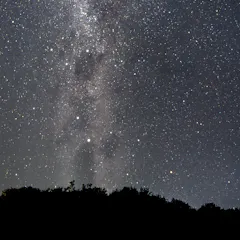
Earth is moving through a bit of space where three streams of debris intersect with our orbit. These streams will give birth to the stars of this weekend’s show.
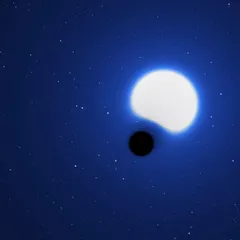
Astronomers have discovered the first dormant black hole outside of the Milky Way. These black holes are not absorbing matter from a nearby star, making them incredibly hard to find.
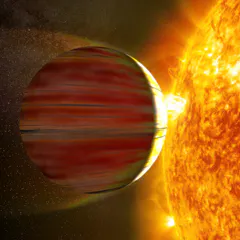
The unusual planetary system has a host star orbited by two giants. One has an incredible odd route around its star. And the other (unlike our own gas giants) is hellishly hot.
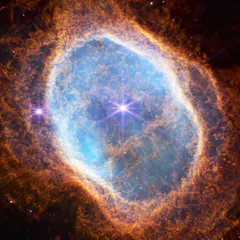
Why is the universe 13.8 billion years old, but 93 billion light-years across? It’s all about how light travels through the cosmos.
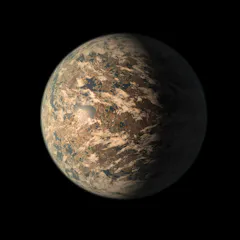
Life on Earth has dramatically changed the chemistry of the planet. Astronomers will measure light that bounces off distant planets to look for similar clues that they host life.
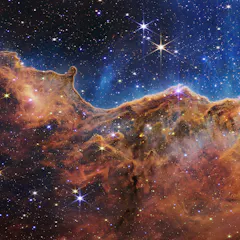
Long before the James Webb telescope brought us these deep field images, artists have been capturing notions of space.
Top contributors
-

Professor (Astrophysics), University of Southern Queensland
-
Senior Curator (Astronomy), Museums Victoria Research Institute; The University of Melbourne
-
Associate Professor in Astronomy, Monash University
-
University Distinguished Professor of Astronomy, University of Arizona
-
Associate Professor, School of Physics, The University of Melbourne
-
Professor of Astrophysics, University of Sydney
-
Professor, Radio Astronomy, University of Sydney
-
Pro Vice-Chancellor Flagship Initiatives, Swinburne University of Technology
-
Honorary Fellow, Space and Astronomy, CSIRO; Western Sydney University
-
John Curtin Distinguished Professor (Radio Astronomy), Curtin University
-
Postdoctoral Researcher in Radio Astronomy, University of Sydney
-
Lecturer in Astronomy, Nottingham Trent University
-
Senior Lecturer in Physics, Nottingham Trent University
-
Associate Dean of Innovation and Engagement, Swinburne University of Technology
-
Associate Professor, Astronomy, University of Regina