
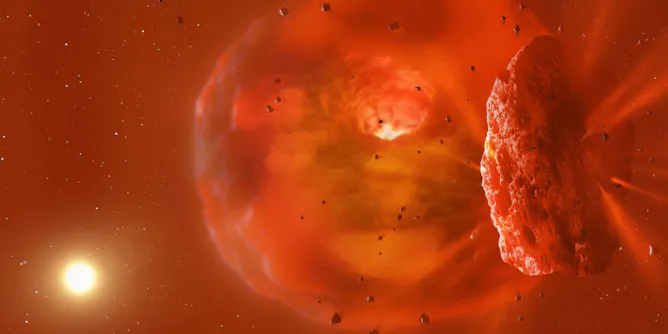
The discovery provides a way to study the birth of an entirely new planet in real time.
Articles on Astronomy
Displaying 261 - 280 of 989 articles

There’s a flurry of excitement every time a comet comes into view from Earth. But what are these celestial objects, and where do they come from?
Measuring the ages of planets and stars is tricky. An observational astrophysicist describes the subtle clues that provide good estimates for how old different space objects are.
Massive flashes of energy known as ‘fast radio bursts’ have puzzled astronomers for years – and a new search for links to gravitational waves has so far found no connection.

Canada’s partnership in the world’s largest radio telescope, located in South Africa and Australia, creates new opportunities for research, but the benefits go beyond astronomy.
Planetary analogues are sites on Earth that are so extreme that they replicate those of celestial bodies in our solar system.
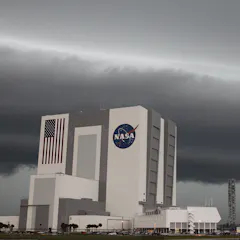
Months after a military officer made sensational claims about unexplained objects in the skies, NASA released a report loosely outlining a scientific approach for analyzing UAP reports.
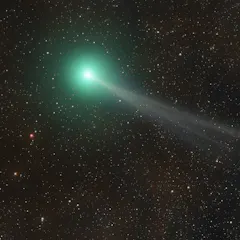
There’s a chance Nishimura might brighten unexpectedly – but it’s a slim one.
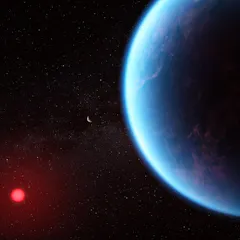
The results are intriguing, but analysing the atmospheres of exoplanets is no easy task.

An astronomer and ‘black hole historian’ explains how the parts of the universe black holes grow in might influence how quickly they become bright, supermassive objects.

To the ǀXam and San people, being in the world as a person includes “the sky’s things” - an understanding of and deep connection with the cosmos.

Astronomer Caroline Herschel’s work discovering and cataloging astronomical objects in the 18th century is still used in the field today, but she didn’t always get her due credit.
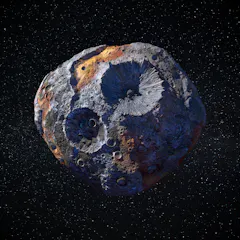
Liftoff to the distant asteroid is scheduled for Oct. 5, 2023 – the beginning of a six-year journey to one of the most unusual objects in the solar system.

Ancient stories of the sea and the sky date back to the end of the last ice age.

The universe used to be filled with a hydrogen fog, before early stars and galaxies burned through the haze. Astronomers are studying galaxies that tell them about this period in the early universe.

A mysterious hunk of space junk buzzed through Australian skies last night. It may have been the third stage of a Soyuz 2 rocket just launched by Russia.
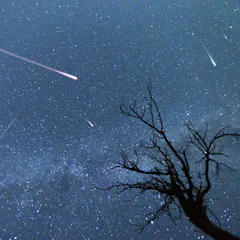
What is a shooting star? Where do these bright moving bodies come from? How and when can we observe this astronomical phenomenon?
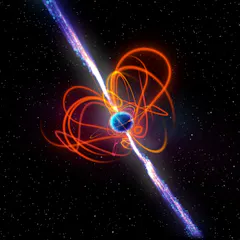
Astronomers have detected a long-running source of slow, repeating radio pulses that can’t be explained by current theories – but it’s probably not aliens.
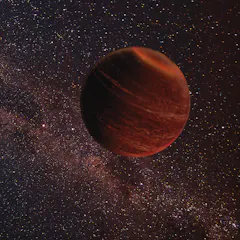
Astronomers have detected the coldest star ever found to emit radio waves using the Australian SKA Pathfinder telescope.
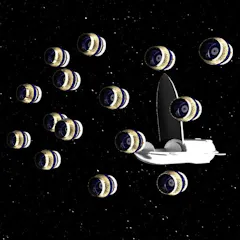
Space telescopes are limited in size due to the difficulties and cost of getting into orbit. By revamping an old optical technology, researchers are working on a lightweight and thin telescope design.
Top contributors
-

Professor (Astrophysics), University of Southern Queensland
-
Senior Curator (Astronomy), Museums Victoria Research Institute; The University of Melbourne
-
Associate Professor in Astronomy, Monash University
-
University Distinguished Professor of Astronomy, University of Arizona
-
Associate Professor, School of Physics, The University of Melbourne
-
Professor of Astrophysics, University of Sydney
-
Professor, Radio Astronomy, University of Sydney
-
Pro Vice-Chancellor Flagship Initiatives, Swinburne University of Technology
-
Honorary Fellow, Space and Astronomy, CSIRO; Western Sydney University
-
John Curtin Distinguished Professor (Radio Astronomy), Curtin University
-
Postdoctoral Researcher in Radio Astronomy, University of Sydney
-
Lecturer in Astronomy, Nottingham Trent University
-
Senior Lecturer in Physics, Nottingham Trent University
-
Associate Dean of Innovation and Engagement, Swinburne University of Technology
-
Associate Professor, Astronomy, University of Regina