

Resistant bacteria aren’t the only risk posed by overprescribing antibiotics. A more immediate risk is side-effects and reactions, which a new review shows are surprisingly frequent and often severe.
Articles on Antibiotic resistance
Displaying 81 - 100 of 228 articles

As viruses are transmitted from person to person they are constantly mutating and replicating. Could the SARS-CoV-2 virus evolve to evade the new vaccines that have just been developed?

Estimating the cost of antibiotic resistance to economies and health-care systems is fraught with difficulty, but new research says Australia will be hit harder than we think.

It takes around 61 hours to identify the pathogen causing a patient’s pneumonia. A new test reduces that to four hours.
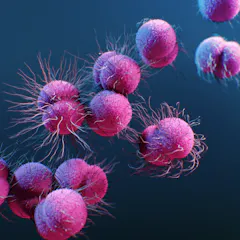
The African continent has the highest burden of gonorrhoea worldwide. In South Africa alone, it’s estimated that more than 2 million new cases occur annually.

We often think of antibiotic resistance in terms of humans, but it is actually a complex problem of interrelated factors including animal health, the environment and food production.

Scientists at Cambridge are developing a lab-in-a-briefcase for rapidly and cheaply identifying disease-causing bacteria.

As antimicrobial resistance increases, the options for treating serious infections dwindle. Doctors need reliable information about which treatments to try out.

Vaccines and antivirals aren’t the only game in town.

Superbugs spread through the environment – and it needs urgent attention.

A CSIRO survey has found many people are confused about common infections, believing antibiotics can treat colds, flu and other viruses. This could fuel a dangerous rise in drug-resistant superbugs.
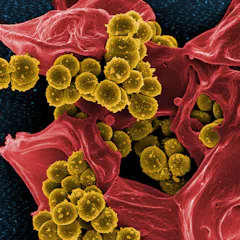
Antimicrobial resistance is a public health and economic disaster waiting to happen. If we do not address this threat, by 2050 more people will die from drug-resistant infections than from cancer.

Misuse of common cleaning products or hand sanitisers can lead to antimcrobial resistance in bacteria.

Knowing what genes cause antibiotic resistance – and where they are in the body – is critical for preventing further antibiotic resistance.
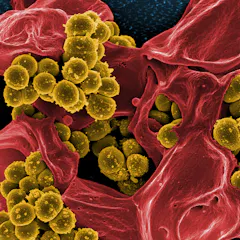
Pathogens rapidly evolve resistance to antibiotics. AI could keep us a step ahead of deadly infections.

New research finds taking antibiotics in early life is associated with an increased risk of obesity at age four. But that’s no reason not to give your child antibiotics if they really need them.
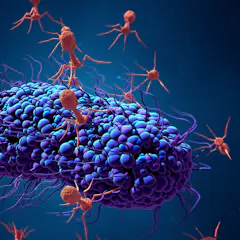
Bacteriophages are viruses that infect bacteria. But could they be key in solving the antibiotic resistance epidemic?

Leafcutter ants, Komodo dragons and even your nose are potential sources of new antimicrobial compounds.

Antibiotic resistance is one of the greatest health challenges of the modern day. It’s especially prevalent, and must be acted on, in Australia’s remote Indigenous communities.

Antibiotic resistance is one of the greatest health challenges we face today. But making a few small changes to the way antibiotics are prescribed could make a big difference in Australia.
Top contributors
-

Senior Lecturer, Medical Microbiology, University of Westminster
-
Senior Research Fellow, School of Medicine, The University of Western Australia
-
Professor of Biocchemistry and Biomedical Sciences, McMaster University
-
Dean of the College of Science, Professor of Biochemistry, Rochester Institute of Technology
-
Professor, The University of Queensland
-
Senior Lecturer in Microbiology, Aston University
-
Professor of Infectious Diseases, Monash University
-
Director Of Medicine, The Maitland and Kurri Kurri Hospital, University of Newcastle
-
Visiting Research Fellow, History of Biomedical Sciences, University of Cambridge
-
Professor of Public Health, Bond University
-
Research Fellow in Microbiology, University of Glasgow
-
Professor, The Peter Doherty Institute for Infection and Immunity
-
Clinical Lecturer and GP, University of Oxford
-
South African Research Chair in Antibiotic Resistance and Professor in Pharmaceutical Sciences, University of KwaZulu-Natal
-
Professor at ANU Medical School; Senior Staff Specialist Infectious Diseases; General Physician, Australian National University