
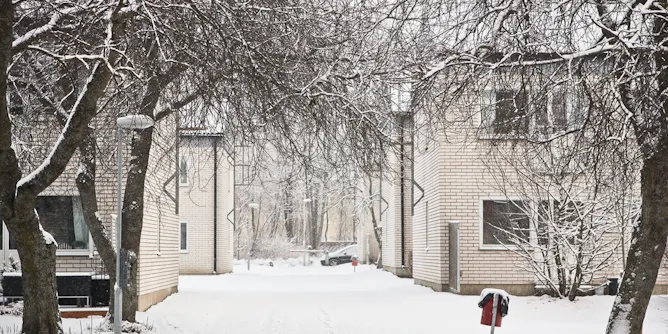
Communal laundries are easy to find in Swedish apartment buildings and can provide a cheap way to do the washing.
Articles on Water
Displaying 41 - 60 of 832 articles
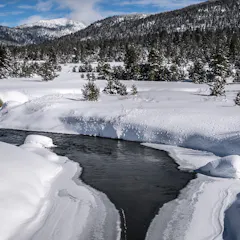
Streamflows the West relies on for drinking water and farms used to follow a fairly predictable arc as winter snow melted. Rising temperatures are changing that.

Over 100,000 water handpumps in rural sub-Saharan Africa are broken, leaving millions without safe water. Regular maintenance is cheaper than repairs.
Gender inequity is still framed primarily as a problem of access and representation. It is also a governance problem.
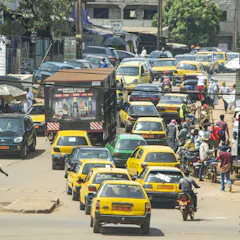
Every city is different but they can learn from each other.
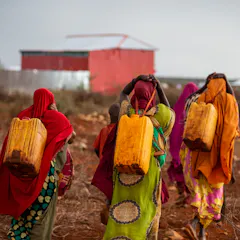
In high and low income economies, women and girls bear the brunt of inequalities caused by water scarcity.
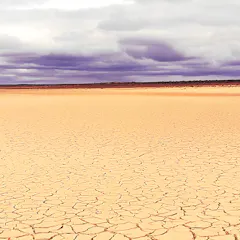
South Africa’s driest regions rely on groundwater, which dries up as the climate warms. Replenishing aquifers with excess rainfall may be a solution.
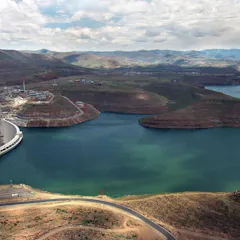
The Lesotho-South Africa water deal was clinched during the apartheid era and without public consultation.
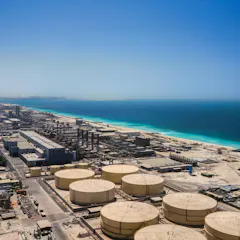
Plants that convert seawater to drinking water are at the heart of major cities in the Gulf. But they are increasingly becoming military targets.
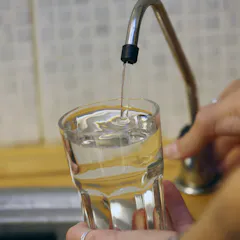
Floods can increase the risk of water contamination. A water safety expert explains how you can ensure your water is safe to drink.

Key sources of drinking water have been targets in past conflicts. And Iranian strikes have already hit close to some.

Climate change is altering not only how much snow falls, but where snowpack persists and how long it lasts.

If growth is the metric that counts, this is not yet the turning point that will deliver rising living standards and jobs for all.

The water industry has been left to police its own pollution.
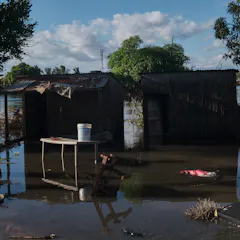
Flooding alters the environment in ways that favour malaria transmission.
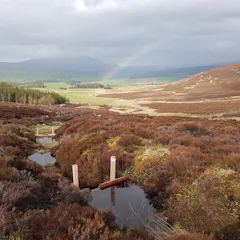
Capturing floodwater in the winter could help avoid summer droughts, research suggests.
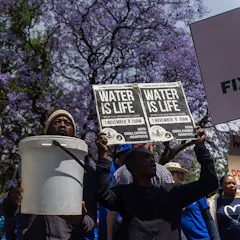
The answers to what needs to be done to solve the chronic water crisis in South Africa’s towns and cities have been known for some time.

Native American lands contain 30% of the nation’s coal, 50% of its uranium and 20% of its natural gas, as well as copper, lithium and rare earth elements.
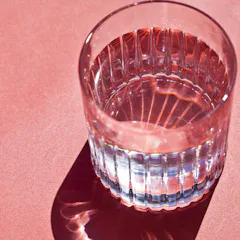
Go on, drink hot water if it makes you feel good. But don’t expect it to have magical properties beyond staying hydrated.
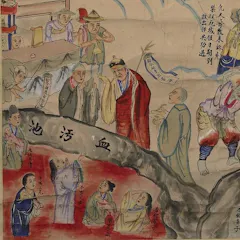
In some cultures, menstruation and childbirth are treated as polluting, not life-giving. One Buddhist text’s interpretation of ‘Blood Pond Hell’ shows how far such beliefs go – and how women respond.
Top contributors
-

Associate Professor in Environmental Science, Western Sydney University
-
Visiting Adjunct Professor, School of Governance, University of the Witwatersrand
-
Professor of Civil, Environmental and Ecological Engineering, Purdue University
-
Regents Professor Emeritus and Morris K. Udall Professor of Law & Public Policy Emeritus, University of Arizona
-
Senior lecturer, Nelson Mandela University
-
Executive Co-Director, UNU Hub on Empowering Communities to Adapt to Environmental Change, United Nations University; University of Calgary
-
Research Associate, Department of Economics, SOAS, University of London
-
Matthew Flinders Professor in Water Economics, Flinders University
-
Professor, School of Biological, Earth and Environmental Sciences, UNSW
-
Distinguished Professor of Engineering, University of California, Merced
-
Distinguished visiting professor, University of Glasgow
-
Research Fellow, Monash Sustainability Institute, Monash University
-
Associate Professor of Environmental Economics and Policy, School of Environment, Science and Engineering, and Fellow of the Marine Ecology Research Centre, Southern Cross University
-
Professor, Fenner School of Environment & Society, Australian National University
-
Senior Lecturer, Melbourne Law School, The University of Melbourne