
Public concerns about issues such as wind farms and vaccines have led to a discussion about why some people have strong fears or adverse reactions, and why their perception of risk doesn’t align with those…
Articles on Science communication
Displaying 261 - 280 of 336 articles
More and more scientists are communicating via social media to find, publicise and discuss current research. This trend has been highlighted in two recent papers that look at the influence of social media…
“DNA is your blood in you, we can use DNA as evidence if someone’s been stabbed. We can run tests in suspects.” (Girl, 12, central Queensland) “DNA has to do with blood types and fingerprints, it helps…
Without good advice, governments are in extreme danger of creating erroneous or damaging public policy. So it’s a serious matter when a government science adviser is accused of ignoring scientific evidence…
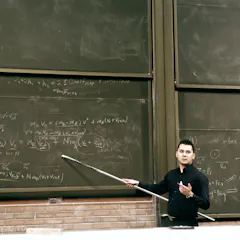
Science engagement in Australia is trapped in the 20th century. It operates under an outdated model that aims to promote and celebrate science, rather than encouraging the public to participate in, and…
Australia punches above its weight in terms of global research, producing more than we might expect given our small population. At least … that’s the line we’ve been fed for years – but is it true? A cracking…
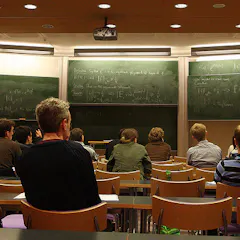
Demand for trained mathematicians is growing but enrolment is maths courses is in steep decline. Failing to tackle the problem puts the country at risk of producing the scientists and engineers needed…

When you open a science textbook or magazine, it’s often the images that capture your attention. Some of these images help you visualise the topics, while others - such as diagrams - can be instrumental…
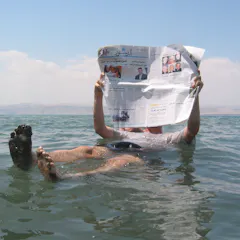
Peer review is an essential part of science. Journal editors recruit scientists to provide expert opinion on manuscripts submitted by other scientists. Reviewers are expected to identify major errors and…
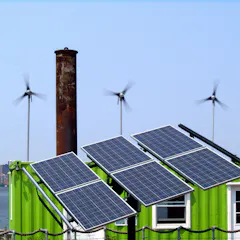
Climate change no longer attracts the headlines it once did, as the recent conference in Doha showed. Global media attention since its 2009 peak during the Copenhagen summit has fallen off a cliff – according…
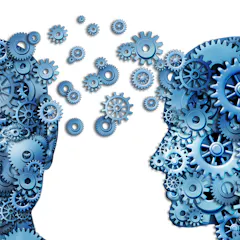
Neuroscience: the word oozes sophistication and intelligence – the very qualities we might want to nurture in our students, our children, our general populace. Maybe that’s why many people involved in…
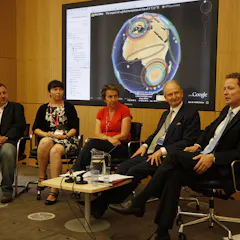
Does scientific knowledge matter in the climate debate? Recent research suggests that it is not “what you know” but “who you are” that counts in making up your mind about climate change. What are the implications…
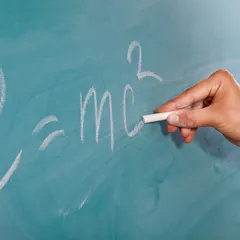
School students today are taught physics based on obsolete theories and outmoded ways of thinking. Instead of the truth, most learn a naive simplification - the 300 year-old Newtonian physics, itself based…

All human societies construct and teach creation myths or origin stories. These are large, extraordinarily powerful, but often ramshackle narratives that try and tell the story of how everything came to…

People are more likely to believe that humans cause global warming if they are told that 97% of publishing climate scientists agree that it does, a new study has found. Despite overwhelming evidence showing…
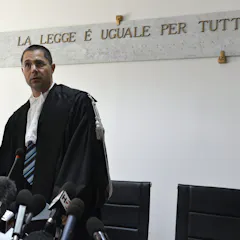
Researchers worldwide have condemned an Italian court’s judgement that six scientists and a government official are guilty of manslaughter for underestimating the risk of an earthquake accurately. The…

Few of us have the time or expertise to sift through all of the scientific papers published every day to determine which research is important and relevant to our lives. In this sense, science journalists…
While the Australian Research Council considers its policy on open-access publication and others within the scientific community call for the increased sharing of scientific data, the British are already…
Science (real science, not the summaries in popular books and the media) is needlessly closed to the outside world. Worse, it is closed within itself, with every lab its own silo, and little sharing of…
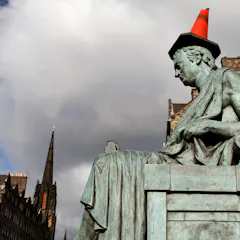
If you listen to the debate between science and society in most of the West, you get one version or another of the linear model. Science comes first. When it is “settled”, society will know what to do…
Top contributors
-

Associate Professor (hon) at the Centre for Public Awareness of Science, Australian National University
-
Senior Lecturer, Australian National Centre for the Public Awareness of Science, Australian National University
-
Science Communication Researcher, Stellenbosch University
-
Senior Research Fellow, Melbourne School of Psychological Sciences, The University of Melbourne
-
Professor of Public Relations, Michigan State University
-
Senior Lecturer in Philosophy and Education; Curriculum Director, UQ Critical Thinking Project, The University of Queensland
-
Science communicator and communication consultant to Questacon, and alumni, CSIRO
-
Professor, Australian National University
-
Chair, The Conversation Media Group
-
Professor and UNESCO Chair-holder, Australian National University
-
Associate Professor of Health Law, Policy and Management, Boston University
-
Laureate Professor of Mathematics, University of Newcastle
-
Campus Visitor / Director of Econnect Communication, Australian National University
-
Associate Professor, Interim Pro Vice Chancellor Learning and Teaching, Australian National University
-
PhD; Lawrence Berkeley Laboratory (retired) and Research Fellow, University of California, Davis