

Green ratings are growing in South Africa, mainly for upgraded older buildings, but some low scores suggest buildings may appear greener than they are.
Articles on Science and innovation for development
Displaying 1 - 20 of 251 articles

A new nanomaterial ‘blanket’ could reduce evaporation from dams by blocking heat while letting sunlight through, helping save scarce water in hot parts of Africa.
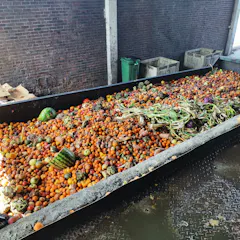
South Africa must focus not just on food production but on preserving what is produced through improved cold chain infrastructure.

Scientists are exploring light-activated nanoparticles to kill biofilms in stored drinking water, aiming to make household water safer in South Africa.
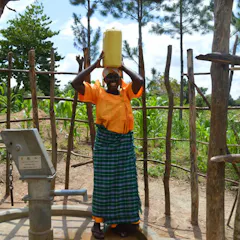
Solutions for food systems exist; scaling them is where the challenge lies.

As food and living costs rise, rooftop solar and rainwater harvesting could help low income South African households save money and buy more food.

Access to global markets will continue to decrease if the disease is not brought under control.

AI tools for farming can play a role. But they need to be properly tailored for African and developing nations’ context.
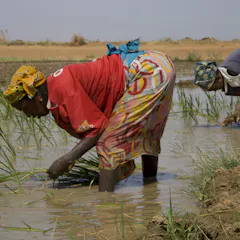
Science can only change the world when societies decide to give it the means to do so.
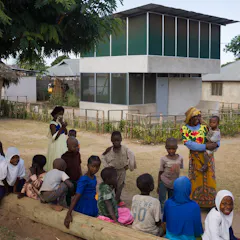
A three year study of Tanzanian children found that changing the way homes are designed can prevent diarrhoea, pneumonia and malaria, and help children grow taller.

Research suggests a shift to electric mobility is technically and economically feasible.

Africa doesn’t need a technological breakthrough to scale EV adoption. It needs cheaper capital and supportive policy environments.
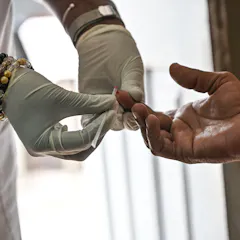
African countries must not sign away their health data or release their pathogens in exchange for donor funding.
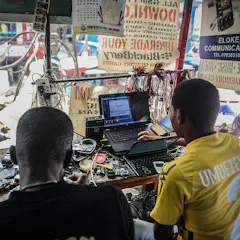
Crypto works in Nigeria because of very human networks of trust.
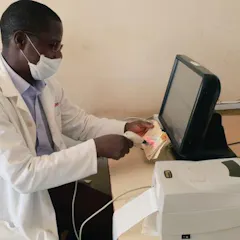
A simple solution of moving from paper to electronic records improved healthcare for many HIV patients.
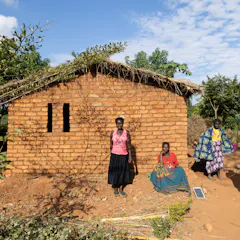
Even small solar devices that can power phone chargers and lights have made a difference in rural Malawi. Now, bigger and better solar systems are needed.

The South African government and coal industry need to move fast to set up a plan to turn old coal mines and power stations into job-creating hubs after they close.

Digital tools need better ethics, otherwise they will further entrench inequality.

South African homes need two-way meters so that they can feed extra solar power from home systems and electric vehicles back to the grid.
International scholarships make up most of the foreign aid to higher education in conflict-affected countries.
Top contributors
-

Senior Lecturer International Law, Bioethics, Emerging Tech, University of KwaZulu-Natal
-
Fellow, Nigerian Academy of Science
-
Professor of medicine and deputy director of the Desmond Tutu HIV Centre at the Institute of Infectious Disease and Molecular Medicine, University of Cape Town
-
Professor of Organic Chemistry, Neville Isdell Chair in African-centric Drug Discovery & Development, and Director of the Holistic Drug Discovery and Development (H3D) Centre, University of Cape Town
-
Dean Faculty of Health Sciences and Professor of Vaccinology at University of the Witwatersrand; and Director of the SAMRC Vaccines and Infectious Diseases Analytics Research Unit, University of the Witwatersrand
-
Professor of the Practice of International Development, Harvard Kennedy School
-
Post Doctoral Fellow, University of KwaZulu-Natal
-
Professor in Biochemistry, Genetics and Microbiology, and Professor at Future Africa, University of Pretoria, University of Pretoria
-
Principal Medical Scientist and Head of Laboratory for Antimalarial Resistance Monitoring and Malaria Operational Research, National Institute for Communicable Diseases
-
Head of the Centre of Excellence for Biomedical TB Research, University of the Witwatersrand
-
Chair of Policy Innovation, School for Data Science and Computational Thinking, Stellenbosch University
-
Head of the Division of Pulmonology, University of Cape Town
-
Associate Professor, Cape Peninsula University of Technology
-
Professor and Chair of Genomic Diversity, Queen Mary University of London
-
Tutorial Fellow, School of Medicine, University of Nairobi, University of Nairobi