
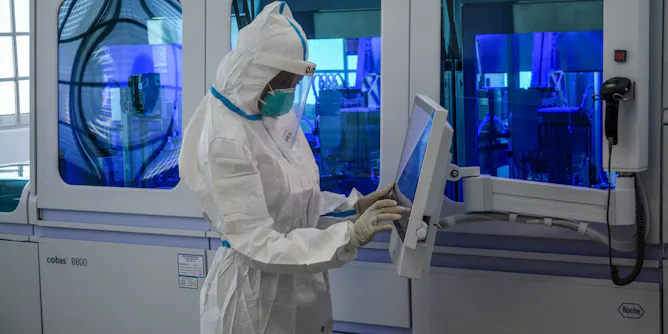
More funding is needed to galvanise
Nigeria’s health system as medical research is not well funded.
Articles on Science and innovation for development
Displaying 81 - 100 of 251 articles

We’ve made advances towards delivering new devices to empower even people with basic medical knowledge to administer malaria tests in the field.

Discovery of a new antibiotic compound from a Nigerian environment is good news for researchers in this field.

The decision is supported by the government’s policy environment in recent years. This has aimed to increase innovation, and views technology as a way to achieve this.
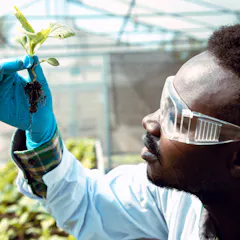
Stronger agricultural R&D systems will enable agriculture to power Africa’s transformation.
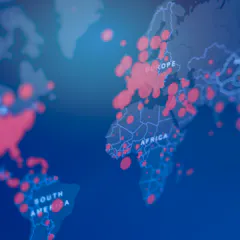
Policymakers need to make sense of the data so as to predict and manage what’s happening. To address this need, we developed a visualisation tool to track and predict country-level COVID-19 cases.
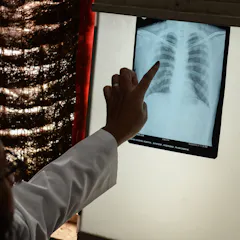
BCG remains the only widely available vaccine for TB. Yet the development of a COVID-19 vaccine over the last year shows that there is capacity to rapidly create new vaccines.
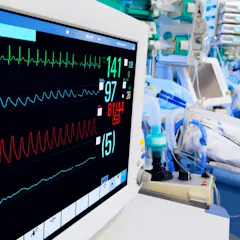
Machine learning offers improved access to affordable testing and quality of care for those who are unaware of their hepatitis B status.
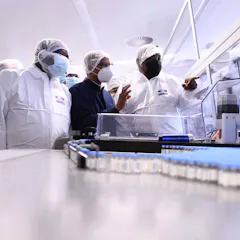
Vaccine manufacturing doesn’t come cheap. It depends heavily on support from developed countries. It also requires much more than relaxing intellectual property rights and a desire for vaccine equity.
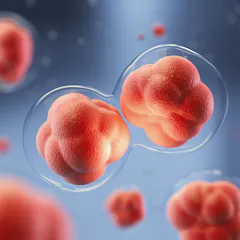
The rule, which previously acted as the upper time limit on human embryo research, has been dropped, paving the way for research on older human embryos.

Entrepreneurs can create entirely new ways of providing goods and services if they’re adequately trained to take advantage of technological advances.

Climate change science dominated by knowledge produced in the global North cannot address the particular challenges faced by those living in the global South.
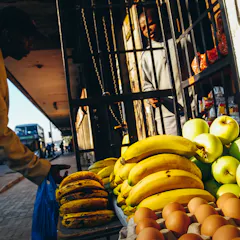
It’s time African governments supported the development of online platforms designed to support local people in the informal sector.

She believed and advocated that Africa needs to find solutions to its own problems and worked tirelessly to build biomedical engineering capacity across the continent.
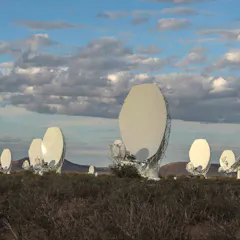
The pandemic has underscored that the world requires agility for survival. That makes blue skies science, which encourages curiosity and nimble thinking, perhaps more important than ever.

African governments should prioritise investment in high speed internet connectivity because it can have spillover benefits for education systems, as well as economic and social growth.
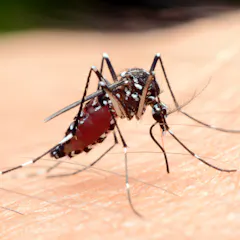
There is a chemical skin surface difference between individuals who perceived themselves as being attractive for mosquitoes and those that weren’t.
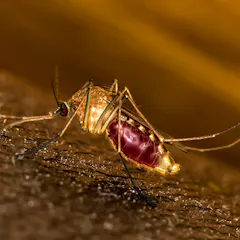
This project may help to eradicate malaria by developing new technologies to prevent mosquitoes from biting people when they are outdoors.
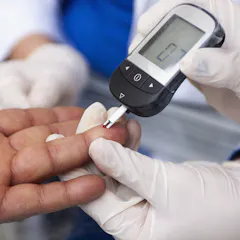
To stem the rise in diabetes, new and innovative methods of risk assessment must be implemented, specific to populations on the continent.
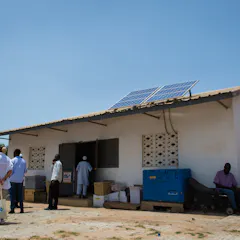
Solar-powered cold chain technologies can be game-changers in the fight against COVID-19 in resource-limited settings in sub-Saharan Africa and beyond.
Top contributors
-

Senior Lecturer International Law, Bioethics, Emerging Tech, University of KwaZulu-Natal
-
Fellow, Nigerian Academy of Science
-
Professor of medicine and deputy director of the Desmond Tutu HIV Centre at the Institute of Infectious Disease and Molecular Medicine, University of Cape Town
-
Professor of Organic Chemistry, Neville Isdell Chair in African-centric Drug Discovery & Development, and Director of the Holistic Drug Discovery and Development (H3D) Centre, University of Cape Town
-
Dean Faculty of Health Sciences and Professor of Vaccinology at University of the Witwatersrand; and Director of the SAMRC Vaccines and Infectious Diseases Analytics Research Unit, University of the Witwatersrand
-
Professor of the Practice of International Development, Harvard Kennedy School
-
Post Doctoral Fellow, University of KwaZulu-Natal
-
Professor in Biochemistry, Genetics and Microbiology, and Professor at Future Africa, University of Pretoria, University of Pretoria
-
Principal Medical Scientist and Head of Laboratory for Antimalarial Resistance Monitoring and Malaria Operational Research, National Institute for Communicable Diseases
-
Head of the Centre of Excellence for Biomedical TB Research, University of the Witwatersrand
-
Chair of Policy Innovation, School for Data Science and Computational Thinking, Stellenbosch University
-
Head of the Division of Pulmonology, University of Cape Town
-
Associate Professor, Cape Peninsula University of Technology
-
Professor and Chair of Genomic Diversity, Queen Mary University of London
-
Tutorial Fellow, School of Medicine, University of Nairobi, University of Nairobi