
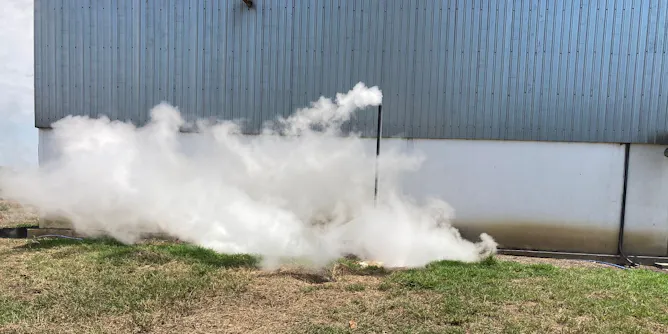
Wastewater heat recovery, which recycles hot water from drains to preheat new water, could cut coal use, lower carbon emissions, and create local jobs in Zambia.
Articles on Science and innovation for development
Displaying 21 - 40 of 251 articles
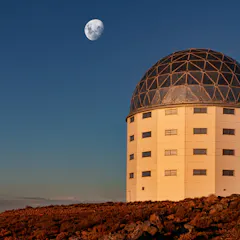
This year, on 10 November, it is World Science Day for Peace and Development. SALT has had considerable social benefits for the community in Sutherland.
AI coverage in African media has shown that local voices and experts are missing.
Many of Africa’s most powerful innovations are not being measured correctly.

Knowing how mountain winds create fire conditions is useful for monitoring the danger.
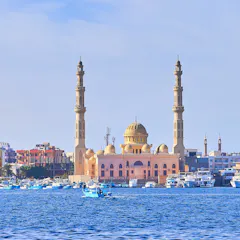
Egypt has always relied on the River Nile for its freshwater but needs new sources to cope with a growing population. Desalinating seawater could be a solution.
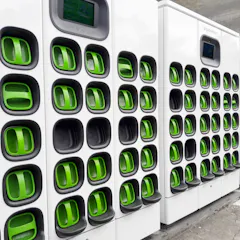
Electric vehicles are expensive and yet to take off in South Africa. Wind and solar powered battery swapping stations could help motorists make the switch.
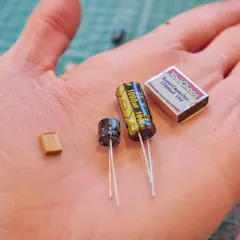
New research has found that a key component of valuable supercapacitor energy storage devices can be made with waste peel from the mangosteen fruit.

Scientists on the African continent have made notable contributions to photonics research.
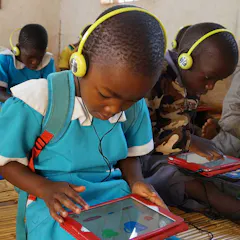
Child-directed educational technology can deliver high quality education for millions of marginalised children worldwide.
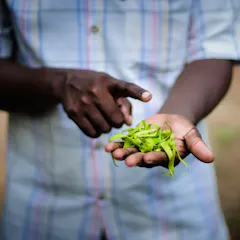
Biogas systems that generate cooking gas from plant waste can be relatively low-cost to set up. They come with environmental and health benefits for rural people who have only firewood to cook with.

Through collaboration and resource sharing, smallholder rice farmers can enhance their productivity and achieve a fully mechanised farming system.

In South Africa, a group of citizen scientists who test water quality and log the results on a specialised app have helped keep the water supply for 4.3 million people clean.

In sub-Saharan Africa, most governments welcome China’s investment in digital infrastructure.

Key to diagnosing foetal alcohol syndrome is an assessment of certain facial features. A 3D facial scan is expensive but 2D images may offer a solution.

Many speak fondly of how Barry Dwolatzky took them into a derelict disco and enthusiastically explained the tech co-working space he envisioned there.
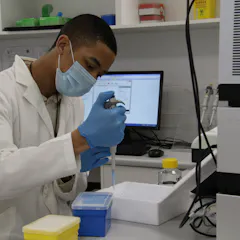
Africa has come a long way, in the post-COVID era, in boosting the morale around local production investments among local and foreign companies. But more is needed.
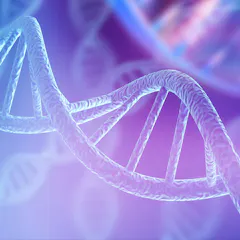
Our understanding of Parkinson’s disease is far from complete. But researchers now believe that in most cases, Parkinson’s is caused by a complex interaction between genetic and environmental factors.
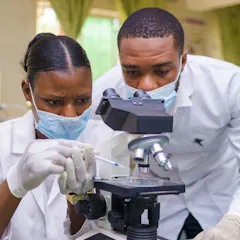
Here’s what Nigeria’s new president should do to elevate science in the country.
Africa has been slow in embracing Open Science.
Top contributors
-

Senior Lecturer International Law, Bioethics, Emerging Tech, University of KwaZulu-Natal
-
Fellow, Nigerian Academy of Science
-
Professor of medicine and deputy director of the Desmond Tutu HIV Centre at the Institute of Infectious Disease and Molecular Medicine, University of Cape Town
-
Professor of Organic Chemistry, Neville Isdell Chair in African-centric Drug Discovery & Development, and Director of the Holistic Drug Discovery and Development (H3D) Centre, University of Cape Town
-
Dean Faculty of Health Sciences and Professor of Vaccinology at University of the Witwatersrand; and Director of the SAMRC Vaccines and Infectious Diseases Analytics Research Unit, University of the Witwatersrand
-
Professor of the Practice of International Development, Harvard Kennedy School
-
Post Doctoral Fellow, University of KwaZulu-Natal
-
Professor in Biochemistry, Genetics and Microbiology, and Professor at Future Africa, University of Pretoria, University of Pretoria
-
Principal Medical Scientist and Head of Laboratory for Antimalarial Resistance Monitoring and Malaria Operational Research, National Institute for Communicable Diseases
-
Head of the Centre of Excellence for Biomedical TB Research, University of the Witwatersrand
-
Chair of Policy Innovation, School for Data Science and Computational Thinking, Stellenbosch University
-
Head of the Division of Pulmonology, University of Cape Town
-
Associate Professor, Cape Peninsula University of Technology
-
Professor and Chair of Genomic Diversity, Queen Mary University of London
-
Tutorial Fellow, School of Medicine, University of Nairobi, University of Nairobi