

Russia isn’t likely to put nuclear missiles in space, but their reported anti-satellite weapon is just as alarming. An expert on nuclear strategy explains.
Articles on Satellites
Displaying 101 - 120 of 301 articles
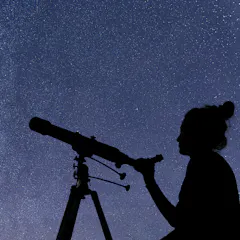
Megaconstellations of satellites are hindering the most powerful tool for space exploration: telescopes.
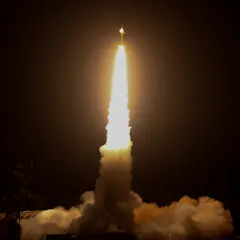
Despite what you may think, Australia has a long history of space activities. But this is the first time the Australian public has been asked its opinions on space.

Countries have submitted applications for hundreds of thousands of new satellites to be launched. The scale poses challenges for overcrowding orbit, with environmental and safety challenges.
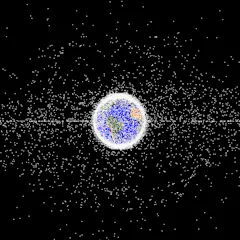
Earth’s orbits are getting more and more crowded. To keep track of everything and avoid collisions and catastrophes, we need a new field: space domain awareness.
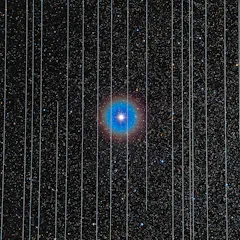
Starlink satellites emit bright, unintended and unexpected signals that can be detected by radio telescopes.

The combination of data and maps is useful for a lot more than just helping you get from point A to point B. Think natural disasters, global supply chains and climate change.
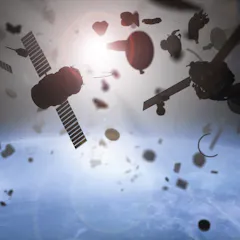
Treaties meant to ensure sustainability in space don’t currently regulate private companies, and not every country has signed on to an agreement for sustainable space exploration.
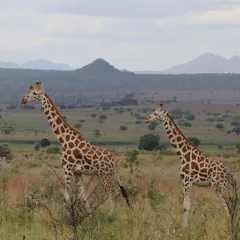
The largest ever giraffe tracking study shows how these massive animals are responding to human pressures across many different habitats throughout Africa.
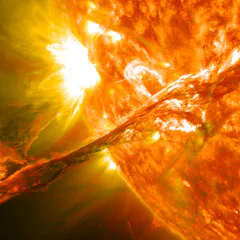
We’re currently a few years into the 25th studied solar cycle. An 11-year period of sun activity, this solar cycle is more active than previously expected.
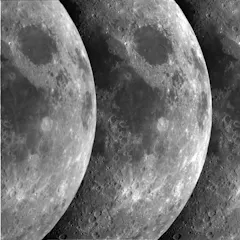
While a return to the Moon will allow the U.S. to collaborate with other nations interested in space, this endeavor is also complicated by geopolitical tensions.
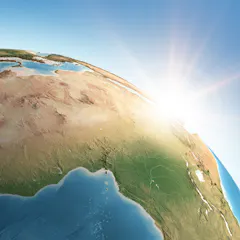
Côte d’Ivoire’s nanosatellite is the first step towards applications that monitor environmental harm and illegal activities and assist in planning for development.
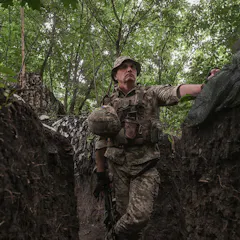
A selection of the best of our coverage of the conflict from the past fortnight.

The Ukraine conflict shows the importance of space technology in modern warfare.

As signatories, Nigeria and Rwanda are demonstrating their commitment to safe, sustainable use of outer space. This should have multiple benefits.
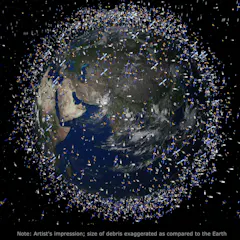
How might the space industry reduce its ecological footprint and better manage the debris it leaves in its wake?
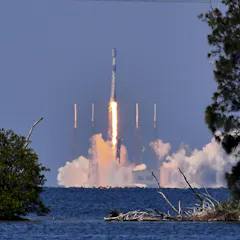
Rockets used to launch satellites fall back to Earth, and as their number grows, the risk faced by people living on the ground — or flying in airplanes — increases.

Tens of thousands of satellites orbiting Earth will hamper astronomers’ efforts to study the Universe and spot dangerous asteroids, as well as brightening the sky and hiding stars from the rest of us.
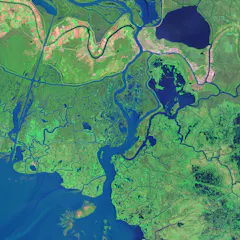
Time-lapse animations that once took days to create are now easy to build with publicly available satellite images and free online tools.
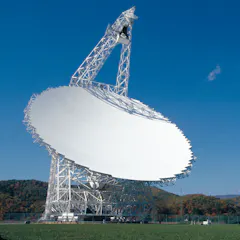
Many telescopes use the radio spectrum to learn about the cosmos. Just as human development leads to more light pollution, increasing numbers of satellites are leading to more radio interference.
Top contributors
-

Associate Professor, Astronomy, University of Regina
-
Professor, Physics and Astronomy, University of British Columbia
-
Andrew Dempster is a Friend of The Conversation.
Director, Australian Centre for Space Engineering Research; Professor, School of Electrical Engineering and Telecommunications, UNSW
-
Associate Professor in Archaeology and Space Studies, Flinders University
-
Associate Professor in Astronomy, Monash University
-
Associate Professor of International Affairs, Georgia Institute of Technology
-
Lecturer in space and military law and strategy, UNSW
-
Chief Executive Officer, Australasian Centre for Space Governance; Associate Expert, National Security College, Australian National University
-
Emeritus Professor of International Law, Western Sydney University
-
Adjunct Senior Research Fellow in Environmental Law, University College Dublin
-
Associate Professor, RMIT University
-
Space Plasma Physicist, Imperial College London
-
University Distinguished Professor of Astronomy, University of Arizona
-
Scientific Officer, Obafemi Awolowo University
-
Director, Bushfire Research Centre of Excellence, Australian National University