

Lunar Trailblazer is planned to launch on the first Commercial Lunar Payload Services mission of 2025.
Articles on CubeSat
Displaying 1 - 20 of 24 articles
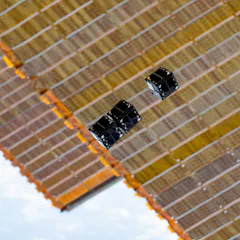
The Sun’s activity is what gives us beautiful auroras – but it also has dramatic negative effects on satellites that go around Earth in a low orbit.

CubeSats have already visited the Moon and Mars and are key components of upcoming deep space missions.
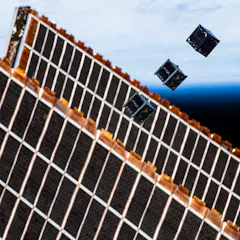
In Western Australia, the first of a series of little satellites just burned up in the sky – exactly as planned.

The Double Asteroid Redirection Test successfully showed that it is possible to crash a spacecraft into a small asteroid. Whether the approach could save Earth from a future threat remains to be seen.

Current trends suggest that powerful nations are defining the rules of resource use in space and satellite access in ways that will make it hard for developing nations to ever catch up.
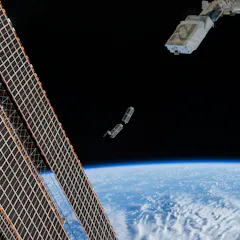
Shrinking satellites are making it cheaper and more accessible to do science in space.

The CUAVA-1 cubesat will monitor space weather and changes to Earth’s ionosphere that affect satellites and electronics.

In the past decade, the number of satellites in orbit has skyrocketed thanks to tiny electronics and cheap launches. The crowded night sky is posing problems for astronomers and astronauts.
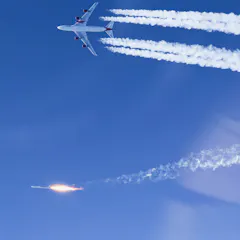
Ten small satellites were launched from 11km above Earth’s surface.
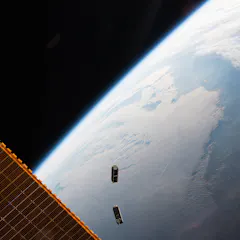
SpaceX and other companies are rushing to put thousands of small, inexpensive satellites in orbit, but pressure to keep costs low and a lack of regulation leave those satellites vulnerable to hackers.
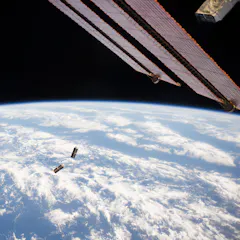
Free space optical communication will allow the same connectivity in space we already have on Earth. And this will provide benefits across a number of sectors.

NASA and the European Space Agency are planning a series of lunar missions using tiny ‘CubeSats’ to map the moon for resources.
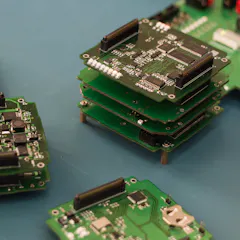
How do you train space engineers? You enable college students to build mini satellites, called CubeSats, launch them into space and help them collect the data.
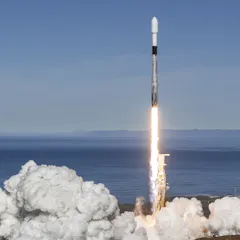
If the Australian space industry is to grow and create thousands of jobs then we need new policy around satellites to meet the challenges involved.

Will new communications licensing costs make small satellites so expensive that they can’t be used for student education?
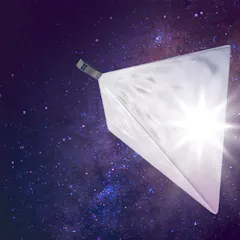
It promises to be one of the brightest objects in the night sky once the Mayak satellite unfolds a giant pyramid reflector. But what is it going to do?
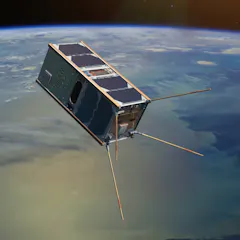
We don’t need another review of Australia’s space industry, we just need a space agency.
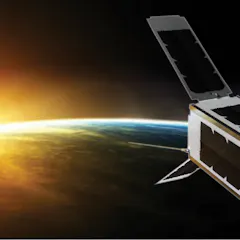
Australia’s hoping to take a share of the billion-dollar space industry with the launch of its first totally Australian-built satellites in 15 years.
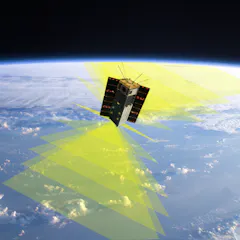
As technology advances, tiny satellites no bigger than a loaf of bread have advanced from just proving they work to being big contributors in answering science questions.
Top contributors
-
 Andrew Dempster is a Friend of The Conversation.
Director, Australian Centre for Space Engineering Research; Professor, School of Electrical Engineering and Telecommunications, UNSW
-
Professor of Physics, UMass Lowell
-
Research Fellow, The Open University
-
Assistant Professor of Computer Science, North Dakota State University
-
Professor of Advanced Technology Transitions, Arizona State University
-
Ph.D. Student in the Human and Social Dimensions of Science and Technology, Arizona State University
-
Associate Professor in Astronomy, Monash University
-
PhD Student in Renewable Energy Storage, Swansea University
-
Researcher in the School of Physics and Astronomy, University of Leicester
-
Senior Engineer, Curtin University
-
Assistant Professor of Global Security, American University School of International Service
-
Associate Professor, UNSW
-
Professor of Robotics, Head of Centre for Robotics Research, King's College London
-
Lecturer in space and military law and strategy, UNSW
-
Professor of Astronautics, University of Southern California