

Seasonality sets the rhythms of life – and can have surprising consequences for ecology and evolution
Articles on Satellites
Displaying 41 - 60 of 301 articles
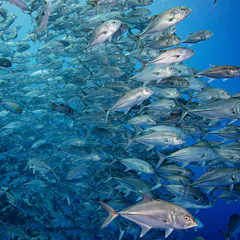
Satellite technology that can track ships even when they ‘go dark’ finds that those protected areas that fully ban industrial fishing are succeeding, even if others aren’t.
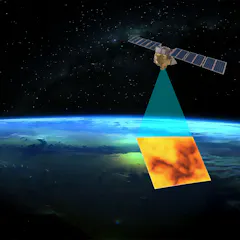
MethaneSat was developed to spot emission hot spots of invisible methane pollution from space. Without it, accurate methane monitoring will be incredibly difficult.
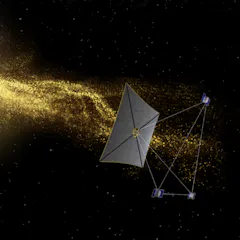
As more satellites are launched into orbit, space agencies are looking at how to predict space weather events that could harm them.
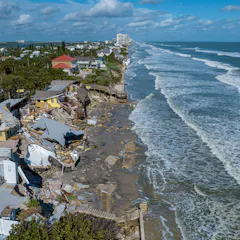
The Defense Meteorological Satellite Program has been particularly important for understanding when a hurricane is about to rapidly intensify, a dangerous situation for coastal communities.
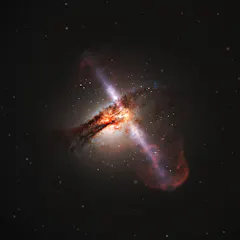
The satellites the world relies on for navigation, communication and more get their bearings from distant black holes – but radio noise is blurring the picture.
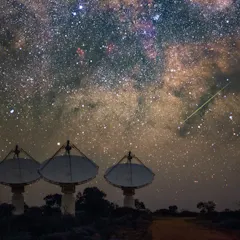
The quest to pin down the source of the burst led to a derelict 60-year-old satellite.

Musk’s ability to switch satellite communications on and off can make a considerable difference to sensitive situations.
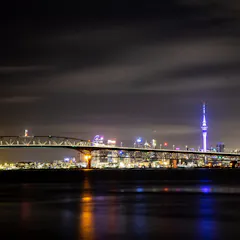
About half of all New Zealanders can no longer see the Milky Way in winter due to light pollution from ever brighter cities and expanding satellite constellations.
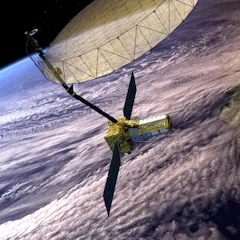
The NISAR satellite will be able to detect centimetre-sized changes on Earth’s surface, providing crucial data for agriculture and climate modelling.

The popular satellite internet service is helpful for education and disaster relief in remote island communities.
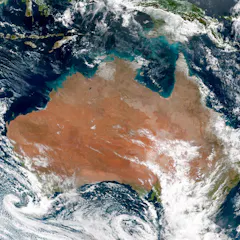
Australia relies on satellites it doesn’t own – which creates a risky situation.
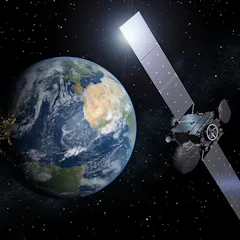
The extraordinary potential of quantum computers also threatens the security systems that keep our digital world safe.
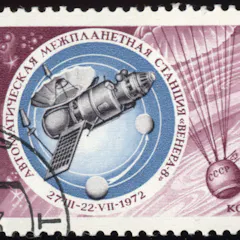
The Soviet Union launched Kosmos 482 towards Venus in 1972. But all didn’t go to plan.
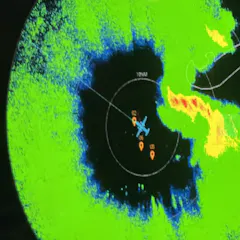
A meteorologist explains three essential components of NOAA hurricane data collection that forecasters everywhere rely on yet are being targeted for federal cuts.

Satellites can now track the deep ocean currents around Antarctica that could accelerate climate change.

Space is becoming “increasingly contested”, according to military experts.
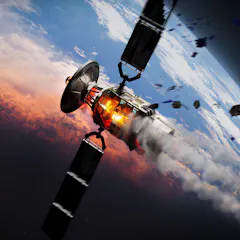
The number of satellites is exploding, and we still don’t have a fully safe way to dispose of them.
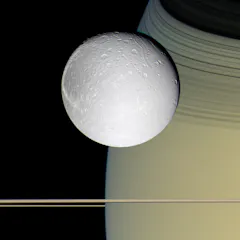
The number of known moons in our Solar System has been rising for centuries, but astronomers say it has probably peaked – for now.
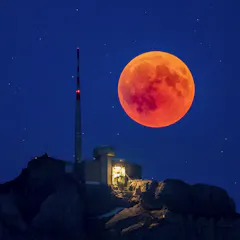
A full moon, low on the horizon, tinted red – it’s a sight not to be missed.
Top contributors
-

Associate Professor, Astronomy, University of Regina
-
Professor, Physics and Astronomy, University of British Columbia
-
Andrew Dempster is a Friend of The Conversation.
Director, Australian Centre for Space Engineering Research; Professor, School of Electrical Engineering and Telecommunications, UNSW
-
Associate Professor in Archaeology and Space Studies, Flinders University
-
Associate Professor in Astronomy, Monash University
-
Associate Professor of International Affairs, Georgia Institute of Technology
-
Lecturer in space and military law and strategy, UNSW
-
Chief Executive Officer, Australasian Centre for Space Governance; Associate Expert, National Security College, Australian National University
-
Emeritus Professor of International Law, Western Sydney University
-
Adjunct Senior Research Fellow in Environmental Law, University College Dublin
-
Associate Professor, RMIT University
-
Space Plasma Physicist, Imperial College London
-
University Distinguished Professor of Astronomy, University of Arizona
-
Scientific Officer, Obafemi Awolowo University
-
Director, Bushfire Research Centre of Excellence, Australian National University