
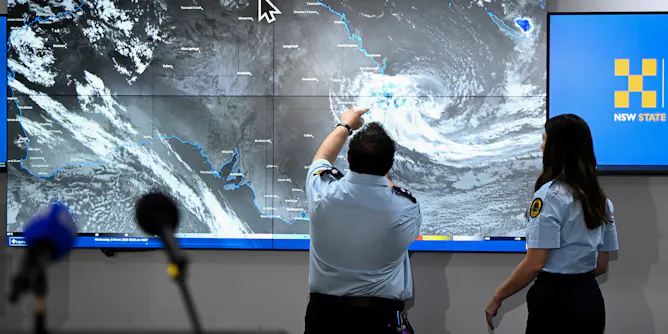
Both geostationary and polar orbiting satellites collect data in the visible and infrared regions. There are polar satellites collecting data in the microwave range.
Articles on Satellites
Displaying 61 - 80 of 301 articles

An overhaul of the mobile network could help us send texts and make calls in even the remotest areas. But there are technical challenges we’d need to overcome.
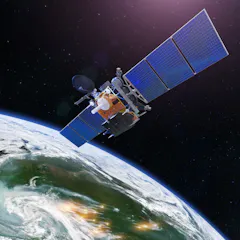
From space, scientists can track everything from sea levels or greenhouse gases to infectious bacteria or water stored underground.
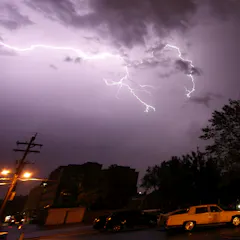
Lightning can be used to probe Earth’s dynamic Van Allen radiation belts, directly connecting terrestrial weather and space weather.
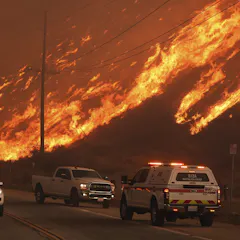
Fire spotters used to watch with binoculars from forest towers. Now, technology can help forecast fire behavior, but human experience is still essential.
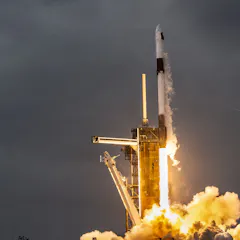
A rocket needs to overcome the force of gravity to leave Earth behind.
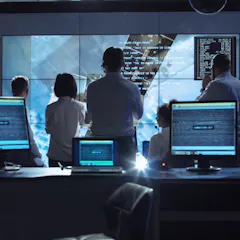
This year should see the first working prototype of a data centre designed for space.
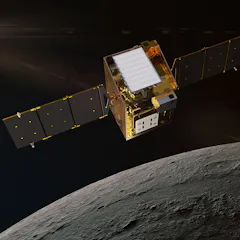
Lunar Trailblazer is planned to launch on the first Commercial Lunar Payload Services mission of 2025.
The Sun’s activity is what gives us beautiful auroras – but it also has dramatic negative effects on satellites that go around Earth in a low orbit.
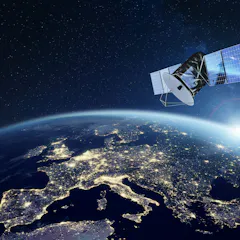
Europe’s first multi-orbital satellite network aims to provide secure EU governmental communications. It will consist of some 300 satellites and is scheduled for full implementation by 2030.
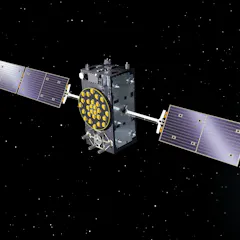
The Galileo satellite project brought major players in the European space industry into “coopetitive” relationships. Effective governance is key to managing the tensions inherent in such undertakings.

From creating the Space Force to blocking weapons testing in space, both Trump and Harris have extensive records on space policy to examine .
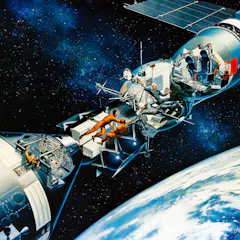
The latest ‘space race’ between the US and China aims to get people back on the Moon. But the path to get there doesn’t have to be rife with conflict.
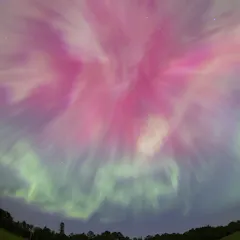
Geomagnetic storms occur fairly often. Minor ones happen multiple times per year.

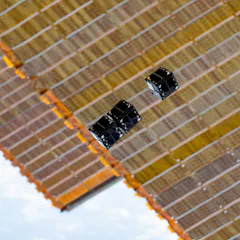
CubeSats have already visited the Moon and Mars and are key components of upcoming deep space missions.
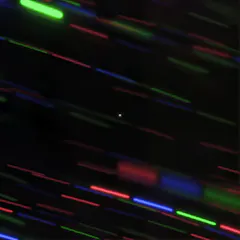
A large space rock will be temporarily captured by Earth’s gravity throughout October and November.
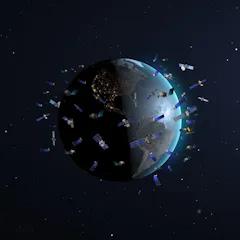
The space missions of the future will need to coordinate multiple satellites and spacecraft − and figure out how to refuel, repair and even replace them in orbit.
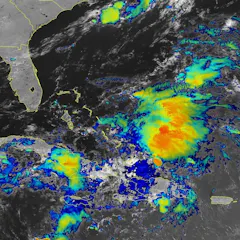
New techniques are helping forecasters spot potentially dangerous storms earlier than ever.
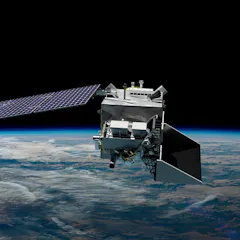
New US legislation could force Nasa to include enhanced cybersecurity for all its spacecraft.

As the number of satellites and rocket launches increases, so does the amount of discarded rockets and components. This space junk risks falling to Earth, as it did in Saskatchewan this spring.
Top contributors
-

Associate Professor, Astronomy, University of Regina
-
Professor, Physics and Astronomy, University of British Columbia
-
Andrew Dempster is a Friend of The Conversation.
Director, Australian Centre for Space Engineering Research; Professor, School of Electrical Engineering and Telecommunications, UNSW
-
Associate Professor in Archaeology and Space Studies, Flinders University
-
Associate Professor in Astronomy, Monash University
-
Associate Professor of International Affairs, Georgia Institute of Technology
-
Lecturer in space and military law and strategy, UNSW
-
Chief Executive Officer, Australasian Centre for Space Governance; Associate Expert, National Security College, Australian National University
-
Emeritus Professor of International Law, Western Sydney University
-
Adjunct Senior Research Fellow in Environmental Law, University College Dublin
-
Associate Professor, RMIT University
-
Space Plasma Physicist, Imperial College London
-
University Distinguished Professor of Astronomy, University of Arizona
-
Scientific Officer, Obafemi Awolowo University
-
Director, Bushfire Research Centre of Excellence, Australian National University