

If SpaceX launches one million new satellites, it will increase atmospheric pollution and risk of falling debris. And we will see more satellites than stars.
Articles on Satellites
Displaying 21 - 40 of 301 articles
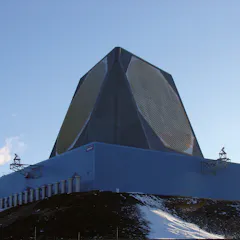
Tracking Iranian missiles and drones requires a network of satellites and numerous radars on land, sea and air.
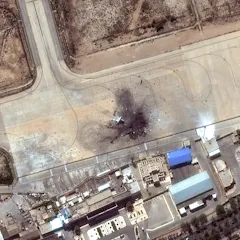
A new treaty on military space operations is highly unlikely, leaving private companies and militaries to define the boundaries of acceptable conduct in war.
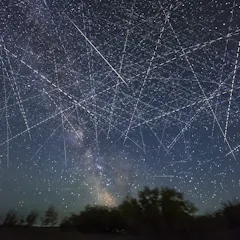
Planned ‘megaconstellations’ of satellites could cause unforeseen harm to the ozone layer and climate systems. Global regulation is needed before it’s too late.
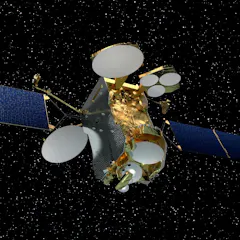
Two Russian satellites appear to have been shadowing European spacecraft in Earth orbit.
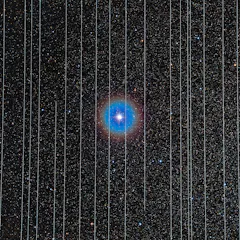
Cultural, spiritual, and most environmental impacts aren’t taken into account when launching thousands of satellites.
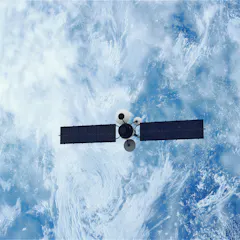
The closer to Earth a satellite flies, the clearer a picture it can take of the surface. But low-flying satellites also have to deal with atmospheric drag.

Google’s Project Suncatcher would need sophisticated collision avoidance capabilities to navigate a junk-filled landscape.
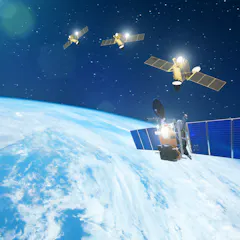
Google plans to start experimenting with data centres in space in just over a year, while SpaceX and Blue Origin are also talking up the possibilities.
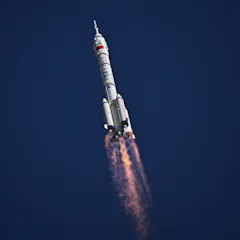
China has created more space debris than any other country. But as its space program grows, it has more to lose from a collision than ever before.

As Australia faces longer, more erratic fire seasons, tools like this may prove essential for staying one step ahead of the flames.
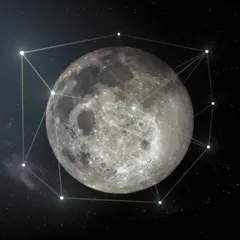
The US doesn’t currently have much ability to monitor what’s going on in the space around the Moon. An effort by the Air Force Research Laboratory could help.
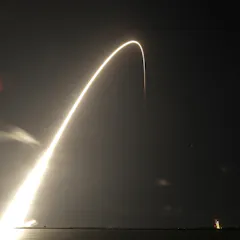
While a recent executive order directed the Department of Commerce to elevate this office, budgetary actions threaten it.
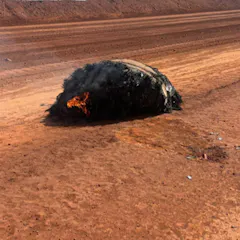
A piece of a suspected rocket found on fire in Western Australia highlights the growing problem of space junk – and how humanity is dealing with it.

Using satellites and AI, scientists have mapped wildebeest across the Serengeti-Mara, offering a new perspective on how this movement can be monitored from space.
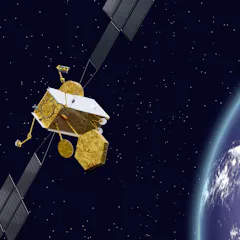
Satellites can carry out jamming and intelligence gathering from other spacecraft.
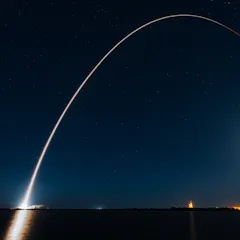
Satellites beaming sunlight down to Earth sound like science fiction – and they have astronomers very worried.
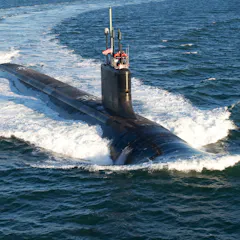
New technology could leave few places for submarines to hide.
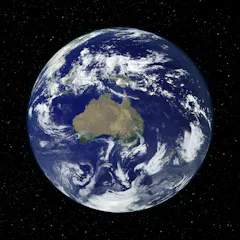
Every single day, space technology impacts our lives. But a new report reveals gaps between what Australians think and what they know about space.

Small farms will have the hardest time meeting the rules, giving big producers an edge. One potential solution: agroforestry, growing coffee plants among the trees.
Top contributors
-

Associate Professor, Astronomy, University of Regina
-
Professor, Physics and Astronomy, University of British Columbia
-
Andrew Dempster is a Friend of The Conversation.
Director, Australian Centre for Space Engineering Research; Professor, School of Electrical Engineering and Telecommunications, UNSW
-
Associate Professor in Archaeology and Space Studies, Flinders University
-
Associate Professor in Astronomy, Monash University
-
Associate Professor of International Affairs, Georgia Institute of Technology
-
Lecturer in space and military law and strategy, UNSW
-
Chief Executive Officer, Australasian Centre for Space Governance; Associate Expert, National Security College, Australian National University
-
Emeritus Professor of International Law, Western Sydney University
-
Adjunct Senior Research Fellow in Environmental Law, University College Dublin
-
Associate Professor, RMIT University
-
Space Plasma Physicist, Imperial College London
-
University Distinguished Professor of Astronomy, University of Arizona
-
Scientific Officer, Obafemi Awolowo University
-
Director, Bushfire Research Centre of Excellence, Australian National University