
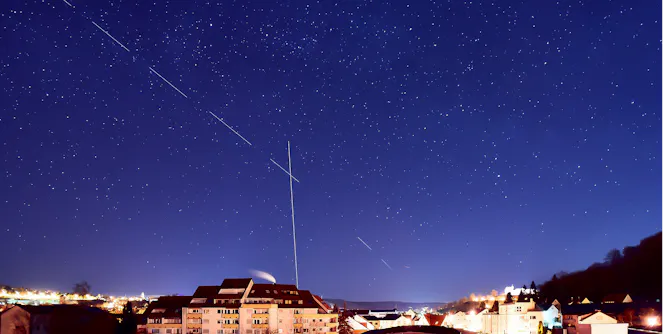
Megaconstellations of satellites will visually clutter the night sky, disrupting astronomical research. And the environmental damage caused by these satellites is still unknown.
Articles on Satellites
Displaying 161 - 180 of 301 articles
Australia’s bushfire response relies on foreign satellites, which are not designed to assess our highly flammable eucalypt-clad landscapes.

Activities in space today are far more numerous and complicated compared to 1967, before humans had landed on the moon or Elon Musk had been born. Two experts explain the need for better laws to keep space peaceful.
Russia’s testing of an anti-satellite weapon risked the life of astronauts on the International Space Station and could have astronomical impacts on Earth.
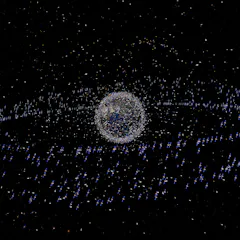
A Russian satellite has been destroyed in a missile strike, creating a vast amount of debris that joins the tens of thousands of pieces already in orbit around the Earth.
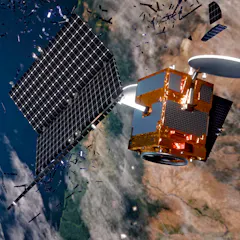
Russia destroyed one of its old satellites during a successful test of an anti-satellite weapon. A space security expert explains what this weapon was and the dangers of the expanding debris field.

International space law doesn’t explicitly prohibit anti-satellite missile tests — which makes uproar over Russia’s actions all the more significant.
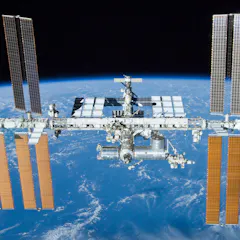
A close call for the International Space Station highlights the growing problem of space junk putting satellites at risk.
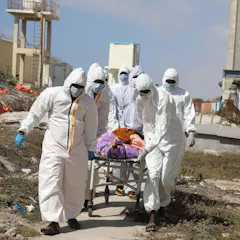
Satellite imagery can help to get data in fragile, crisis-affected situations.
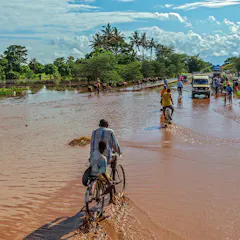
New technologies can help reduce the cost of producing maps that warn where floods might happen.

The CUAVA-1 cubesat will monitor space weather and changes to Earth’s ionosphere that affect satellites and electronics.
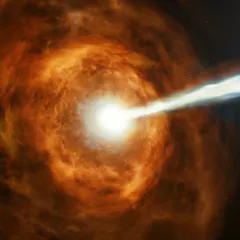
Did we observe the most distant gamma ray burst yet seen, or was it something closer to home?

What did Mercury look like as BepiColombo swung by?

In the past decade, the number of satellites in orbit has skyrocketed thanks to tiny electronics and cheap launches. The crowded night sky is posing problems for astronomers and astronauts.
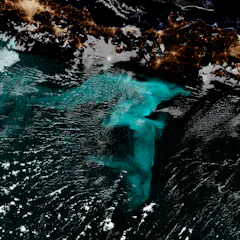
When conditions are just right in some parts of the Indian Ocean, a type of bacteria will multiply and start to glow. Satellites are helping scientists study these milky seas for the first time.
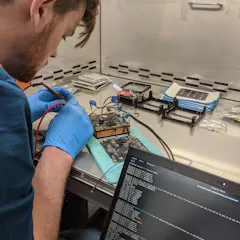
The Binar-1 mission is the first in a series that will hopefully culminate in a mission to the Moon, with satellites developed using know-how gained from designing tough instruments for the WA outback.
An expert says Nigeria’s capacity to access space support for development and security will be affected if its satellite goes down.
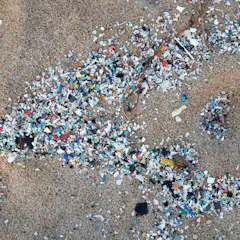
New research suggests that an effective way to locate and track large concentrations of microplastics in the ocean could be from high in the sky.
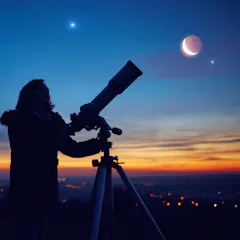
As thousands of new satellites enter Low Earth Orbit, it’s important to consider their potential impact, including possible environmental damage in addition to hindering the work of astronomers.
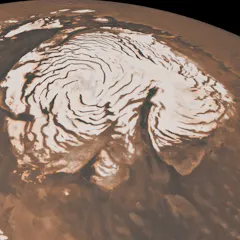
New results show why and how water is disappearing from Mars atmosphere.
Top contributors
-

Associate Professor, Astronomy, University of Regina
-
Professor, Physics and Astronomy, University of British Columbia
-
Andrew Dempster is a Friend of The Conversation.
Director, Australian Centre for Space Engineering Research; Professor, School of Electrical Engineering and Telecommunications, UNSW
-
Associate Professor in Archaeology and Space Studies, Flinders University
-
Associate Professor in Astronomy, Monash University
-
Associate Professor of International Affairs, Georgia Institute of Technology
-
Lecturer in space and military law and strategy, UNSW
-
Chief Executive Officer, Australasian Centre for Space Governance; Associate Expert, National Security College, Australian National University
-
Emeritus Professor of International Law, Western Sydney University
-
Adjunct Senior Research Fellow in Environmental Law, University College Dublin
-
Associate Professor, RMIT University
-
Space Plasma Physicist, Imperial College London
-
University Distinguished Professor of Astronomy, University of Arizona
-
Scientific Officer, Obafemi Awolowo University
-
Director, Bushfire Research Centre of Excellence, Australian National University