
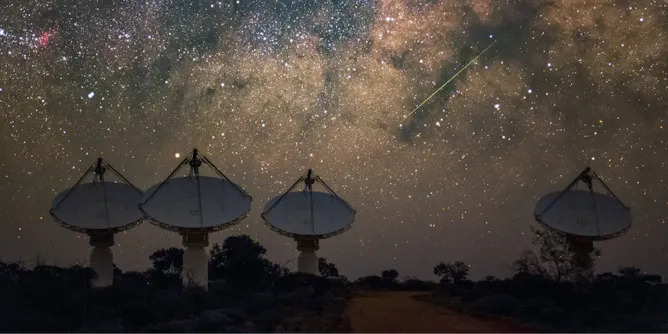
The quest to pin down the source of the burst led to a derelict 60-year-old satellite.
Articles on Radio telescope
Displaying 1 - 20 of 40 articles

The SKA-Low radio telescope in Western Australia is slowly coming online. It will probe the shape of the universe and study cosmic mysteries.

The best spots on the Moon for lunar bases are the same spots where scientists want to build telescopes − can these two interests coexist?
Projects under NASA’s CLPS program – including the Odysseus lander that made it to the lunar surface – will probe unexplored questions about the universe’s formation.
Artificial intelligence tools are making waves in almost every aspect of life, and astronomy is no different. An astronomer explains the history and future of AI in understanding the universe.
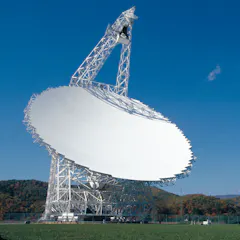
Many telescopes use the radio spectrum to learn about the cosmos. Just as human development leads to more light pollution, increasing numbers of satellites are leading to more radio interference.

Our galaxy should be full of traces of dead stars. Until now, we have found surprisingly few of these supernova remnants, but a new telescope collaboration is changing that.
The technology of an advanced alien civilization is likely to produce many signs that could be detected across the vastness of space. Two astronomers explain the search for technosignatures.
Astronomers studying fast radio bursts recently discovered one that repeats, has a persistent radio signal and originated in a galaxy much closer than it should have.

Fanaroff is one of the key individuals responsible for the current growth and strength of astronomy in South Africa.
Organic human-level intelligence may be just a brief interlude in human history before the machines take over.
Australian astronomers are part of a prize-winning team that was the first to pinpoint the location of a fast radio burst. But there is much we still don’t know about these mysterious bursts.
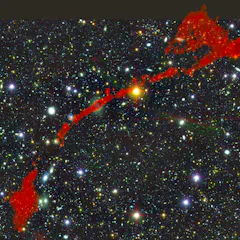
Based on what we currently know about the density of giant radio galaxies in the sky, the probability of finding two of them in this region is extremely small.
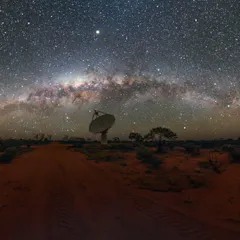
Visitors are discouraged from the remote desert location where powerful telescopes are listening to the universe.
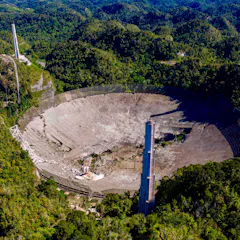
The collapse of the Arecibo Observatory in Puerto Rico was a result of financial neglect – and was a long time coming.
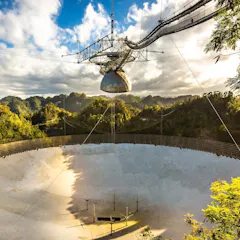
The Arecibo radio telescope has collapsed but its amazing discoveries will live on.
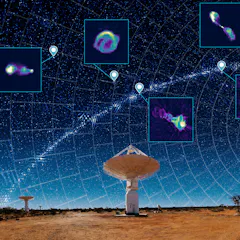
Researchers have spotted millions of galaxies in the most detailed radio survey of the southern sky ever conducted. It has smashed previous records for survey speed.
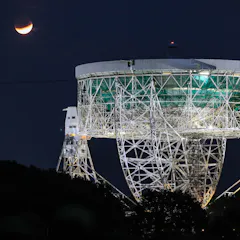
Radio telescopes are incredibly sensitive to phone network interference.
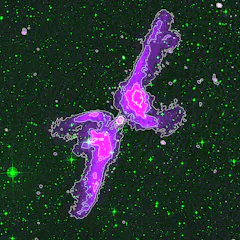
Like a cosmic butterfly in the sky, radio galaxy PKS 2014-55 was observed by CSIRO researchers with the Australian SKA Pathfinder telescope.
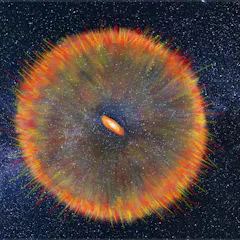
This observation means astronomers can now develop and test theories that explain how high-mass stars gain their mass.
Top contributors
-

Professor, Radio Astronomy, University of Sydney
-
CSIRO
-
Professor, Swinburne University of Technology, Swinburne University of Technology
-
Post-doctoral researcher in Astrophysics, University of the Western Cape
-
Professor of Extragalactic Astronomy, Head of the Astrophysics Group, University of Bath
-
Lecturer, University of Cape Town
-
Manager of the Ghana Radio Telescope Observatory, Ghana Space Science and Technology Institute
-
Lecturer in Astronomy and Astrophysics, Technical University of Kenya
-
PhD Student, University of Cape Town
-
Professor of Astronomy, University of Hertfordshire
-
PhD student in astrophysics, University of Cambridge
-
Honorary Fellow, Space and Astronomy, CSIRO; Western Sydney University
-
Professor in Physics and Astronomy, UNSW
-
Professor of Physics, University of Wisconsin-Milwaukee
-
Professor, University of KwaZulu-Natal