
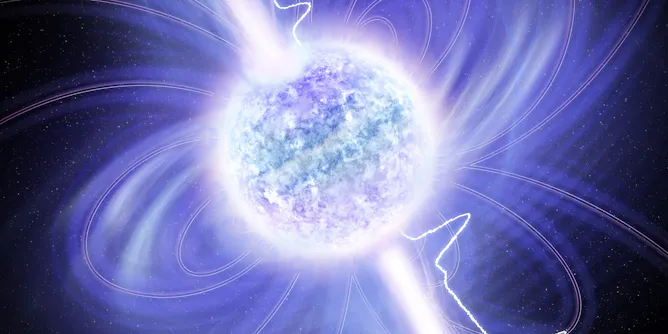
The slowest ‘cosmic lighthouse’ ever found challenges our understanding of how neutron stars work.
Articles on Neutron stars
Displaying 1 - 20 of 47 articles
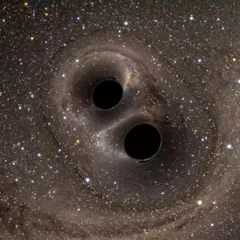
Most objects in the universe have been around for way longer than modern astronomy – digging into historical records can help scientists shed light on a cosmic mystery.
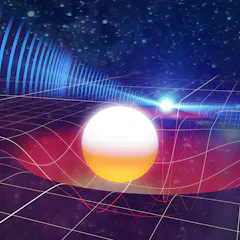
Neutron stars contain some of the universe’s most exotic states of matter – but there’s no easy way to peek inside.
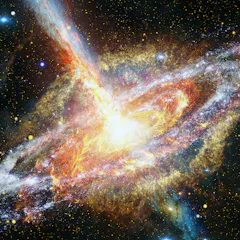
A slowly flickering source of radio waves that changes over time might be a neutron star or a white dwarf – but its behaviour doesn’t quite fit any of our theories.
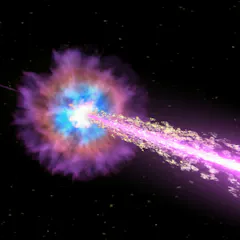
Analysis of two major cosmic blasts deepens the mystery of where the universe’s ‘heavy’ elements come from.

Where specialized algorithms fail to classify star-borne pulses, human volunteers with just a little training can step in.

Astronomers caught the bizarre ‘awakening’ of an incredibly rare magnetic star.

Some ancient texts record what were likely dying stars, faintly visible from Earth. If close enough, these events can disturb telescopes and even damage the ozone layer.
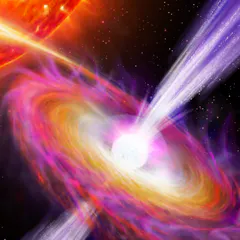
Powerful jets are launched from the most massive objects in our universe, but we don’t fully understand how. This measurement gets us a step closer to solving the mystery.
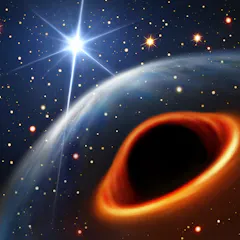
It’s too heavy to be a neutron star and too light to be a black hole. So what is it?
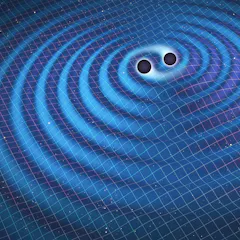
Upgrades to the hardware and software of the advanced observatory should allow astrophysicists to detect much fainter gravitational waves than before.
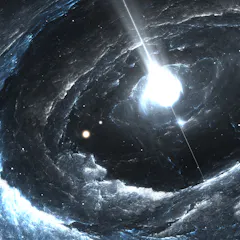
Magnetic fields billions of light years away offer clues to the nature of intense flashes from the sky known as fast radio bursts.

For years, astronomers have been detecting incredibly powerful pulses from the cosmos, without a confirmed source. Recent advances in astronomy are getting us closer to the solution.
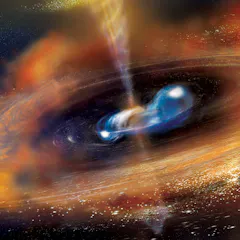
Gamma-ray bursts occur when a massive star explodes or when two neutron stars merge. A newly discovered burst has puzzled astronomers, as it lasted much longer than astronomers would have expected.
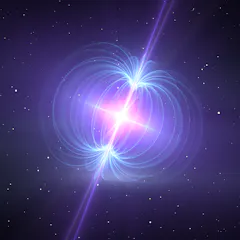
The object has a highly unusually long rotation period, and was found in an area we call the neutron star ‘graveyard’.

A mysterious repeating signal from our galactic backyard is a reminder the universe is full of unexpected surprises, if only we should look.
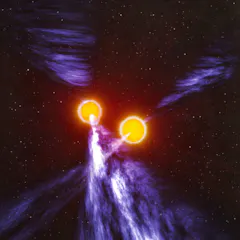
Astronomers watched a pair of pulsars for 16 years to test the theory of general relativity, which has stood unchallenged for over a century.
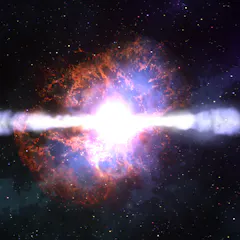
The discovery of an ancient star in the Milky Way’s halo is providing evidence for another source that would have produced the galaxy’s heavy elements.

The aftermath of a black hole colliding with a neutron star has been recorded on Earth.
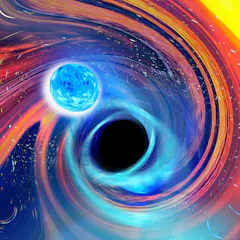
Gravitational waves reveal the demise of super-dense neutron stars spiralling into their black hole companions - the first time such strange and exotic star systems have ever been observed.
Top contributors
-

Emeritus Professor, ARC Centre of Excellence for Gravitational Wave Discovery, OzGrav, The University of Western Australia
-
Professor, Radio Astronomy, University of Sydney
-
Senior Lecturer in Astrophysics, University of Sydney
-
Professor of Physics, University of Wisconsin-Milwaukee
-
Lecturer In Pulsar Astrophysics, University of Manchester
-
Professor, Curtin Institute of Radio Astronomy, Curtin University
-
Associate Professor in Astrophysics, Monash University
-
Professor of Physics, Penn State
-
Professor of Theoretical Physics, Australian National University
-
Professor of Gravitational Astrophysics and Cosmology, University of Glasgow
-
Professor of Physics, Syracuse University
-
Academic, Research School of Astronomy and Astrophysics, Australian National University
-
Research Associate Professor of Astronomy, Wesleyan University
-
Professor of Nuclear Physics, Michigan State University
-
OzGrav Associate Investigator; Research Fellow in Astrophysics, The University of Western Australia