
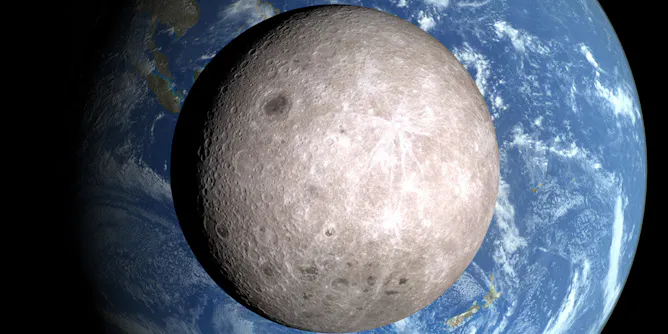
The current race to the Moon is opening up opportunities for lunar astronomy.
Articles on Radio astronomy
Displaying 41 - 60 of 130 articles
Machine learning is becoming an indispensable tool in astronomy by sorting through enormous datasets from telescopes.
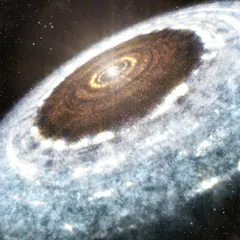
Astronomers have long known where water is first formed in the universe and how it ends up on planets, asteroids and comets. A recent discovery has finally answered what happens in between.
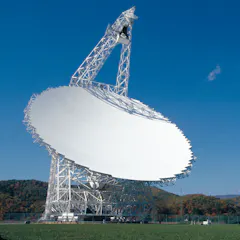
Many telescopes use the radio spectrum to learn about the cosmos. Just as human development leads to more light pollution, increasing numbers of satellites are leading to more radio interference.

Astronomers have detected a radio glow caused by shockwaves in the gigantic filaments between galaxy clusters in the ‘cosmic web’ which pervades the Universe.
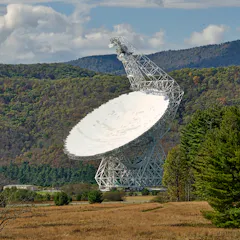
Can artificial intelligence transform the search for alien intelligence?
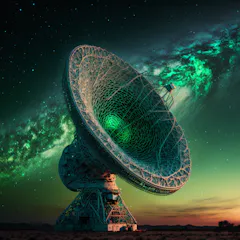
AI’s ability to identify ‘technosignatures’ missed by classical algorithms is an exciting step forward for radio astronomers.
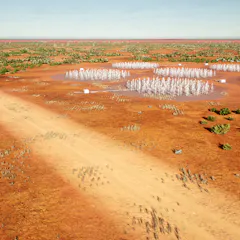
Hundreds of thousands of antennas across the Western Australian outback will transform our view of the Universe.
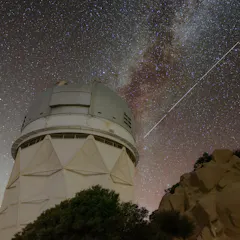
The stars, planets and Milky Way we see at night are part of a wilderness shared across the globe and across centuries. But does BlueWalker 3 herald a night sky polluted with bright satellites?
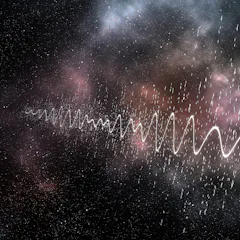
The technology of an advanced alien civilization is likely to produce many signs that could be detected across the vastness of space. Two astronomers explain the search for technosignatures.

Radio telescopes produce enormous amounts of data, and we need immense computing power to produce even a single image like this one.
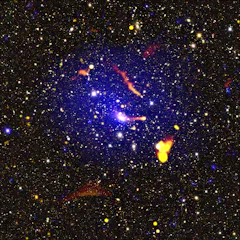
One of the objects is a ‘fossil’ radio source – a leftover from the death of a supermassive black hole that once shot out huge jets of plasma.

Through direct comparison with images from Hubble, you can start to see the exquisite detail and clarity Webb provides.

Have astronomers finally found evidence of intelligent found life beyond Earth?
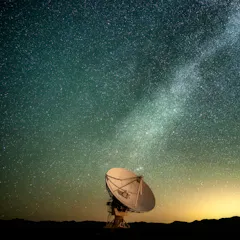
Astronomers studying fast radio bursts recently discovered one that repeats, has a persistent radio signal and originated in a galaxy much closer than it should have.
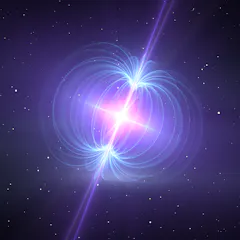
The object has a highly unusually long rotation period, and was found in an area we call the neutron star ‘graveyard’.

Fanaroff is one of the key individuals responsible for the current growth and strength of astronomy in South Africa.
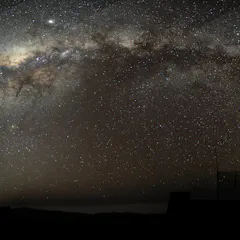
This year, two groups of astronomers plan to send messages containing information about humans and the location of Earth toward parts of space they think may be home to intelligent life.
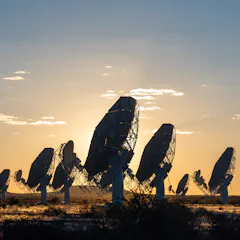
Complementary science will be at the heart of the Square Kilometre Array.
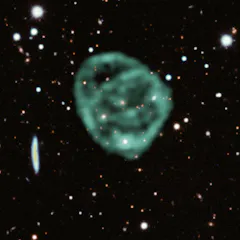
Next-generation radio telescopes unravel the mysteries of ghostly circles in the sky.
Top contributors
-

Professor, Radio Astronomy, University of Sydney
-
Honorary Fellow, Space and Astronomy, CSIRO; Western Sydney University
-
CSIRO
-
John Curtin Distinguished Professor (Radio Astronomy), Curtin University
-
Professor in Physics and Astronomy, UNSW
-
Professor at the International Centre for Radio Astronomy Research (ICRAR), The University of Western Australia
-
Postdoctoral Researcher in Radio Astronomy, University of Sydney
-
Senior research fellow, Curtin University
-
Radio Astronomer, Curtin University
-
Sir Bernard Lovell chair of Astrophysics, University of Manchester
-
Professor of Physics, University of Wisconsin-Milwaukee
-
Professor of Extragalactic Astronomy, Head of the Astrophysics Group, University of Bath
-
Senior Lecturer in Astrophysics, University of Sydney
-
Lecturer, University of Cape Town
-
Director, Astronomy and Space Science, CSIRO