
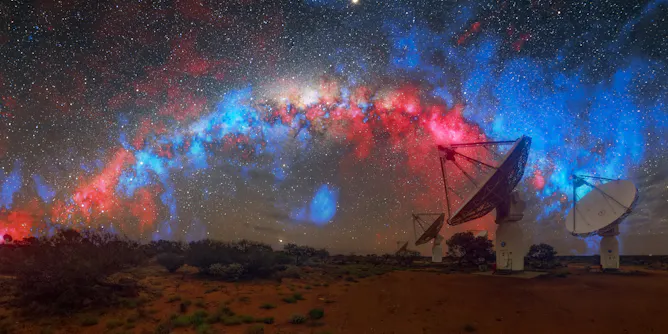
The best map yet of cosmic magnetic fields has been created with Australia’s most powerful radio telescope.
Articles on ASKAP
Displaying 1 - 20 of 32 articles

Seeing a signal in different kinds of light is like having a text written in several forms of writing – it makes it easier to decipher.

New radio astronomy results reveal how galaxies exchange gas with the intergalactic medium – the raw material for stars and the key to galactic evolution.
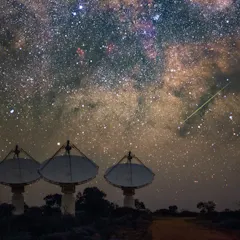
The quest to pin down the source of the burst led to a derelict 60-year-old satellite.

The object doesn’t resemble any known type of star or system in the Milky Way.
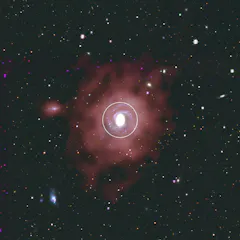
A new, more detailed study of 1,000 distant galaxies explains why some gas-rich galaxies don’t produce as many stars as you’d expect.
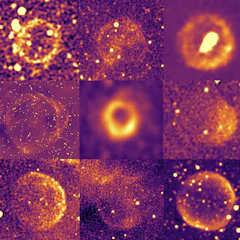
The newest generation of radio telescopes can detect objects so faint, we’ve never seen them before.
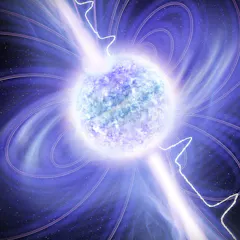
The slowest ‘cosmic lighthouse’ ever found challenges our understanding of how neutron stars work.
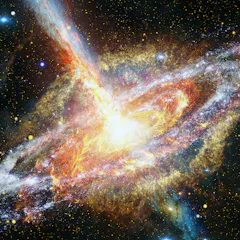
A slowly flickering source of radio waves that changes over time might be a neutron star or a white dwarf – but its behaviour doesn’t quite fit any of our theories.
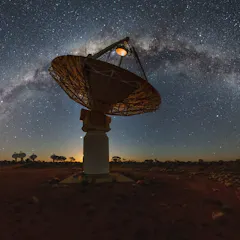
Do all big black holes in very massive galaxies emit radio waves? We used the latest radio telescopes to find out.
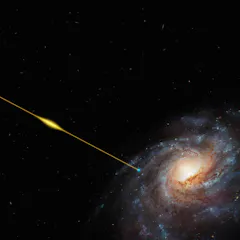
A record-breaking discovery of an extreme ‘fast radio burst’ opens a window into the early universe.
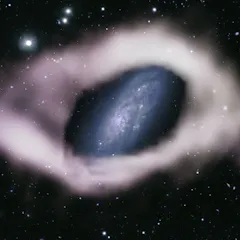
New ASKAP images reveal a giant hydrogen ring around the spiral galaxy NGC 4632.
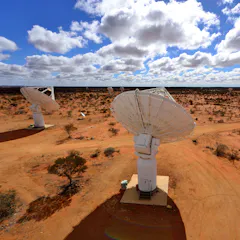
One of the few examples of a fast radio burst and the slow-moving, star forming gas in its origin galaxy has been linked together – thanks to observations from a CSIRO telescope.

For years, astronomers have been detecting incredibly powerful pulses from the cosmos, without a confirmed source. Recent advances in astronomy are getting us closer to the solution.

Our galaxy should be full of traces of dead stars. Until now, we have found surprisingly few of these supernova remnants, but a new telescope collaboration is changing that.
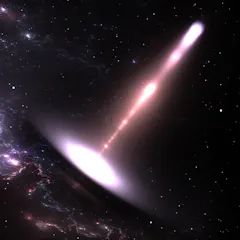
Over 1 million light-years end to end, the pressurised jet shoots away from a central black hole in a nearby galaxy.

Radio telescopes produce enormous amounts of data, and we need immense computing power to produce even a single image like this one.
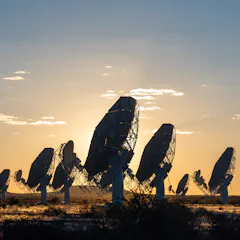
Complementary science will be at the heart of the Square Kilometre Array.
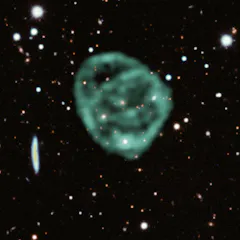
Next-generation radio telescopes unravel the mysteries of ghostly circles in the sky.

Fluctuating radio waves that appear to come from near the heart of the Milky Way are a new puzzle for astronomers.
Top contributors
-

Honorary Fellow, Space and Astronomy, CSIRO; Western Sydney University
-
Associate Lecturer, Curtin Institute of Radio Astronomy (CIRA), Curtin University
-
CSIRO
-
Professor, Radio Astronomy, University of Sydney
-
Professor, Western Sydney University
-
Senior Lecturer (astronomy and astroparticle physics), Curtin University
-
Senior Lecturer in Astrophysics, University of Sydney
-
Astronomer, CSIRO
-
CSIRO
-
-
Professor, Swinburne University of Technology, Swinburne University of Technology
-
Professor of Astronomy, Macquarie University
-
Senior Lecturer in Physics, Western Sydney University
-
Research scientist, CSIRO
-
Research Scientist, Space and Astronomy, CSIRO