

Scientists have discovered the most distant hydroxyl megamaser ever detected. This is a natural space laser.
Articles on Square Kilometre Array
Displaying 1 - 20 of 57 articles
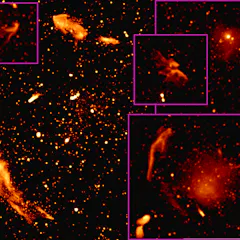
South Africa is using homegrown technology to answer questions about where our universe came from and where it is going.
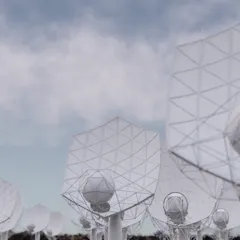
The world’s largest space telescope, comprising thousands of antennae in the southern hemisphere, will generate massive amounts of data — some of which will be processed in Canada.

The SKA-Low radio telescope in Western Australia is slowly coming online. It will probe the shape of the universe and study cosmic mysteries.
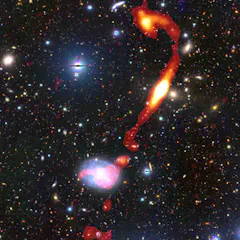
It’s been a bit troublesome to understand the physics behind what’s going on with Inkathazo.
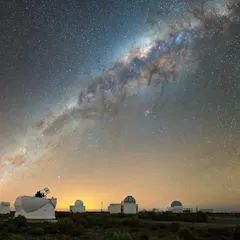
The first International Astronomical Union General Assembly was held just over 100 years ago, in Rome, Italy.

MeerKAT has made remarkable contributions to South African and international science.
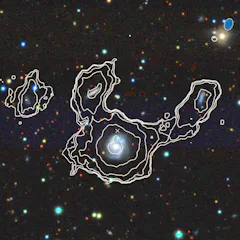
An attempt to study gas in one galaxy with the MeerKAT radio telescope detected 49 other galaxies instead.
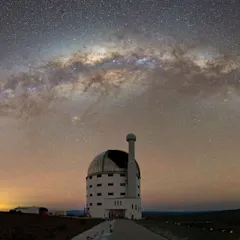
The astronomical community has thrived and world-class astronomical facilities have been established in South Africa.
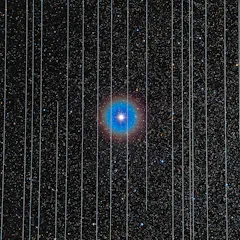
Starlink satellites emit bright, unintended and unexpected signals that can be detected by radio telescopes.

Canada’s partnership in the world’s largest radio telescope, located in South Africa and Australia, creates new opportunities for research, but the benefits go beyond astronomy.

To the ǀXam and San people, being in the world as a person includes “the sky’s things” - an understanding of and deep connection with the cosmos.
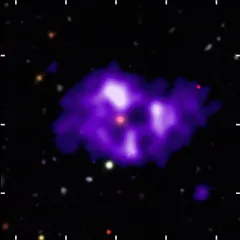
Machine learning is becoming an indispensable tool in astronomy by sorting through enormous datasets from telescopes.
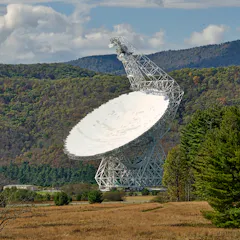
Can artificial intelligence transform the search for alien intelligence?
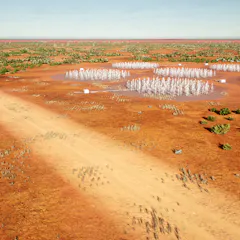
Hundreds of thousands of antennas across the Western Australian outback will transform our view of the Universe.

Fanaroff is one of the key individuals responsible for the current growth and strength of astronomy in South Africa.
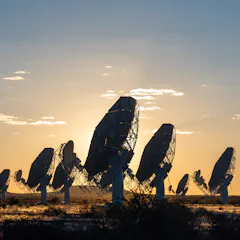
Complementary science will be at the heart of the Square Kilometre Array.
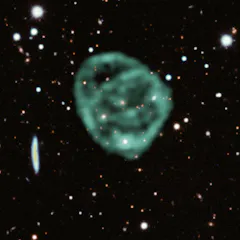
Next-generation radio telescopes unravel the mysteries of ghostly circles in the sky.
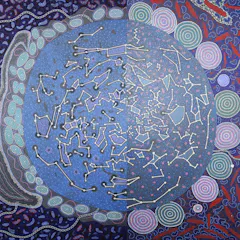
A new 3D film follows two children as they discover the astrophysical story of the universe and Yamaji stories of the sky and land. Making it was an extraordinary cross-cultural experience.

Technology is allowing astronomers to study and analyse galaxies in far more detail than was previously possible.
Top contributors
-

John Curtin Distinguished Professor (Radio Astronomy), Curtin University
-
Australian Government Women in STEM Ambassador, Professor of Practice, UNSW
-
Professor, Radio Astronomy, University of Sydney
-
Distinguished Professor, Australian National University
-
Lecturer, University of Cape Town
-
SKA-Low Senior Commissioning Scientist and Adjunct Associate Professor, Curtin Institute of Radio Astronomy, Curtin University
-
Dean of Science, University of California, Santa Cruz
-
ARC Laureate Fellow, Swinburne University of Technology
-
Post-doctoral researcher in Astrophysics, University of the Western Cape
-
SKA Postdoc in Observational Cosmology, University of the Western Cape
-
Postdoctoral Fellow in High Energy Astro-particle physics
-
Science Engagement Astronomer, South African Astronomical Observatory, National Research Foundation
-
Honorary Research Fellow, CSIRO
-
Neurosurgeon and Director Monash Institute of Medical Engineering, Monash University
-
Vice-Chancellor, University of Newcastle