
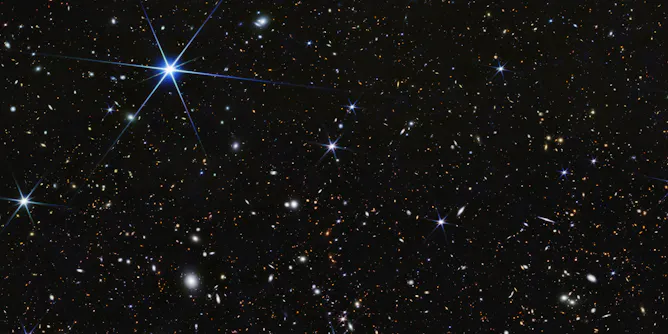
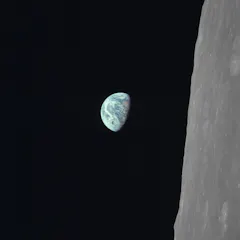
To travel between solar systems, a spacecraft would need extremely sophisticated – if not impossible – technology.
Articles on SETI
Displaying 1 - 20 of 58 articles

The fictional biologist in ‘Project Hail Mary’ claims that potential alien organisms might not be made of carbon or require water, unlike life on Earth.

Radio astronomy opened up the universe for scientists. They could map new elements across galaxies and also search for signals from extraterrestrial civilizations.
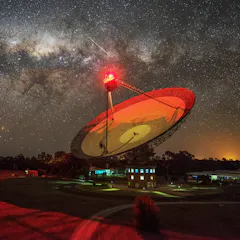
‘Project Phoenix’ was initiated by small research organisation known as the SETI Institute. But it was lucky to get off the ground.

On what would’ve been the astronomer’s 90th trip around the Sun, here’s a look at his legacy as a scientist, advocate and communicator.
AI may be destroying civilisations before they get a chance to explore space properly.
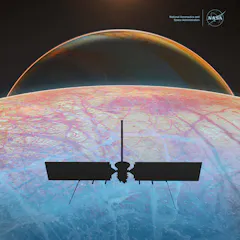
Europa Clipper will contain a plaque that celebrates humanity’s relationship with water and a decades-old tradition of searching for life outside Earth.
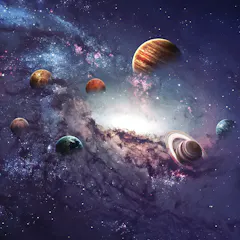
When most of us left school there were still 9 planets – but we’ve come a long way since Pluto’s demotion. Here’s what’s next on the space agenda.
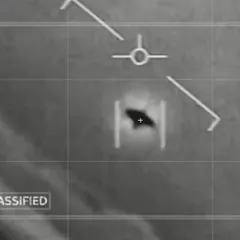
Several scientific projects are aiming to investigate UFO sightings.

Previous searches for extraterrestrial life have included only the radio band above 600 MHz, leaving lower frequencies virtually unexplored.

Whistleblower allegations that the government possesses UFOs may not be backed up by public physical evidence, but some argue that listening for extraterrestrial life is the first phase of contact.
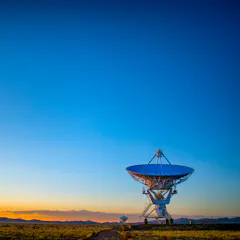
Three Indigenous studies scholars draw from colonial histories and explain why listening for alien life can have ethical ramifications.
Space telescopes are limited in size due to the difficulties and cost of getting into orbit. By revamping an old optical technology, researchers are working on a lightweight and thin telescope design.
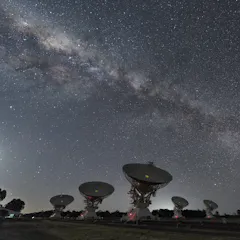
The accumulated radio emission from mobile phones on Earth is beginning to become quite significant.
Artificial intelligence tools are making waves in almost every aspect of life, and astronomy is no different. An astronomer explains the history and future of AI in understanding the universe.

With more than 5,000 known exoplanets, astronomers are shifting their focus from discovering additional distant worlds to identifying which are good candidates for further study.
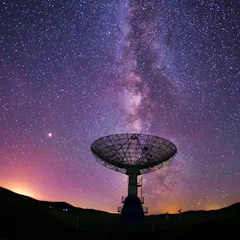
To date, we have not heard from any aliens. Nor have we seen any – but here are the fascinating projects working to change that.
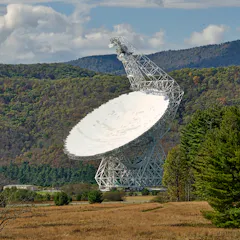
Can artificial intelligence transform the search for alien intelligence?
AI’s ability to identify ‘technosignatures’ missed by classical algorithms is an exciting step forward for radio astronomers.
The technology of an advanced alien civilization is likely to produce many signs that could be detected across the vastness of space. Two astronomers explain the search for technosignatures.
Top contributors
-

University Distinguished Professor of Astronomy, University of Arizona
-
Senior research fellow, Curtin University
-
Professor of Astronomy and Astrophysics, Penn State
-
Sir Bernard Lovell chair of Astrophysics, University of Manchester
-
Honorary Fellow, Space and Astronomy, CSIRO; Western Sydney University
-
Ph.D. Candidate in Astronomy and Astrophysics, Penn State
-
Professor of American Indian Studies, University of Minnesota
-
Professor of Astrophysics Education, The Open University
-
Associate Dean of Innovation and Engagement, Swinburne University of Technology
-
Senior Astronomer, SETI Institute
-
Professor of World Arts and Cultures/Dance, University of California, Los Angeles
-
Pro Vice-Chancellor Flagship Initiatives, Swinburne University of Technology
-
Co-Director Space Technology and Industry Institute, Swinburne University of Technology
-
Professor (Astrophysics), University of Southern Queensland
-
Research Fellow, University of St Andrews