

Despite the ruling against Bunnings, Australian businesses can continue to collect your biometric information without your explicit consent by simply putting up signs.
Articles on Privacy
Displaying 61 - 80 of 624 articles
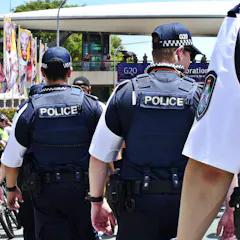
AI technologies can help police. But only structural and organisational reform can fix inequitable surveillance practices.

More awareness is needed of security issues with tech used to track our exercise goals.
While many people are comfortable with using facial recognition technology on their phone, they are less happy when it’s the government or private groups identifying them.

Views differ between owners and non-owners of smartglasses. But both groups agree the technology can help people.
Neither prospective school board social media lawsuit wins, nor proposed Ontario or federal privacy or AI legislation, would prevent problems related to rampant processing of human-derived data.

Australia’s Trust Exchange system offers greater convenience and security for everyday transactions. But the government must make sure it protects Australians’ privacy.

Ray-Ban Meta smart glasses are equipped with a camera and powered by AI. Are the current privacy policies sufficient when it comes to the use of wearable cameras in public spaces?
After receiving dozens of unwanted calls from telemarketers, I started to investigate.

There are three key steps people can take to protect their data from big tech.
The new privacy act reform bill has some welcome amendments, but it doesn’t touch most of the substantive principles that were passed in 1988.
The decision underscores the importance of strengthening privacy laws and enforcement powers of regulators.
Knowing you should set your apps’ privacy permissions might not be enough to protect you. A cybersecurity expert explains how complicated privacy settings can trip you up.
A risk-based approach to regulating AI can help minimise the dangers of the new technology

Privacy comes at a price.
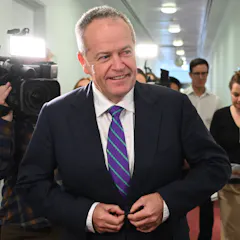
The new scheme, called the Trust Exchange (TEx), would allow people to verify their identities based on information already held by the federal government.
Open-source AI models promise a more democratic and transparent future. They can also be open to misuse – and ethical concerns remain.

Parents and governments are already concerned about children’s safety online – as part of this we need to look more closely at how students’ images are being used by schools.

Human Rights Watch has sounded the alarm over Australian children’s images found in a huge data set used to train AI models. It could be a breach of our privacy law.

When Apple finally unveiled its AI strategy at its developers’ conference, Elon Musk and privacy activists began raising alarm bells.
Top contributors
-

Associate Professor, School of Law, University of Canberra
-
Associate Professor, Faculty of Law & Justice; Lead, UNSW Public Interest Law & Tech Initiative, UNSW
-
Professorial Fellow, University of Canberra
-
Emeritus Professor in Law and Criminal Justice, Adelaide University
-
Professor of Cyber Security Practice, Edith Cowan University
-
Professor specialising in Internet law, Bond University
-
Dean of Global Business, The Fletcher School, Tufts University
-
Director of UWA Centre for Software Practice, The University of Western Australia
-
Associate Professor in Telecommunications Engineering, Swinburne University of Technology
-
Research Director of the Security and Surveillance Research group; Professor, The University of Queensland
-
Professor (adjunct) and Senior Fellow, Institute for Health Policy, Management and Evaluation, Dalla Lana School of Public Health, University of Toronto
-
Research engineer, Advanced Surveillance Project, CSIRO
-
Senior Lecturer, The University of Melbourne
-
Senior Researcher and Project Manager, Advanced Surveillance Project, CSIRO
-
Former data protection and surveillance stream lead, Allens Hub for Technology, Law and Innovation, UNSW Law Faculty, UNSW