

Just as we prepare wills for our physical possessions, we need to plan for our digital remains.
Articles on Privacy
Displaying 41 - 60 of 624 articles

Online churches in Ghana face questions over the safety of their members.
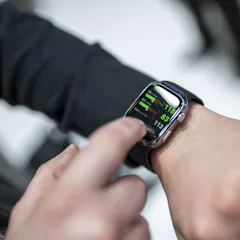
As wearable technologies become more popular, it’s important to consider how they actually work and what their data actually tells us.

UNESCO’s approach to regulating neurotechnology considers future applications and current privacy and consent concerns.
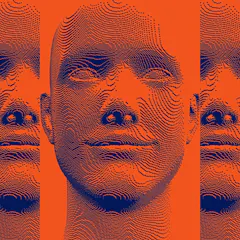
The use of digital clones of real-life models by the fashion industry raises questions about inclusion, consent and privacy.
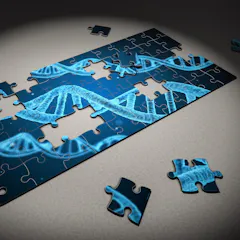
By understanding a patient’s unique genetic profile, biomarker readings and lifestyle information, doctors could tailor the most effective and safest treatments for that individual.

Customer data has become a valuable asset for businesses. But privacy laws need to be clearer about what happens to this information when businesses go into liquidation.

If you were a 23andMe customer, your genetic and personal information could be used in civil or criminal cases, targeted advertising, medical discrimination and so much more.
The possibility of new ownership over 23andMe has some customers concerned about how their sensitive genetic information will be handled in the future.

If you are a parent of a school student, you may have received a form seeking permission to use your child’s image on school social media accounts. Should you sign?

Patients rely on abortion clinics to protect their privacy. The providers have work to do to catch up to today’s digital surveillance threats.

The Philadelphia Police Department plans to expand its use of drones, including as first responders.
A new study shows that simply knowing we are being watched can unconsciously heighten our awareness of other people’s gaze.

In Ontario and elsewhere, we still need reforms that give decision-makers the power to bring robust democratic oversight to EdTech in schools.
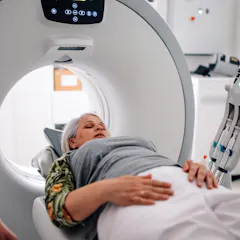
The company’s privacy policy does mention sharing data with research bodies, as authorised by Australian law. But few Australians read and understand privacy policies.
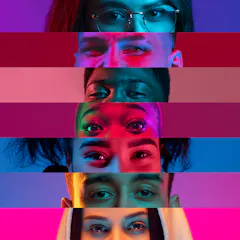
Emotion recognition technologies endanger fundamental rights without proper justification.
As 23andMe struggles financially, it’s a good time to reconsider issues on privacy, use, and commercialization of genetic information.

Most people who record their medical appointments do so to help them understand and remember medical information.

An investigation reveals e-voting software used by numerous large-scale organisations isn’t as anonymous or secure as claimed.

There are dangers to having government surveillance carried out without proper oversight and accountability.
Top contributors
-

Associate Professor, School of Law, University of Canberra
-
Associate Professor, Faculty of Law & Justice; Lead, UNSW Public Interest Law & Tech Initiative, UNSW
-
Professorial Fellow, University of Canberra
-
Emeritus Professor in Law and Criminal Justice, Adelaide University
-
Professor of Cyber Security Practice, Edith Cowan University
-
Professor specialising in Internet law, Bond University
-
Dean of Global Business, The Fletcher School, Tufts University
-
Director of UWA Centre for Software Practice, The University of Western Australia
-
Associate Professor in Telecommunications Engineering, Swinburne University of Technology
-
Research Director of the Security and Surveillance Research group; Professor, The University of Queensland
-
Professor (adjunct) and Senior Fellow, Institute for Health Policy, Management and Evaluation, Dalla Lana School of Public Health, University of Toronto
-
Research engineer, Advanced Surveillance Project, CSIRO
-
Senior Lecturer, The University of Melbourne
-
Senior Researcher and Project Manager, Advanced Surveillance Project, CSIRO
-
Former data protection and surveillance stream lead, Allens Hub for Technology, Law and Innovation, UNSW Law Faculty, UNSW