

As cities get smarter, we need to examine carefully who gets our data and what it is used for.
Articles on Privacy
Displaying 381 - 400 of 624 articles

Do we really want to protect our privacy when we expose it on social networks?
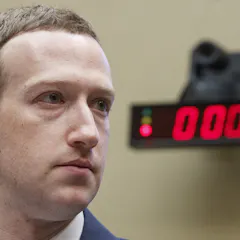
After facing the US Congress the Facebook chief will have learned the easy part is over. From now on things will be tougher.

Facebook says it’s going to continue to respond to widespread concerns about its practices and role in society. Researchers of privacy and online trust offer ideas for immediate action.

Facebook is realizing it has broad obligations to society. Here’s how it could start meeting them.

For years, watchdogs have warned of the potential problems of sharing data with online companies. The Facebook data crisis has made these concerns much more real. What should be done now?

The current reckoning with data has been a long time coming, a historian of privacy in the US writes.
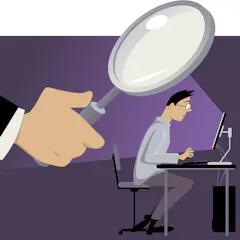
US privacy laws focus on informing consumers what’s happening with their data; other countries specifically restrict data collection and analysis.

The ban on Queensland Members of Parliament using encrypted messaging apps for government business should be accompanied by a willingness to strengthen official accountability across the board.

If you’re concerned about privacy, but you’re not ready to #deletefacebook here’s what you can do, step by step, to minimise the amount of data you share.

The Cambridge Analytica scandal has finally brought privacy concerns about personal online data to the masses – and action is urgently needed.

Scholars discuss the Facebook-Cambridge Analytica scandal: what happened, what’s at stake, how to fix it, and what could come next.
Facebook must confront deep challenges if it’s to become a force in the global fight against false narratives.

In the wake of the Cambridge Analytica scandal, Facebook users seek answers on how their data is scraped and targeted.

Social media provide shortcuts to things we yearn for, like connection and validation. Media effects scholars explain the psychological benefits we get from Facebook that make it so hard to quit.

From predicting suicide risk to chatbot therapy, artificial intelligence is all the rage in suicide prevention. The question is, can it really work?

Facebook’s users have wildly different expectations about privacy and security. What may look like inadequate oversight in some places may be considered an overreach in others.

The silver lining to the Cambridge Analytica case is that more people are recognising that we pay for online services with not only our own privacy, but that of our friends, family and colleagues.

Slacktivism won’t cut it in the wake of the Cambridge Analytica scandal.

Noise around extreme practices drowns out how data analytics is being used in everyday ways. To really consider control of our data we must look beyond Cambridge Analytica.
Top contributors
-

Associate Professor, School of Law, University of Canberra
-
Associate Professor, Faculty of Law & Justice; Lead, UNSW Public Interest Law & Tech Initiative, UNSW
-
Professorial Fellow, University of Canberra
-
Emeritus Professor in Law and Criminal Justice, Adelaide University
-
Professor of Cyber Security Practice, Edith Cowan University
-
Professor specialising in Internet law, Bond University
-
Dean of Global Business, The Fletcher School, Tufts University
-
Director of UWA Centre for Software Practice, The University of Western Australia
-
Associate Professor in Telecommunications Engineering, Swinburne University of Technology
-
Research Director of the Security and Surveillance Research group; Professor, The University of Queensland
-
Professor (adjunct) and Senior Fellow, Institute for Health Policy, Management and Evaluation, Dalla Lana School of Public Health, University of Toronto
-
Research engineer, Advanced Surveillance Project, CSIRO
-
Senior Lecturer, The University of Melbourne
-
Senior Researcher and Project Manager, Advanced Surveillance Project, CSIRO
-
Former data protection and surveillance stream lead, Allens Hub for Technology, Law and Innovation, UNSW Law Faculty, UNSW