

Twitter and Meta are looking to make money from protecting users’ identities. This raises questions about collective security, people understanding what they’re paying for and who remains vulnerable.
Articles on Privacy
Displaying 121 - 140 of 624 articles

Many people have become resigned to the fact that tech companies collect our private data. But policymakers must do more to limit the amount of personal information corporations can collect.

When schools ask student-athletes about their menstrual cycles, they may be infringing on anti-discrimination and privacy laws.

Cellphones are constantly collecting location data from global satellites, but there is uncertainty about who is using these data, and for what purposes.

The proposals from the Attorney-General’s Department could help bolster Australia’s privacy laws — but there are some deficiencies.
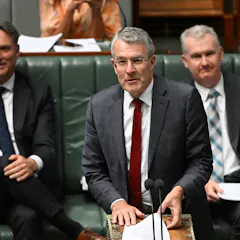
There are many good proposals in Dreyfus’s reform paper. But they risk being lost once again among the voices of those whose interests are served by maintaining the status quo.

ChatGPT is fuelled by our intimate online histories. It’s trained on 300 billion words, yet users have no way of knowing which of their data it contains.

Social media and publishing platform users have generated vast amounts of data. This data remains online long after people have stopped using the platforms, and can impact people’s lives.
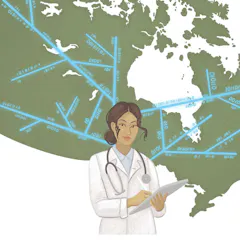
There are concerns about how health data are used, but research shows support for uses with public benefits by health-care providers, governments, health-system planners and university-based researchers.
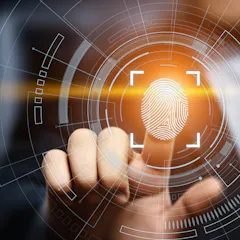
Biometric data can be used in schools to track everything from attendance to exam behaviour and what students buy from the canteen.

Credit checks and international co-operation are crucial when it comes to tracking down cybercriminals.

The cybercrime ecosystem is vast and complex – and increasingly littered with specialists who will cheaply sell your data.
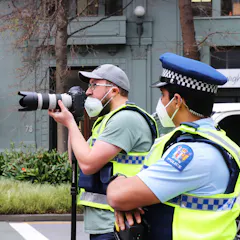
Questions about illegal surveillance photography and powerful facial recognition technology suggest updating the police training manual and the Policing Act itself should be a priority.

This isn’t the first time Australians’ Medicare numbers have been exposed.

Optus used press releases, and Twitter when it could have contacted its customers by text.

In the pursuit of efficiency, governments turn to technological solutions, like automated decision-making systems. But these systems are often problematic.

As businesses establish themselves in the metaverse, the amount of financial transactions there will increase. This will come with previously unknown risks.

Research shows strong emotions are what drives oversharing online – but there are simple things you can do to keep your social media professional.

Even a burner phone paid for with cash can reveal your identity and where you’ve been. A data privacy expert explains.

Data collection is big business in the US, but a bipartisan data privacy bill rapidly moving through Congress promises to affect the information websites, social media platforms and all other businesses collect.
Top contributors
-

Associate Professor, School of Law, University of Canberra
-
Associate Professor, Faculty of Law & Justice; Lead, UNSW Public Interest Law & Tech Initiative, UNSW
-
Professorial Fellow, University of Canberra
-
Emeritus Professor in Law and Criminal Justice, Adelaide University
-
Professor of Cyber Security Practice, Edith Cowan University
-
Professor specialising in Internet law, Bond University
-
Dean of Global Business, The Fletcher School, Tufts University
-
Director of UWA Centre for Software Practice, The University of Western Australia
-
Associate Professor in Telecommunications Engineering, Swinburne University of Technology
-
Research Director of the Security and Surveillance Research group; Professor, The University of Queensland
-
Professor (adjunct) and Senior Fellow, Institute for Health Policy, Management and Evaluation, Dalla Lana School of Public Health, University of Toronto
-
Research engineer, Advanced Surveillance Project, CSIRO
-
Senior Lecturer, The University of Melbourne
-
Senior Researcher and Project Manager, Advanced Surveillance Project, CSIRO
-
Former data protection and surveillance stream lead, Allens Hub for Technology, Law and Innovation, UNSW Law Faculty, UNSW