

Research on generative AI use among youth pinpoints design features that pose age-specific risks, which must be addressed before we adopt genAI into our schools and homes.
Articles on Digital privacy
Displaying 1 - 20 of 111 articles

A new code for children’s online privacy is currently open for consultation. Here’s what it contains.
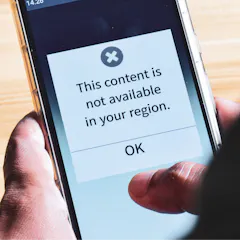
VPNs are becoming a popular option for people wanting to access overseas content. But they’re much more than that – and sometimes legally murky.

American women are deleting period trackers after the end of Roe v. Wade, but evading digital surveillance will be almost impossible without changes to privacy regulations.

The fast-growing educational technology industry is poorly regulated and profits from user data. Australian law, education departments and schools can all do more to improve safeguards for children.

One of a hacker’s most valuable tools is the phishing attack, and you might be unwittingly making the hacker’s job easier by leaving useful information about you online.

Kiwi consumers are increasingly experiencing personalised, targeted manipulation online, but the law has very little to say about it.

When school officials post photos about students on Facebook, they may be inadvertently enabling data mining firms and others to use the information for other purposes, new research has found.

Accessing India’s digital consumers is seen as the key to future growth for big tech companies like Facebook.
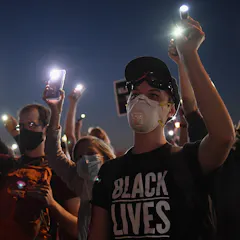
A privacy expert says citizens will need to exercise their right to public protest if they want to preserve their privacy.

Google’s shift to ‘profiling’ is being billed as a privacy boon – but it’s also a strategic pivot.

Many of us will have received new gadgets this festive season. But how can we ensure these are set up safely? And what’s the best way to discard of old devices being replaced?
A recent Labor Department memo urges agencies to avoid releasing press releases accusing companies of violating laws, to protect the companies’ reputations. People are denied the same protections.

In the current pandemic, finding the right balance between the protection of public health and respecting civil liberties has proven to be supremely difficult.

There are calls for better web design standards to ensure greater personal data and privacy protection.

For decades experts have puzzled over why most people claim to have privacy concerns, but few actually do enough about it.

The massive increase in internet-connected devices will create an informal surveillance network that could be used to target protestors and activists.
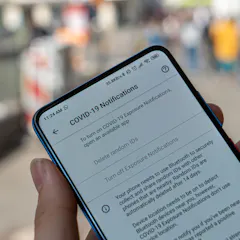
In response to the Covid-19 epidemic, more than 50 countries have developed tracing applications to help alert citizens and authorities when outbreaks occur. But the process is anything but simple.

Automated text messages if your phone detects you’re a long way from home, or discounted home internet, are just a few possible technology solutions to make New Zealanders “stay home to save lives”.

Web browsers are introducing encryption technology that could stop governments spying on you – and catching criminals.
Top contributors
-

Associate Professor, School of Law, University of Canberra
-
Senior Lecturer, Information Management, Te Herenga Waka — Victoria University of Wellington
-
Professor of Global Politics and Cybersecurity, UCL
-
Head, The Cyber Academy, Edinburgh Napier University
-
Distinguished Professor and C. Ben Dutton Professor of Law, Indiana University
-
Lecturer in Media Studies, Te Herenga Waka — Victoria University of Wellington
-
Professeur de Droit. co-Director of the MSc in Health Management & Data Intelligence. Droit international des affaires, Business and Compliance. Health management, EM Lyon Business School
-
Honorary Lecturer in Sociology, Australian National University
-
Professor in Human Resource Management and Employee Relations, Swinburne University of Technology
-
Professor specialising in Internet law, Bond University
-
Professor of Cybersecurity, Head of School of Computer Science and Informatics, De Montfort University
-
Fellow of the Faculty of Engineering and Information Technology, University of Technology Sydney
-
Associate Professor in Telecommunications Engineering, Swinburne University of Technology
-
Professor, Monash University
-
Senior Lecturer of Media Studies and Digital Media, University of Sussex