
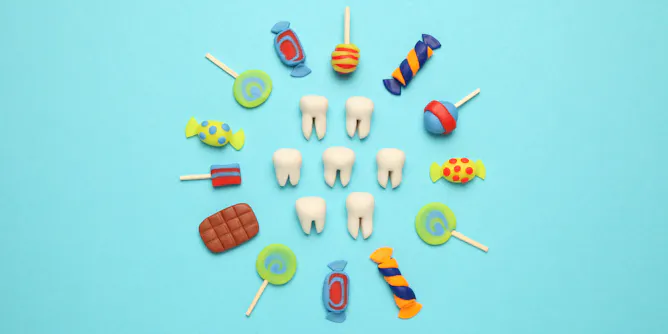
Bacteria living in your mouth get to work as soon as you take your first bite or sip of something sweet. Consuming your sugar more strategically can help keep cavities at bay.
Articles on Microbiology
Displaying 21 - 40 of 134 articles

An infection control expert explains why sharing your razor, towel or toothbrush isn’t such a great idea.

Biosphere 2 isn’t just the site of a famous human experiment. Today, scientists there work to understand how life emerges in barren environments.
Microbes hidden deep in ocean volcanoes could resemble life on other planets or moons.
Aflatoxin can cause serious damage to the liver, including cancer. But contamination recalls are rare.
Children who grow up on farms are less likely to develop asthma or allergies as adults. The reason? Micro-organisms in the air.
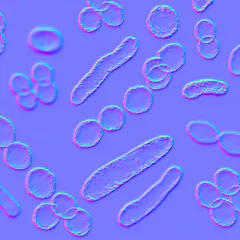
Scientists have described antimicrobial resistance as an overlooked pandemic. Improving surveillance can help prevent deadly outbreaks.
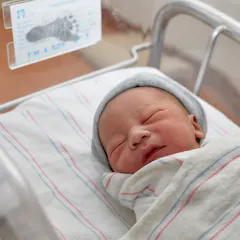
Hepatitis B can lead to liver disease. But we can prevent and manage this viral infection. Here’s what we know about the latest health alert.
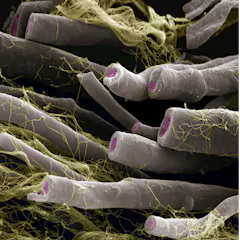
Levels of 2 types of bacteria in your gut could help improve the diagnosis and treatment of multiple sclerosis.

Antimicrobial resistance is yet another catastrophic legacy of war, threatening human health and security for generations to come.
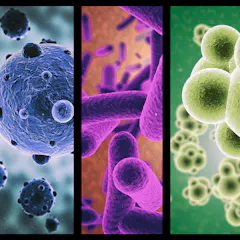
Using digital blueprints of the metabolism of microbes, scientists can simulate expensive and time-intensive experiments set in space, power plants and farm fields.
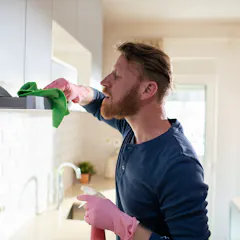
Perhaps mid-way through cleaning your kitchen or bathroom you’ve wondered why no disinfectant seems to be able to get rid of 100% of germs.

But with a little preparation, you can make your next summer barbecue or picnic memorable for all the right reasons.

Pathogens have distinct electrical charges, shapes and sizes. Measuring how quickly they move through an electric field can help researchers separate different species in a sample in minutes.
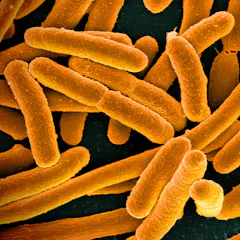
Certain strains of E. coli tucked in a gel can crowd out the microbes that cause urinary tract infections.
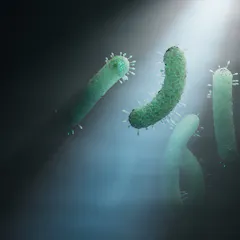
By analyzing the resistance genes and proteins of E. coli, researchers can optimize treatments to address both current and future antimicrobial resistance.
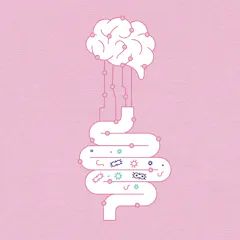
Imbalances in different species of bacteria in a baby’s gut may provide insights into their neurodevelopment.

An accurate estimate of when someone died is a critical part of forensic investigations. In extremely cold conditions, molecular biology can provide critical information where the naked eye cannot.

From ice cores extracted from the Tibetan Plateau, scientists recovered the equivalent of 1,705 virus species. Reading their genomes tells the story of 41,000 years of climate change.

Getting drugs into the brain is a challenge. A new study suggests a brain parasite may be able to help.
Top contributors
-

Professor of Microbiology and Immunology, Indiana University
-
Professor of Microbiology, Swinburne University of Technology
-
Senior Lecturer in Microbiology, Western Sydney University
-
Senior Lecturer in Clinical Microbiology, University of Leicester
-
Professor of Forensic Sciences, School of Law and Policing, University of Lancashire
-
Senior Lecturer in Medical Microbiology, Western Sydney University
-
Professor of Biological Sciences, University of Maryland, Baltimore County
-
Senior Lecturer in Biology, Brunel University of London
-
Ph.D. Candidate in Microbiology, Cornell University
-
Professor of Microbiology, School of Medicine, University of Washington
-
Associate Professor and Clinical Academic Gastroenterologist, Western Sydney University
-
Regents' Professor & Chair, Medical Laboratory Science, Texas State University
-
Senior Lecturer in Medical Microbiology, Edinburgh Napier University
-
Associate Professor, University of Michigan
-
Professor and Chair of Epidemiology, University of Michigan