

Chatbots can facilitate ‘cognitive offloading,’ or taking shortcuts when learning. But emerging research on AI and cognitive science shows that learning is like a workout.
Articles on Learning
Displaying 61 - 80 of 407 articles
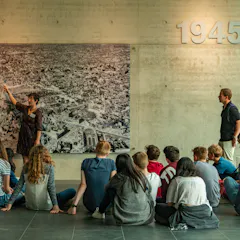
History should teach students how to understand and interpret events – not just recite dates and names.

Students in Adelaide have been protesting to keep face-to-face lectures. But many students today work or live far from campus – making old-school lectures tricky.

Survey shows students rapidly picked up chatbots, but perhaps surprisingly, they more often used it to augment their learning, rather than hand work off.

As AI automates technical work, students and educators need to emphasize social skills and a high degree of self-awareness.

Even before generative AI went mainstream, fewer people were reading books.

Humans learn and understand the world through play.

Study finds a gap between policy and textbook that skews literacy test results.

Most of the learning we do is informal.

Maybe the tool matters less than the user.

Students created sci-fi and fantasy stories with characters that represented ideas in statistics.

Why isn’t academic development working effectively enough in South African higher education?

Whether students and faculty are actively using AI or not, it is having significant interpersonal, emotional effects on learning and trust in the classroom.

Learners understood human evolution better after interactive workshops at a museum.

Research offers insights into the ideal frequency for reviewing material to make sure it sticks.
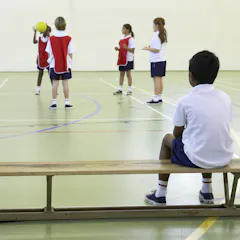
Rejection can feel physically painful. It also provides a lesson for your brain on whom to connect with and how.

During the Industrial Revolution, craftsmanship retreated to the margins. As AI becomes widely adopted, will the same happen to original thinking?

Even the most advanced AI tools are useless if employees don’t feel confident using them. Building trust and boosting workers’ belief in their abilities is the real key to successful adoption.

An education sector that responds to the different needs of boys and girls creates equal participation in learning.

A pilot programme in 15 schools demonstrates how targeted, structured interventions can rapidly close foundational literacy gaps.
Top contributors
-

Professor of Reading and Children’s Development, The Open University
-
Professor of Higher Education, Rhodes University, South Africa, Rhodes University
-
Research Scientist, African Population and Health Research Center
-
Director of the Learning, Instruction & Technology Lab and Professor of Educational Psychology, School of Education, The University of Queensland
-
Scientia Professor and Professor of Educational Psychology, UNSW
-
Deputy Director, ARC Centre of Excellence in Cognition and its Disorders, Macquarie University
-
Professor, Melbourne Graduate School of Education, The University of Melbourne
-
Professor of Early Childhood Studies, The University of Melbourne
-
Professor Emeritus, Swinburne University of Technology
-
Senior Lecturer, School of Education, Macquarie University
-
Professor of Education, Durham University
-
Associate Professor of Education, Charles Sturt University
-
Campus and Secondary Principal at the International School of Geneva's La Grande Boissière, Research Associate at the University of Geneva's department of Education and Psychology, Université de Genève, Université de Genève
-
Senior Lecturer (Adjunct), Nutritional neuroscientist, Adelaide University
-
Senior Lecturer in Education, Queensland University of Technology