
Audiobooks can develop children’s listening skills, expand their vocabulary and encourage independent learning.
Articles on Learning
Displaying 101 - 120 of 407 articles
Classroom reading clubs can be a space for children to share ideas and build understanding.

Making physics more engaging means meeting students where they are, highlighting the ways in which it plays a role in their communities.

Very compressed study schedules lead to a catastrophic amount of forgetting.
Florida’s school safety data dashboard is one of the most comprehensive in the US. A school safety researcher explains how schools and parents can use it.
Smartphones are undoubtedly a distraction to learning. We should keep an open mind about the school ban and give teachers and students time to see what works.

Teaching students strategies for learning embedded in all courses should be an important part of all conversations about student retention.
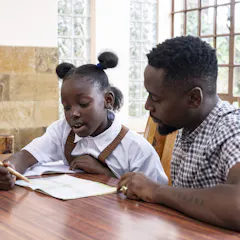
Studies show that teaching parents how to support their children can lead to improvements in literacy.
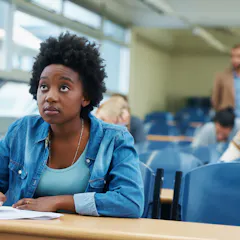
Assessment is involved in many of the challenges facing higher education.
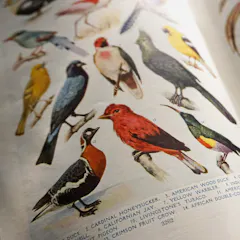
Mid-century encyclopaedias claimed the power to decide what counted as knowledge and what didn’t – much as online publishing platforms and social media companies do today.

In response to threats, we learn to avoid challenge and comply with external rules (instead of wondering how systems can be improved). We protect our feelings and restrict our thoughts to what’s safe.
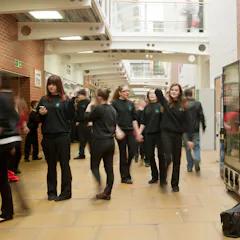
Pisa measures 15-year-olds in reading, maths and science every three years - but is that the best way to test an education system?

To boost post-pandemic math learning, a multi-dimensional approach is needed that promotes the success of the whole child: academic, physical and socio-emotional.

Our latest research may have found a way of helping children with this condition to learn.

A journalism professor discovers that some of the best lessons for future journalists can be taught on a pool table.

Being open to the possibility you could be wrong about your beliefs is an important part of learning about the world. But this trait is not enough on its own.

Box jellyfish have no brains, yet were recently found to be able to learn from touch. Many brainless organisms are now forcing us to rethink what it means to learn.

According to cognitive psychology there are three distinct types of memory. Each plays a different role in effective study.

Ghanaians measure the quality of education by examination scores.
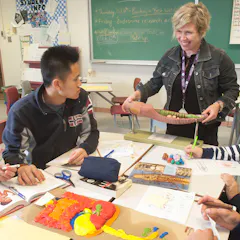
The idea that each person has a particular learning style is a persistent myth in education. But new research provides more evidence that you won’t learn better in one modality than another.
Top contributors
-

Professor of Reading and Children’s Development, The Open University
-
Professor of Higher Education, Rhodes University, South Africa, Rhodes University
-
Research Scientist, African Population and Health Research Center
-
Director of the Learning, Instruction & Technology Lab and Professor of Educational Psychology, School of Education, The University of Queensland
-
Scientia Professor and Professor of Educational Psychology, UNSW
-
Deputy Director, ARC Centre of Excellence in Cognition and its Disorders, Macquarie University
-
Professor, Melbourne Graduate School of Education, The University of Melbourne
-
Professor of Early Childhood Studies, The University of Melbourne
-
Professor Emeritus, Swinburne University of Technology
-
Senior Lecturer, School of Education, Macquarie University
-
Professor of Education, Durham University
-
Associate Professor of Education, Charles Sturt University
-
Campus and Secondary Principal at the International School of Geneva's La Grande Boissière, Research Associate at the University of Geneva's department of Education and Psychology, Université de Genève, Université de Genève
-
Senior Lecturer (Adjunct), Nutritional neuroscientist, Adelaide University
-
Senior Lecturer in Education, Queensland University of Technology