

Lack of co-ordination means that information important for the safety of children can be missed.
Articles on Learning
Displaying 81 - 100 of 407 articles

As you experience or encounter new things, your brain must encode this information via the right neural networks at the right time.

The pope’s embrace of literature and history is a sharp contrast to some of his predecessors, a medievalist explains.

Note-taking on a laptop may be faster but handwriting engages the brain in a more active way than typing.

As students and teachers return to school after the fires, educators will have to focus on emotional rehabilitation before academic recovery can begin.

The findings shake up previous ideas about language learning – and give us an earlier window to help children who might be at risk of speech or language delays.
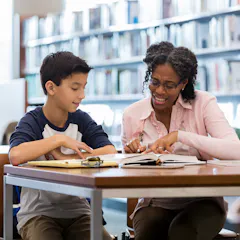
Conversation scholars examine the costs and effectiveness of tutoring in the US.

The Brereton Inquiry recommended reassessing the Australian Defence Force’s ethics training approach. Four years later it’s improved a bit, but could be much better.

Policymakers commonly suggest that teaching to ‘fidelity’ − following a plan word for word − is best for student learning. However, research suggests the opposite is true.

Conditional cash transfers can increase access to education – but they need to be accompanied by other measures to boost literacy.

Noam Chomsky’s notion of the human instinct for freedom ties together his many intellectual pursuits, from educating creative, independent citizens to rejecting social and economic hierarchies.

Clumsiness can cause some children to withdraw from physical, sporting and leisure activities.

Clear, actionable feedback can help students learn.

Some people swear by it, others find it painfully distracting. Here’s what the research suggests about the best way to use it.

Students found the topic of climate change less boring when they studied it using a numbers estimation game.

If you stop to think about it, most of your knowledge can’t be clearly tied to one particular experience.

Artificial intelligence ‘bots’ may be widely available to teach in the coming years. But will they be effective? An expert on technology in education weighs in.
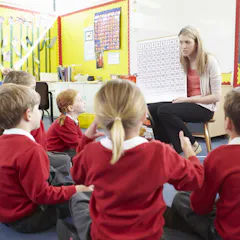
There is a new push for ‘explicit teaching’ around Australia. This includes changes for New South Wales schools announced this week.

Giving and receiving criticism can be difficult. This class tries to make it easier.

The government is reducing the scope and scale of the free school lunch programme. But evidence suggests expanding it would be good for children, communities and local businesses.
Top contributors
-

Professor of Reading and Children’s Development, The Open University
-
Professor of Higher Education, Rhodes University, South Africa, Rhodes University
-
Research Scientist, African Population and Health Research Center
-
Director of the Learning, Instruction & Technology Lab and Professor of Educational Psychology, School of Education, The University of Queensland
-
Scientia Professor and Professor of Educational Psychology, UNSW
-
Deputy Director, ARC Centre of Excellence in Cognition and its Disorders, Macquarie University
-
Professor, Melbourne Graduate School of Education, The University of Melbourne
-
Professor of Early Childhood Studies, The University of Melbourne
-
Professor Emeritus, Swinburne University of Technology
-
Senior Lecturer, School of Education, Macquarie University
-
Professor of Education, Durham University
-
Associate Professor of Education, Charles Sturt University
-
Campus and Secondary Principal at the International School of Geneva's La Grande Boissière, Research Associate at the University of Geneva's department of Education and Psychology, Université de Genève, Université de Genève
-
Senior Lecturer (Adjunct), Nutritional neuroscientist, Adelaide University
-
Senior Lecturer in Education, Queensland University of Technology