
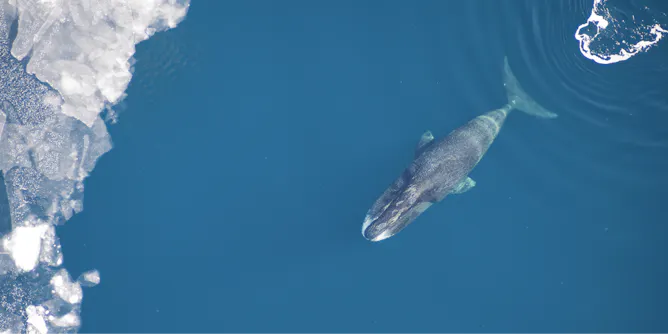
New research used whaling logbooks to explain why only two of the four bowhead whale populations are bouncing back from whaling, which was abandoned a century ago.
Articles on Inuit
Displaying 1 - 20 of 99 articles
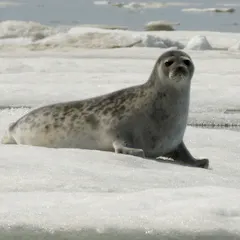
New research shows seals are being affected by chemical pollution in the Arctic food web and rapid climate-driven warming that is transforming their sea ice habitat.

Indigenous communities have long fought to control their own education. A scholar traces that history and examines what a new Inuit-led university could mean for Inuit self-determination.
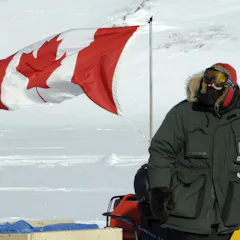
As Arctic competition grows, Canada’s security depends not just on defence, but on migration and retaining people to build resilience in the North.
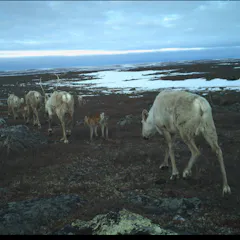
As delegates gather in Brazil for COP15, the fate of Arctic caribou migrations should serve as both a warning and a test.

For decades, ECCC research scientists have been integral to the work of the Arctic Monitoring and Assessment Programme.

Greenland’s inhabitants call it Kalaallit Nunaat, or land of the Kalaallit. It is an Indigenous nation whose relatively few people now mostly govern themselves.
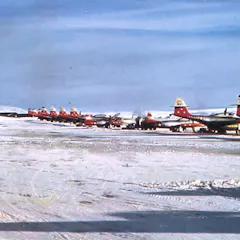
In 1951, the French Explorer Jean Malaurie witnessed the building of a US military base in Greenland in near total secrecy, which marked an irreversible turning point for Inuit societies.
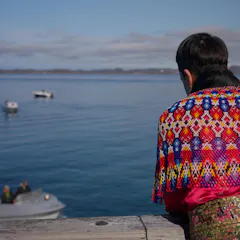
The EU has failed to engage Greenlandic people in public consultations that are part of its review of its seal trade regulations.
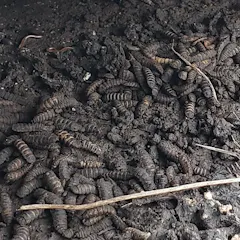
New research highlights the prevalence of maggots as an easily obtained, nutrient-rich supplement of ancient hominin diets.
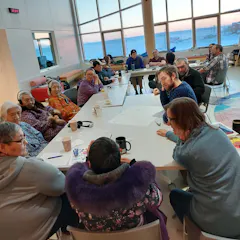
Using fast-evolving DNA-based techniques requires awareness, community buy-in, and, most importantly, trust and respect to tackle urgent challenges in the Arctic.
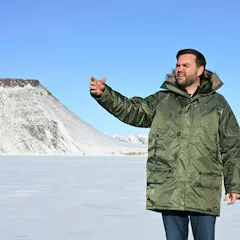
The White House intends to appeal to Greenlanders by highlighting their shared heritage with Alaska’s indigenous population.
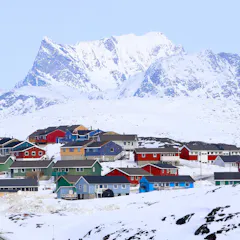
Can you guess which languages score the highest for terms relating to ‘love’, ‘death’, ‘canoe’ or ‘sheep’? We made a tool to help you explore our extensive dataset.

Beyond how beautifully Elisapie interprets classic rock songs, with creative choices like using throat singing to cover Metallica, her music also brings the Inuktitut language to a wider audience.
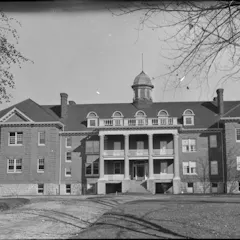
Scholars are working to piece together information about Indigenous children who attended a residential school in Brantford and Inuit patients taken to a sanatorium in Hamilton, Ontario.

With funding for a government food voucher program ending and Parliament prorogued, many Inuit children in Nunavut may soon go hungry.
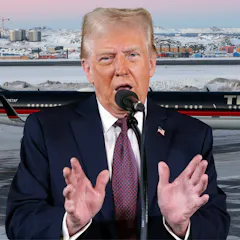
Donald Trump first flagged buying Greenland, whose colonial history spans centuries, during his first term. Yesterday, he said he wouldn’t rule out military force.
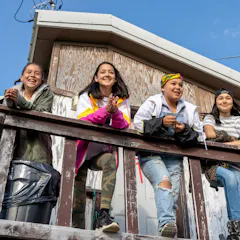
The Winnipeg-based series has screened over 100 films in multiple genres by Indigenous filmmakers, and brings filmmakers together with audiences as a form of public education.

Research partnerships with the people and communities affected help to challenge health inequities, and support person-centred care in health systems.

Food insecurity is an issue felt particularly acutely by Inuit across Northern Canada. Culturally appropriate food systems may be the solution.
Top contributors
-

Associate professor, Department of Health Sciences, Carleton University
-
Professor, University of Alberta
-
Vice-Provost, Labrador Campus & Dean, School of Arctic and Subarctic Studies, Memorial University of Newfoundland
-
PhD Candidate in Public Health and Social Policy, University of Victoria
-
Executive Co-Director, UNU Hub on Empowering Communities to Adapt to Environmental Change, United Nations University; University of Calgary
-
Senior Research Fellow, Center for War Studies, University of Southern Denmark
-
Adjunct Marine Affairs Program, Dalhousie University
-
Assistant professor, Département de médecine sociale et préventive, Université Laval
-
Assistant Professor in Aboriginal and Indigenous Law, Dalhousie University
-
Ottawa Health Services Network Inc.
-
PhD researcher in sovereignty and rhetoric, Carleton University
-
Honorary Research Fellow, Human Geographer, University of Exeter
-
Professor Emeritus, Department of Political Science, Wilfrid Laurier University
-
PhD Candidate in Humanities, Concordia University; Honorary Fellow, UWA Faculty of Law, The University of Western Australia
-
Adjunct professor, U of T Faculty of Law, University of Toronto