

Indigenous economic development corporations can generate income for communities and support the transition to clean energy.
Articles on Inuit
Displaying 21 - 40 of 99 articles
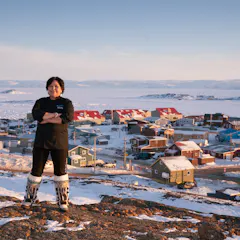
Indigenous women are using sustainable tourism to overcome generational challenges and as an entrepreneurial means of generating income.

For Indigenous literature courses to be successful, Indigenous cultural safety must be centred, and commitment to teacher professional development is a must.

In order to meet its 2030 biodiversity targets, Canada is heavily relying on Indigenous Protected and Conserved Areas, which could do more harm than good for First Nations, Inuit and Métis.

Few Canadians know about the doctrine of coverture and how it stripped Indigenous women of their agency.

Spirituality is a vital part of Indigenous identities. Incorporating spiritual education can create space in schools where Indigenous students can learn and grow.

To fully implement the UN Declaration on the Rights of Indigenous Peoples, Canada must engage in genuine and inclusive law reform.
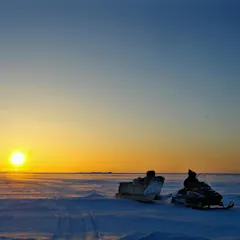
All over the world, the territories of Indigenous peoples map onto regions of the richest and most persistent biodiversity. A book about hunter-gatherer Arctic peoples shows why.

Indigenous-led conservation economies have immense reconciliatory potential and need to be respectfully supported and engaged in order to create a new shared and equitable economic system.
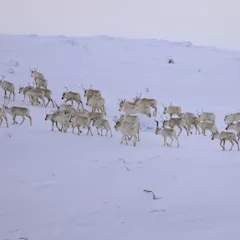
Support for Inuit and other Indigenous-led strategies for conservation and community well-being must be prioritized.

Beyond revamping misleading terminology, some library science scholars and Indigenous knowledge holders are looking at how to index library materials in ways that reflect Indigenous knowledge.

The Aboriginal Coalition to End Homelessness opened British Columbia’s first culturally supportive housing on Vancouver island — a model that can be replicated across Canada.

The DIALOG network forms a bridge between scientific and Indigenous knowledge. It renews the relationship between the university and the Indigenous world, which has for too long been one-sided.

The government needs to implement its proposed action plan. The families of the missing and murdered put their trust in a federal inquiry process, but have yet to receive that justice.

For most Québec residents, there is broad consensus that French should be protected. But many of us believe that multilingualism need not threaten French.

Incorporating lessons from Ryerson University’s renaming process could help Canadian institutions address colonization.

‘Living with COVID-19’ has much higher risks for Nunatsiavut Inuit communities than many other areas. Recognizing those risks is crucial as mining operations resume in Newfoundland and Labrador.

While marketing has made diamond rings a symbol of heteronormative happy endings, women from the Northwest Territories tell a different story about their experiences with the diamond mines.

International proposals to ban the trade of polar bear parts undercut Inuit rights, knowledge and decision-making.

Linguistic rights are human rights that apply to majorities and minorities alike, not just at the discretion of those who hold power.
Top contributors
-

Associate professor, Department of Health Sciences, Carleton University
-
Professor, University of Alberta
-
Vice-Provost, Labrador Campus & Dean, School of Arctic and Subarctic Studies, Memorial University of Newfoundland
-
PhD Candidate in Public Health and Social Policy, University of Victoria
-
Executive Co-Director, UNU Hub on Empowering Communities to Adapt to Environmental Change, United Nations University; University of Calgary
-
Senior Research Fellow, Center for War Studies, University of Southern Denmark
-
Adjunct Marine Affairs Program, Dalhousie University
-
Assistant professor, Département de médecine sociale et préventive, Université Laval
-
Assistant Professor in Aboriginal and Indigenous Law, Dalhousie University
-
Ottawa Health Services Network Inc.
-
PhD researcher in sovereignty and rhetoric, Carleton University
-
Honorary Research Fellow, Human Geographer, University of Exeter
-
Professor Emeritus, Department of Political Science, Wilfrid Laurier University
-
PhD Candidate in Humanities, Concordia University; Honorary Fellow, UWA Faculty of Law, The University of Western Australia
-
Adjunct professor, U of T Faculty of Law, University of Toronto