

A regional permafrost map can’t tell a builder if a particular foundation or road will survive as temperatures rise. Engineers need to see beneath the surface to find the weaknesses.
Articles on Arctic
Displaying 1 - 20 of 286 articles

EU leaders are scrambling to increase the bloc’s presence in the Arctic.
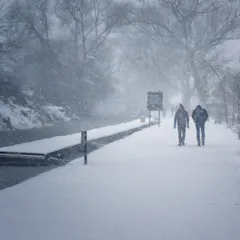
Across the northern hemisphere, cold spells are becoming milder as the temperatures rise, with their intensity decreasing by 0.3°C per decade.

Support settlements are at the forefront of Russian spatial policy. What does the development of these administrative service hubs tell us about how the land lies in Russia today?

The abrupt disappearance of a lake is one clear sign that the ice below is melting, and a clue to wider permafrost changes.

As geopolitical turmoil forces ships to find new trade routes, melting Arctic ice offers a tempting shortcut.

New research shows Arctic winter sea ice loss has not stopped – it was temporarily hidden by natural variability.

Researchers found that some bodies of water have become highly acidic within only a few years.
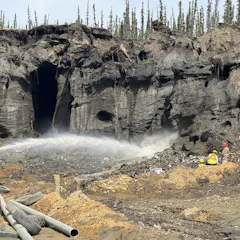
Permafrost holds an extraordinary molecular record of ancient life — and we are only now learning to read it, just as warming begins to erase it.
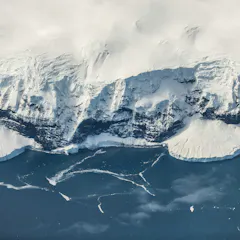
New solutions to two interlinked mysteries reveal how and why the Antarctic’s enormous ice sheet formed.
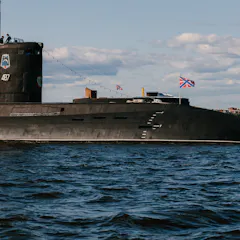
The Bear Gap is as vital to Russian military strategy as it is to Europe’s future security.

As sea ice melts, more of the Arctic Ocean opens up. A former ambassador explains how this treaty creates time for scientists to figure out what lives there.

Long overlooked because of their size, giant viruses are now redefining the frontiers of microbiology.
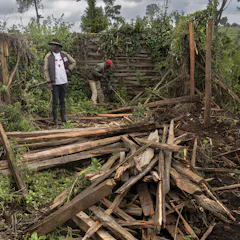
Efforts to protect land and environmental resources, including fighting climate change, often end up displacing people who have lived in those places for generations.

Given increasing geopolitical tensions and economic interest in the region, how can academic research support those who live in and depend on the Arctic?
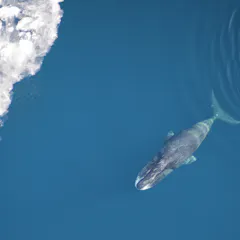
New research used whaling logbooks to explain why only two of the four bowhead whale populations are bouncing back from whaling, which was abandoned a century ago.
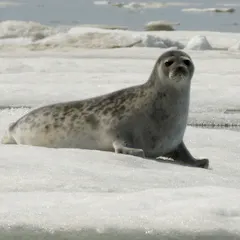
New research shows seals are being affected by chemical pollution in the Arctic food web and rapid climate-driven warming that is transforming their sea ice habitat.

The tsunami struck just 12 hours after a cruise ship had left the fjord, rattling the tourism industry.
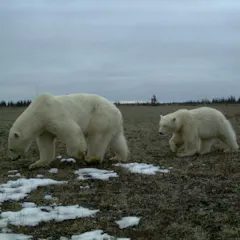
Researchers found that the more time bears were off the ice, the more likely they were to approach human sites.
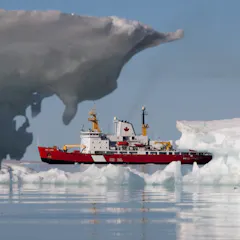
As more ships and tankers sail through the Arctic, the chances of oil spills increase. Canada should take action to prepare for a spill before it occurs.
Top contributors
-

Senior Research Fellow, Center for War Studies, University of Southern Denmark
-
Professor of Natural Resources and Environmental Science, University of Vermont
-
Alaska Climate Specialist, University of Alaska Fairbanks
-
Deputy Lead Scientist, National Snow and Ice Data Center (NSIDC), Cooperative Institute for Research in Environmental Sciences (CIRES), University of Colorado Boulder
-
Senior Scientist, National Snow and Ice Data Center (NSIDC), Cooperative Institute for Research in Environmental Sciences (CIRES), University of Colorado Boulder
-
Professor of Glaciology and Earth Observation, University of Bristol
-
Lecturer in International Studies, University of Washington
-
Associate Director, Climate System Research Center and Associate Professor of Climatology, UMass Amherst
-
Senior Lecturer in Physical Geography, Loughborough University
-
Professor and Director of the Centre for Defence and Security Studies, University of Manitoba
-
Chief Scientist, Australian Antarctic Division and Professor of Climate Science, Australian National University
-
Professeur associé/Adjunct professor, École nationale d'administration publique, École nationale d'administration publique (ENAP)
-
Distinguished Professor of Marine Science, King Abdullah University of Science and Technology
-
Research Professor of Geography and Director, National Snow and Ice Data Center, University of Colorado Boulder
-
Postdoctoral Fellow, Department of Biological Sciences, Simon Fraser University