

Indigenous communities have long fought to control their own education. A scholar traces that history and examines what a new Inuit-led university could mean for Inuit self-determination.
Articles on Nunavut
Displaying 1 - 20 of 25 articles
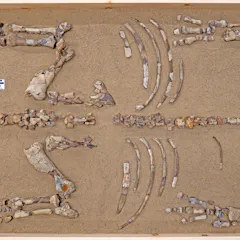
Remains of an ancient Arctic rhino indicate that land mammals traversed the North Atlantic via land bridges, and did so much more recently than previously thought.
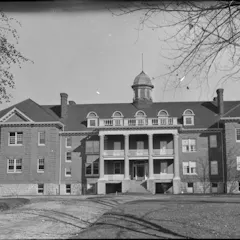
Scholars are working to piece together information about Indigenous children who attended a residential school in Brantford and Inuit patients taken to a sanatorium in Hamilton, Ontario.

With funding for a government food voucher program ending and Parliament prorogued, many Inuit children in Nunavut may soon go hungry.
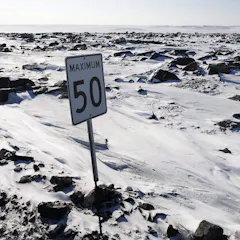
A new survey finds the majority of Canadians, across all regions and political leanings, support the construction of infrastructure in the Arctic.

Researchers have made a fascinating observation: a polar bear used a diving hunting technique, never before reported, to capture large moulting snow geese.
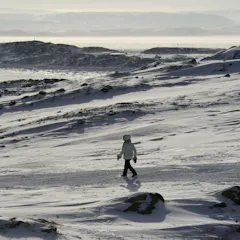
New research about the Nutrition North Canada program shows that the subsidy is not being fully passed on to consumers.
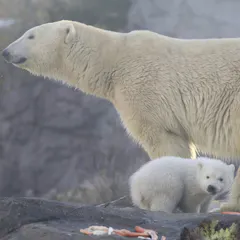
Comparison of modern and archaeological polar bears indicates that four millennia of food web stability has been disrupted by modern climate change.

In formal consensus decision-making, no proposal is adopted until every concern is heard, understood and addressed. Here’s how it can work.
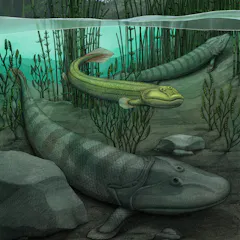
The newly discovered species – Qikiqtania – highlights evolution’s twisty, tangled path.
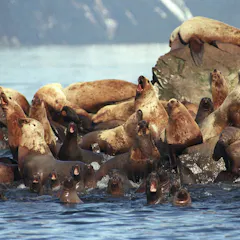
ToxChips study the changes in the DNA of animals exposed to contaminants, like those found in oil spills.

Priority should be given to improving municipal solid waste management in First Nation communities because they currently lack financial resources, infrastructure and solid waste diversion programs.

International proposals to ban the trade of polar bear parts undercut Inuit rights, knowledge and decision-making.

Indigenous people who vote are reminding Canada of the nation-to-nation relationships that continue to exist and to bring change from within the very structure that has been used to erase them.
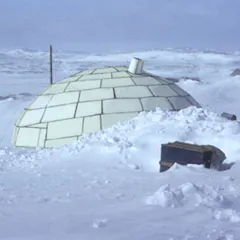
Plastic versions of igloos show an early example of culturally sensitive housing, abandoned in favour of inadequate southern-style structures.
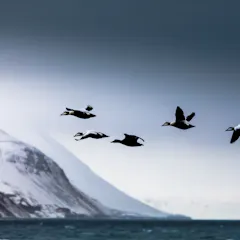
We can learn about the spread of diseases through populations by studying naturally occurring instances of herd immunity. Avian cholera in the Canadian Arctic provides a useful case study.
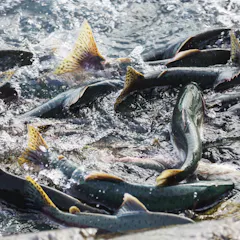
As climate change warms northern rivers and changes precipitation patterns, some types of cold-loving fish are failing.

Despite chronic housing need and persistent health and infrastructural inequities, northern communities are turning to the land and each other to prevent the spread of COVID-19.

Arctic cod are key prey for seals, whales and seabirds. What happens when ship noise drives them away?
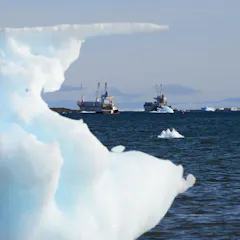
The next federal budget will be decisive for Canada’s North. Will the government put in the money to achieve its many priorities in the Arctic?
Top contributors
-

Professeur associé/Adjunct professor, École nationale d'administration publique, École nationale d'administration publique (ENAP)
-
Associate Professor, Department of Economics, Toronto Metropolitan University
-
Étudiant au doctorat en écologie animale, Université Laval
-
Ottawa Health Services Network Inc.
-
Postdoctoral fellow, Cooke Lab, Carleton University
-
Assistant Professor, Aboriginal and Northern Studies, University College of the North
-
PhD Candidate, Great Lakes Institute for Environmental Research (GLIER), University of Windsor
-
Faculty Lecturer, Department of Political Science, McGill University
-
PhD Candidate, Environmental and Life Sciences, Trent University
-
Professor, School of the Environment, University of Windsor
-
Conservation Planning Biologist, Wildlife Conservation Society Canada and Adjunct Professor of Conservation Biology, University of Saskatchewan
-
Professor and York University Research Chair in Global Change Biology; Director of the United Nations Institute for Training and Research Global Water Academy, York University, Canada
-
Étudiant la maîtrise en biologie, Université Laval
-
Assistant Professor, Political Science, Western University
-
Professor, Biology, Carleton University