

Ottawa has left the outdated 2009 Discover Canada booklet in place, pushing the work of teaching reconciliation to newcomers onto underfunded community educators.
Articles on Reconciliation
Displaying 1 - 20 of 148 articles
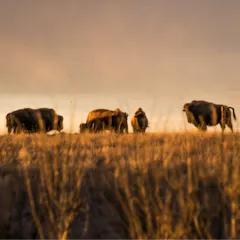
The official interpretation of Treaty 4 is historically contested. And if that interpretation is wrong, then Canada’s claim to “Crown land” and settler ownership rests on a deeply unstable foundation.
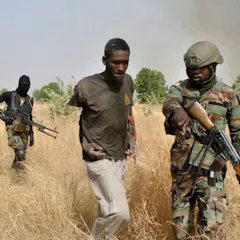
Nigeria has a policy of de-radicalisation of former Boko Haram fighters, but overlooks the voices of soldiers who have to carry out the policy.
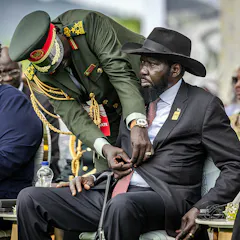
Instability has allowed South Sudan’s elite to undermine the justice system and suppress efforts at reconciliation.

Amid national truth and reconciliation processes, Scandinavian churches are taking stock of their past policies toward the Sámi people.
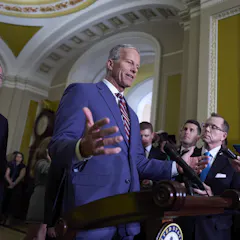
By using reconciliation, which was originally intended to rein in deficits, Republicans can pass the bill with a simple majority vote. But analysts expect it to lead to larger deficits.
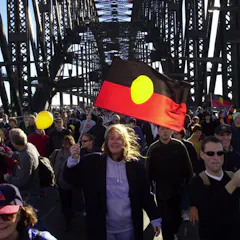
In May 2000, Australians marched to symbolise coming together. But in the decades that followed, promises to Indigenous people have gone unfulfilled.
Kate Grenville’s book successfully intertwines national and personal history to evoke Australia’s past – but multiculturalism challenges her idea of collective memory.
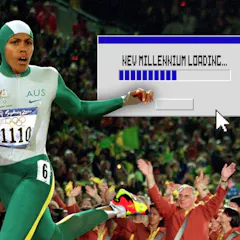
At the turn of the 21st century, Australia put on a show for the world, but for all the talk of the future, we still had one foot in the past.
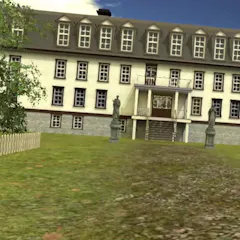
Does virtual reality improve empathy? Findings from one study imply that Survivors’ meaningful stories don’t require sophisticated technology like virtual reality to have impact.
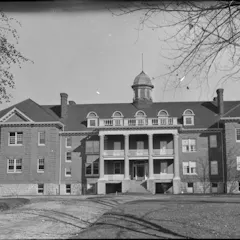
Scholars are working to piece together information about Indigenous children who attended a residential school in Brantford and Inuit patients taken to a sanatorium in Hamilton, Ontario.
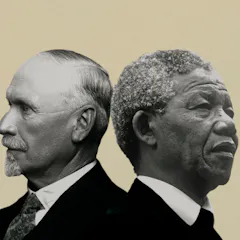
Whereas Jan Smuts was to be largely forgotten after his defeat in South Africa’s 1948 election, Nelson Mandela became an international icon.
Research shows Indigenous voices and stories are sorely lacking from Australian classrooms. This is key component of truth telling and reconciliation.
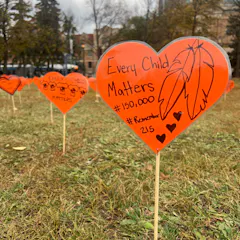
When universities declare commitments to reconciliation, these commitments must accompany changes necessary to ensure Indigenous students are truly welcomed and celebrated on campuses.

This playlist of podcast episodes invites listeners to engage in learning and unlearning; to acknowledge the tragic legacies of residential schools and to move beyond a single day of remembrance.
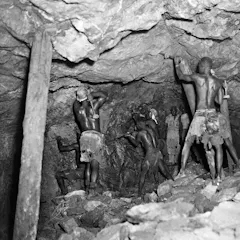
Corrective policies should be implemented as part of a holistic, long-term strategy to address historical injustices and create a more equitable South African society.

Kigali city’s master plan erases social memory in urban spaces.
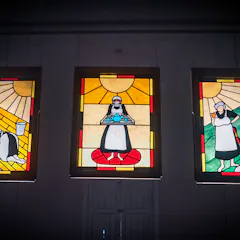
Reading First Nations poetry, we come to feel Aboriginal and Torres Strait Islander people’s lived experiences. Might we see this poetry as a work of makarrata?
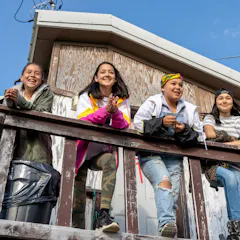
The Winnipeg-based series has screened over 100 films in multiple genres by Indigenous filmmakers, and brings filmmakers together with audiences as a form of public education.

All canoe trips pass through the territories of Indigenous Peoples who are rightsholders to those lands. How can canoers work to account and reconcile for colonialism in Canada?
Top contributors
-

Professorial Fellow, University of Canberra
-
Assistant Professor, Political Science, Brock University
-
Professor, Australian and Aboriginal History, Faculty of Arts, Design and Architecture, Convenor: Indigenous Land & Justice Research Group, UNSW
-
Senior Research Fellow, Indigenous Land & Justice Research Group, UNSW
-
Professor, Department of Geography, Environment and Geomatics, University of Guelph
-
Professor, Department of Psychology, University of Manitoba
-
Associate Professor of Economics, University of Manitoba
-
Researcher, University of Tasmania
-
Professor in Political Science, Arnold Bergstraesser Institute
-
Associate professor emeritus, Journalism, Virginia Commonwealth University
-
Extraordinary Professor, Department of Political Sciences, University of Pretoria
-
Associate Professor, University of Tasmania
-
Professor, Faculty of Education, University of Manitoba
-
Professor of Sociology, University of the Witwatersrand
-
Associate Vice President (Indigenous Engagement), University of Regina