

Many Australian homes are like an oven in summer and a fridge in winter. New ‘smart materials’ are being developed to make houses comfortable in a changing climate.
Articles on Heatwave
Displaying 81 - 100 of 407 articles

Kidney stones are painful and surprisingly common this time of year. Here’s why and how to prevent them ruining your Christmas.

The moss beds in Antarctica are like miniature forests – they create their own climate.

From extreme heat to mosquito-borne illnesses, climate change is making people sicker and more vulnerable to disease. Health scientists explain what individuals and governments can do about it.

The results challenge claims that the climate risks posed by an individual fossil fuel project are negligible or cannot be quantified.
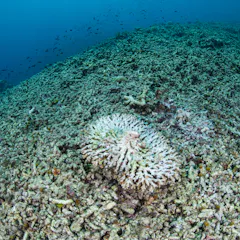
Blast-fished reefs are unlikely to recover naturally without human intervention.
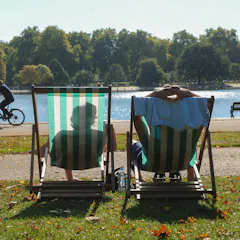
Just one degree of temperature rises can curb economic growth by 2.4%, research has found.

People with schizophrenia made up almost 16 per cent of deaths in B.C.’s 2021 heat dome. Their experiences show why cooling must be treated as a right, not a privilege.

Medieval Europeans became accustomed to hot, dry seasons – and they knew how to endure them.
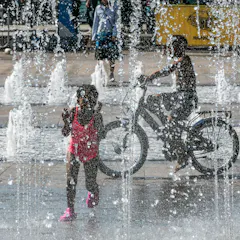
Resilience is possible, but it requires forward planning.

A study using more than 90,000 scientific observations shows Earth is getting too hot for many tropical birds.
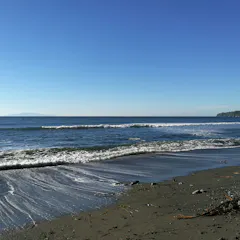
The multi-year heat wave nicknamed ‘The Blob’ impacted thousands of kilometres of marine ecosystems from Alaska to Baja California.

Following on from ‘the year without a butterfly’, 2025 has seen sightings soar in the UK and across Europe.

June 2025 was the hottest on record for Western Europe, with around 2,300 heat-related deaths across the continent.

Italy unofficially names heatwaves, but ‘Lucifer’ was only slightly more effective than ‘Arnold’.
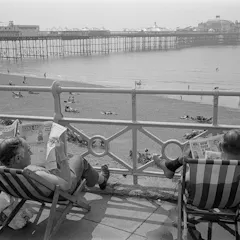
By sentimentalising the summer of 1976, we strip away its lessons.
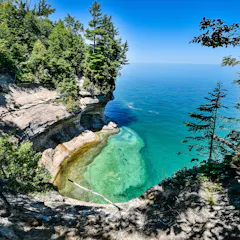
Subsurface heatwaves are becoming more frequent, longer-lasting and more intense.

African countries had 14 of the world’s 67 heat extreme events last year, and several had at least three months of hotter temperatures than the preceding 30 years.
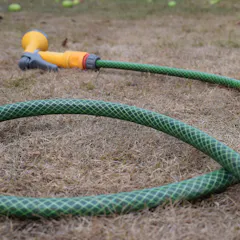
Natural infrastructure can be restored in ways that reduce both flood risk and the effects of drought.

A cold shower could have the opposite effect.
Top contributors
-

ARC Future Fellow and Associate Professor in Climate Science, ARC Centre of Excellence for 21st Century Weather, The University of Melbourne
-
Deputy Director, Engagement and Impact, The ARC Centre of Excellence for the Weather of the 21st Century, Australian National University
-
ARC DECRA Fellow, UNSW
-
Honorary Associate Professor in Environmental Health, Australian National University
-
Postdoctoral Researcher, Climate Science, University of Oxford
-
Professor emeritus, The University of Melbourne
-
Adjunct Professor of Environmental Geography, CQUniversity Australia
-
Adjunct Professor (Practice) in the School of Earth, Atmosphere and Environment, Monash University
-
Senior Lecturer in Climate Change, University of Waikato
-
Head of the Centre for Water, Environment, Sustainability and Public Health, University of Strathclyde
-
Regius Professor of Meteorology and Climate Science, University of Reading
-
Climate Scientist, Australian Bureau of Meteorology
-
Professor of Pyrogeography and Fire Science, University of Tasmania
-
Professor, Water and Landscape Dynamics, Fenner School of Environment & Society, Australian National University
-
Climatologist, Australian Bureau of Meteorology