
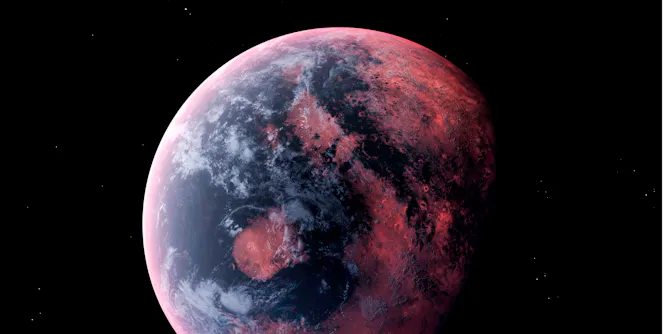
The rocks provide rare evidence of a time when Earth’s surface was a deep sea of incandescent magma.
Articles on Geology
Displaying 221 - 240 of 453 articles
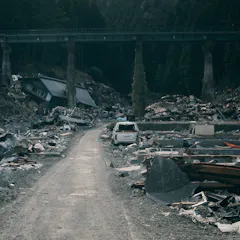
The fault line that ruptured causing the Fukushima disaster hadn’t done so for over 1,000 years.

This discovery will shape the hunt for life on exoplanets.

When sea sediment melts inside the Earth, it helps tectonic plates slide over one another smoothly.
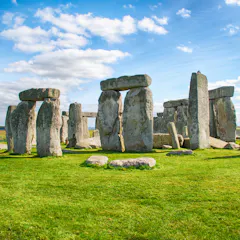
A remarkable set of discoveries has confirmed that parts of Stonehenge first stood 140 miles away at Waun Mawn, west Wales.
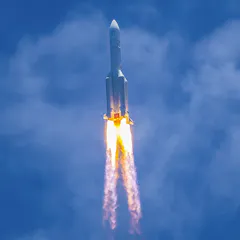
If China succeeds, it will be the first country ever to visit and land on Mars on its first try.
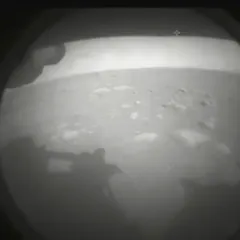
NASA’s Mars 2020 mission has arrived and landed the Perseverance Rover on the red planet. The rover’s goal is to collect rock and soil samples to be brought back to Earth in the future.
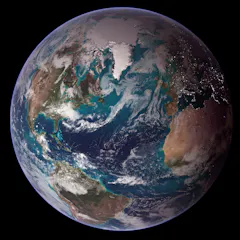
The presence of water on the Earth’s surface is the result of a subtle balance between different mechanisms in the atmosphere and below the surface.
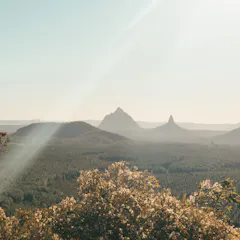
From far north Queensland to the southern tip of Tasmania, there is a common geological mechanism that links Eastern Australia’s volcanic history.
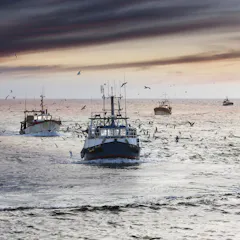
The Atlantic Ocean is still growing physically, but humans are over-harvesting its rich fisheries. The most famous one – North Atlantic cod – has become a textbook example of harmful overfishing.
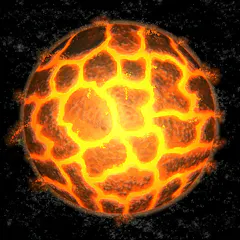
In what could be described as a rather difficult adolescence, Earth earliest continents remained in flux — disappearing and reappeared over 1.5 billion years before finally gaining form.
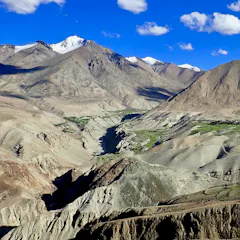
Earth’s magnetic field locks information into lava as it cools into rock. Millions of years later, scientists can decipher this magnetic data to build geologic timelines and maps.
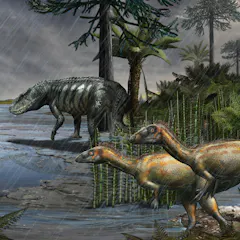
Our new research has discovered how a series of volcanic eruptions 233 million years ago fundamentally changed life on Earth.
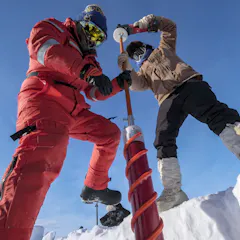
Ice cores can preserve evidence of ‘black swan’ events like pandemics and droughts, but the glaciers from which they are collected are disappearing.
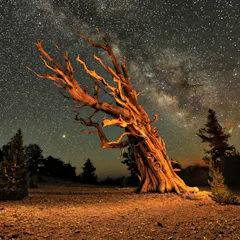
The updated methods are providing a clearer picture of how Earth and its inhabitants evolved over the past 60,000 years - and thus, providing new insight into its future.
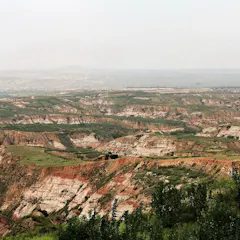
A big dip in the Earth’s crust may record an ancient continental collision from the dawn of plate tectonics.

Born on July 30, 1920, geologist and cartographer Tharp changed scientific thinking about what lay at the bottom of the ocean – not a featureless flat, but rugged and varied terrain.
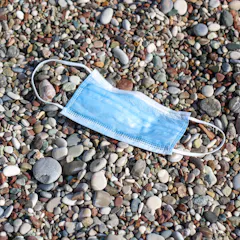
They will find minimal traces of the virus itself, but lots of PPE.

Europe imports the majority of its lithium, an essential material for the energy transition, yet is home to significant deposits.
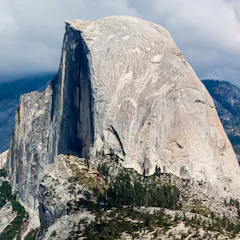
How the earliest continents formed has been a matter of debate. Analysis of zircons in Canada and Australia suggest that those historical processes are similar to current tectonic movements.
Top contributors
-

Professor of Geochronology, Curtin University
-
Professor of Geology, Adelaide University
-
Professor of Palaeobiology, University of Leicester
-
ARC Future Fellow and Associate Professor in Igneous Petrology/Volcanology, The University of Queensland
-
Professor in Earth Sciences, Nanyang Technological University, Singapore, and Emeritus Professor of Mineral Physics, University of Cambridge
-
Professor of Earthquake Science, The University of Melbourne
-
Professor of Geophysics, University of Sydney
-
Associate Professor, Earth and Planetary Sciences, Curtin University
-
Professor of Planetary Geosciences, The Open University
-
Senior Curator of Geosciences, Museums Victoria Research Institute; Monash University
-
Professor in Earth & Climate Science, University of Southampton
-
Harold T. Stearns Professor of Earth Science, Wesleyan University
-
Adjunct professor, UNSW
-
Redmond Barry Distinguished Professor Emeritus, The University of Melbourne
-
Professor of Earth and Space Sciences, University of Washington