
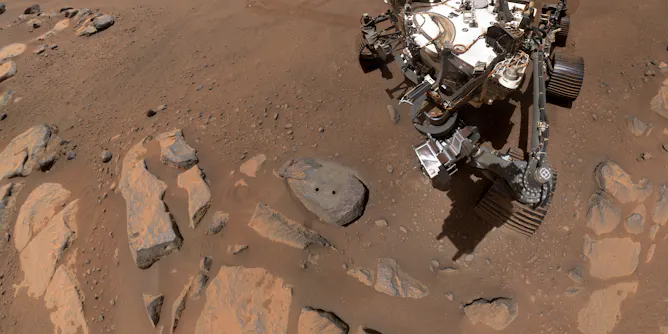
Perseverance and its helicopter sidekick, Ingenuity, have been on Mars for nearly nine months. The duo have taken rock samples, performed first flights and taken images of the delta in Jezero Crater.
Articles on Geology
Displaying 201 - 220 of 453 articles

This article was based on research that has been retracted. See editor’s note.

A previously unknown filtering process inside some volcanoes can cause magma to shoot out like champagne from a bottle - and perhaps even make it easier to forecast when a volcano is about to erupt.

Prehistoric hand and footprints analysed by a team of researchers are an early example of art.

From the tallest cliff in the solar system to its largest impact basin, geological processes on other worlds are very similar to those on our own planet.

Greenland’s conditions were once similar to those of a greenhouse. Volcanoes swelled the land, constricted seaways and gigatonnes of greenhouse gases were released into the atmosphere.

Indigenous artists have been engraving rock shelters for millennia - long before the Kimberley’s celebrated rock art paintings. Now the rocks’ natural coatings are yielding clues to the engravings’ creation.
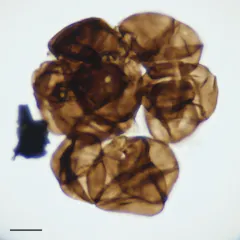
When plants started growing on land, they changed the world. Ancient fossil spores hint at how and when they did it.
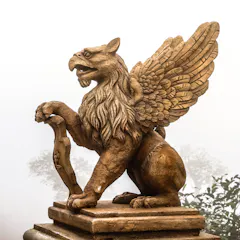
People tell tales to explain what they see – centuries later, scientists try to map handed-down myths onto real geological events.
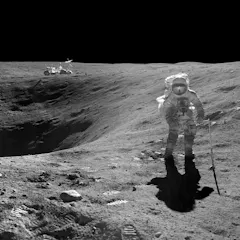
Without a magnetic field, the Moon’s surface is exposed to solar wind. These could have been depositing resources like water and potential rocket fuel on the Moon’s surface for billions of years.
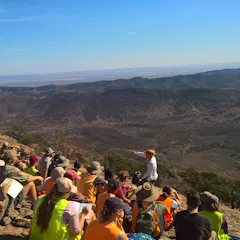
Earth scientists are on the skilled occupation list for immigration even as universities cut back in this area. The problem lies with a funding model that offers no incentive to lift graduate numbers.
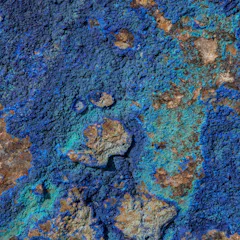
Using geology and AI, a virtual model of how the Earth’s tectonic plates have evolved can help reveal deposits of copper.
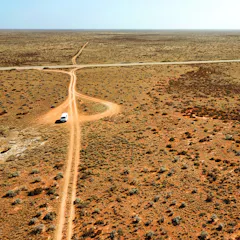
When borders reopen, take an Aussie road trip and explore the continent’s unique geology, from meteorites in the Nullarbor Plain to rock formations that are billions of years old.
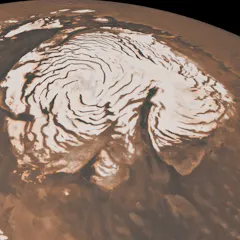
New results show why and how water is disappearing from Mars atmosphere.
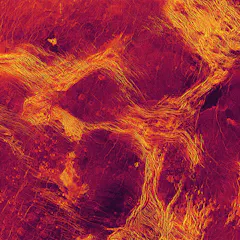
Researchers used decades-old radar data and found that some low-lying areas of Venus’ crust are moving and jostling. This evidence is some of the strongest yet of tectonic activity on Venus.
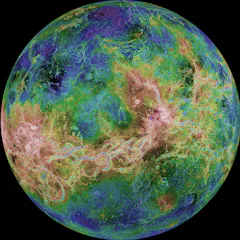
Two new NASA missions – VERITAS and DAVINCI+ – are headed to Venus. The missions will use radar and a probe to learn about Earth’s hard-to-study and potentially prophetic neighbor.
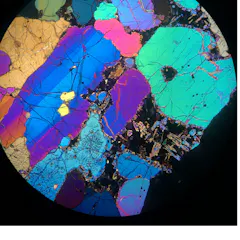
I look at fragments of the Earth’s mantle under a microscope to learn how fast molten rock moves from deep in the Earth to the surface. This can help us prepare for future volcanic eruptions.
Evidence from the Pilbara region suggests Earth in its youth behaved very differently to how it does today, and had more water within it than previously thought.
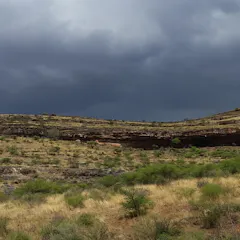
People were drawn to Ga-Mohana for many reasons. Surface water was likely among them.

Lightning strikes may have helped spark life on Earth, and may be continuing to help life start on other Earth-like planets.
Top contributors
-

Professor of Geochronology, Curtin University
-
Professor of Geology, Adelaide University
-
Professor of Palaeobiology, University of Leicester
-
ARC Future Fellow and Associate Professor in Igneous Petrology/Volcanology, The University of Queensland
-
Professor in Earth Sciences, Nanyang Technological University, Singapore, and Emeritus Professor of Mineral Physics, University of Cambridge
-
Professor of Earthquake Science, The University of Melbourne
-
Professor of Geophysics, University of Sydney
-
Associate Professor, Earth and Planetary Sciences, Curtin University
-
Professor of Planetary Geosciences, The Open University
-
Senior Curator of Geosciences, Museums Victoria Research Institute; Monash University
-
Professor in Earth & Climate Science, University of Southampton
-
Harold T. Stearns Professor of Earth Science, Wesleyan University
-
Adjunct professor, UNSW
-
Redmond Barry Distinguished Professor Emeritus, The University of Melbourne
-
Professor of Earth and Space Sciences, University of Washington