
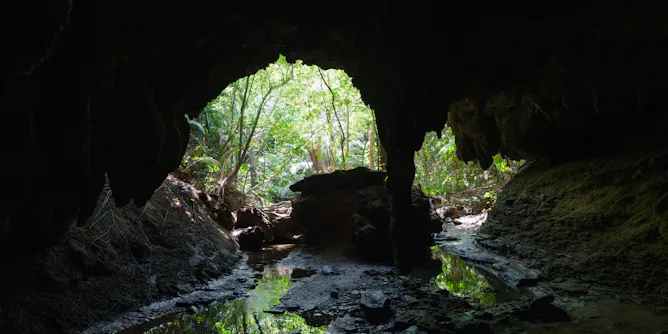
Caves form over millions of years, as a result of flowing water slowly working away at ‘soft’ calcareous rock.
Articles on Geology
Displaying 181 - 200 of 453 articles

Geology experts explain why coloured diamonds are so much rarer than clear ones – and why the newly discovered Lulo Rose might become the most expensive diamond in history.
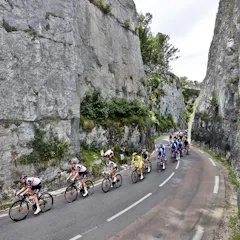
The world’s biggest cycling race is a great way to teach people about geology – and test our own ideas.
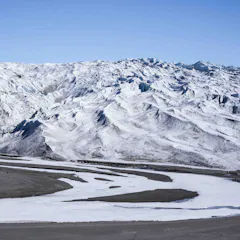
The Earth has had at least five major ice ages, and humans showed up in time for the most recent one. In fact, we’re still in it.

Millions of people around the world live on river deltas and are vulnerable when those rivers shift direction. A new study shows why and where these events, called avulsions, happen.
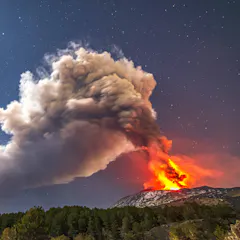
New modelling shows how tectonic plate movements, carbon-rich deep-sea sediment, and mountain weathering have regulated Earth’s climate.
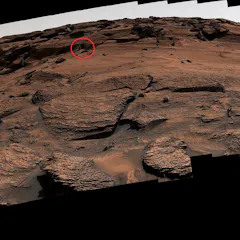
We should not be surprised that some of the innumerable rocks on Mars have weird shapes, because many have been sand-blasted by wind erosion for billions of years.
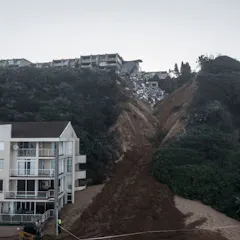
Sloping ground, water and clay combined to leave devastation in its wake in Durban.
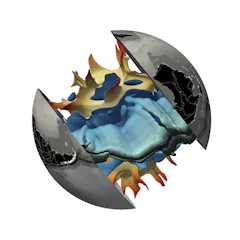
Ancient blobs deep inside the Earth gather together and break apart like continents, according to new research.
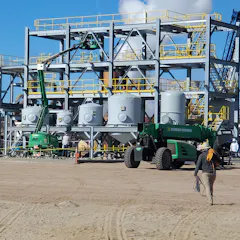
Lithium is essential for batteries that power electric vehicles and store energy from solar and wind farms. A new U.S. source could provide 10 times more lithium than the country uses today.
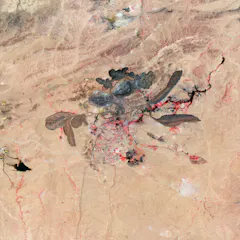
A new geochemical discovery could lead to a cleaner way to extract the rare earth elements needed for the transition to renewable energy.
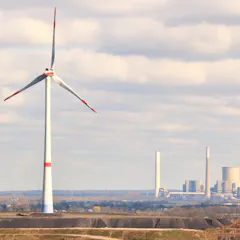
Quirks of our geology made Australia unusually abundant in coal. But as the world goes green, we can switch to vital clean mineral resources so coalminers aren’t left behind.
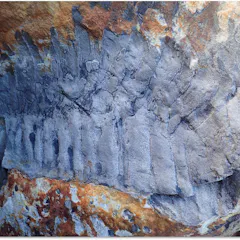
Why our chance discovery of an Arthropleura as long as an alligator, while on holiday on a beach in northern England, was such a landmark moment.
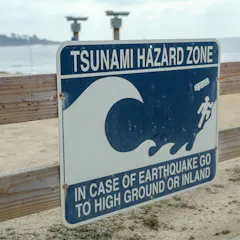
Tsunamis aren’t just bigger-than-average waves. Triggered by undersea earthquakes or volcanic eruptions like the one in Tonga, they are fast, massive and potentially destructive. Here’s why.
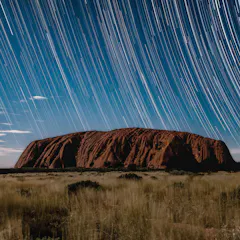
Continents colliding, mountains rising and falling, and remarkable strength. The story of Australia’s most iconic mountain is truly magical.
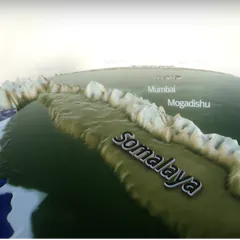
Why we are predicting the mountains of the far future, and what it can tell us about the world today.
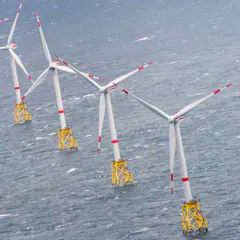
Millions of years of on-off ice ages have left behind a mix of different sediments.
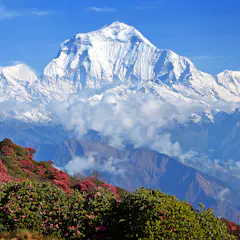
Mountains can’t be created without lubricant, and 2 billion years ago that lubricant was graphite produced by the carbon broken down from layers of dead plankton on the ocean floor.

What climate changes in the distant past can tell us about the near future.
Although alternative terms have been suggested, the Anthropocene captures the magnitude of the crisis we face.
Top contributors
-

Professor of Geochronology, Curtin University
-
Professor of Geology, Adelaide University
-
Professor of Palaeobiology, University of Leicester
-
ARC Future Fellow and Associate Professor in Igneous Petrology/Volcanology, The University of Queensland
-
Professor in Earth Sciences, Nanyang Technological University, Singapore, and Emeritus Professor of Mineral Physics, University of Cambridge
-
Professor of Earthquake Science, The University of Melbourne
-
Professor of Geophysics, University of Sydney
-
Associate Professor, Earth and Planetary Sciences, Curtin University
-
Professor of Planetary Geosciences, The Open University
-
Senior Curator of Geosciences, Museums Victoria Research Institute; Monash University
-
Professor in Earth & Climate Science, University of Southampton
-
Harold T. Stearns Professor of Earth Science, Wesleyan University
-
Adjunct professor, UNSW
-
Redmond Barry Distinguished Professor Emeritus, The University of Melbourne
-
Professor of Earth and Space Sciences, University of Washington