
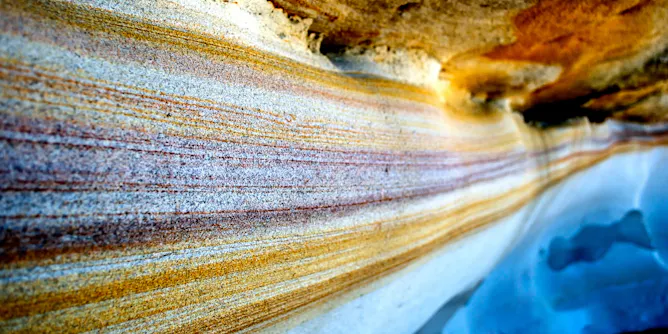
Our activities now affect the entire planet. But there’s a vital debate over when we started disrupting these systems. Was it 1950 – or hundreds and thousands of years earlier?
Articles on Geology
Displaying 141 - 160 of 453 articles

For some people, it’s a choice based on cultural beliefs or economic opportunities provided by the volcano. Other times it’s less a choice than the only option.
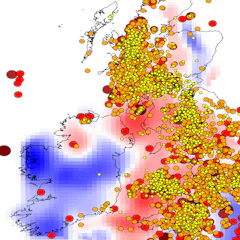
Variations in the thickness of tectonic plates may explain why Britain experiences many more earthquakes than neighbouring Ireland.
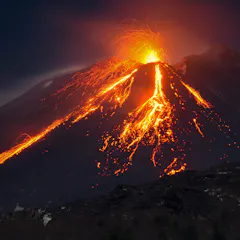
One in ten people around the world live near an active volcano. Understanding the drivers of eruptions is crucial.
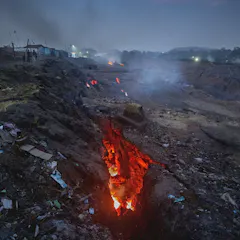
Some rocks will burn, and others will melt, depending on how they were formed and what minerals they contain.
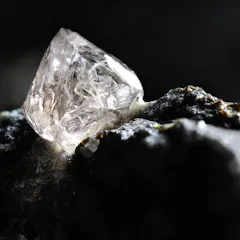
The volcanic eruptions that bring diamonds to Earth’s surface are driven by ‘pillars of heat’ stretching deep inside the planet.
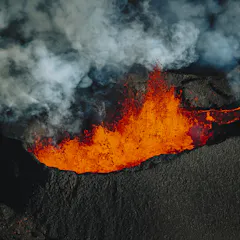
As they shape the Earth, volcanoes inspire and terrify humans.

New research on the Nullarbor Plain reveals the ancient climate change that separated Australia’s east and west ecosystems, shaping today’s biodiversity.
What fossil records tell us about when the Earth was first covered by plants.

The Earth isn’t permanent, but it was here for four billion years before humans arrived and should be here for several billion more.
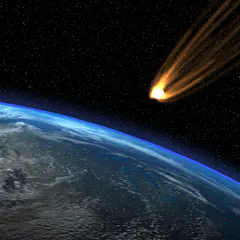
The 2.29 billion-year-old crater in Western Australia offers clues about what massive space rock impacts meant for the early Earth.
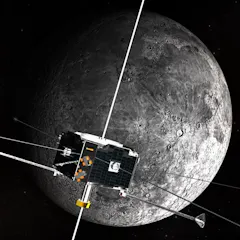
Canadian Jeremy Hansen will be one of the next astronauts on the Artemis II mission. This announcement signals a new era in Canada’s role in space exploration.
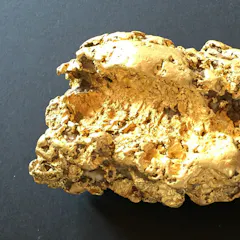
A ‘second gold rush’ has seen amateur and professional miners return to Victoria with modern technology.
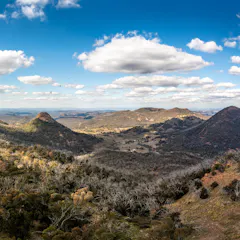
As continents grind across ‘hotspots’ in Earth’s mantle, we can get volcanoes erupting on the surface. Studying these can reveal much about our planet’s evolution.
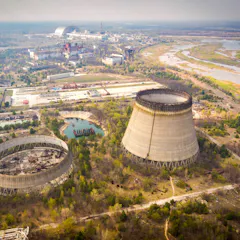
Zircons formed in the hellish Chernobyl meltdown are changing how geologists understand their favourite crystals.

Diamonds form alongside a distinct purple companion. We studied it to reach a conclusion about how rare they might actually be.
To us, Earth’s landscapes might change very little. But over millions of years, our planet’s surface has shifted in innumerable ways.
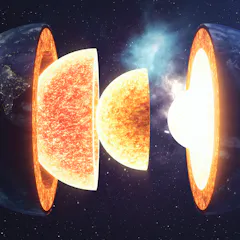
Earth doesn’t just have an inner core. It also has an innermost inner core, a solid ball within the solid ball in the very middle of the planet.
Fossils aren’t just pieces of the past that allow scientists to look backwards. They can play a role in modern policy decision-making, too.
We may never know exactly when the next big quake will hit – but we can have a pretty good idea of the odds.
Top contributors
-

Professor of Geochronology, Curtin University
-
Professor of Geology, Adelaide University
-
Professor of Palaeobiology, University of Leicester
-
ARC Future Fellow and Associate Professor in Igneous Petrology/Volcanology, The University of Queensland
-
Professor in Earth Sciences, Nanyang Technological University, Singapore, and Emeritus Professor of Mineral Physics, University of Cambridge
-
Professor of Earthquake Science, The University of Melbourne
-
Professor of Geophysics, University of Sydney
-
Associate Professor, Earth and Planetary Sciences, Curtin University
-
Professor of Planetary Geosciences, The Open University
-
Senior Curator of Geosciences, Museums Victoria Research Institute; Monash University
-
Professor in Earth & Climate Science, University of Southampton
-
Harold T. Stearns Professor of Earth Science, Wesleyan University
-
Adjunct professor, UNSW
-
Redmond Barry Distinguished Professor Emeritus, The University of Melbourne
-
Professor of Earth and Space Sciences, University of Washington