
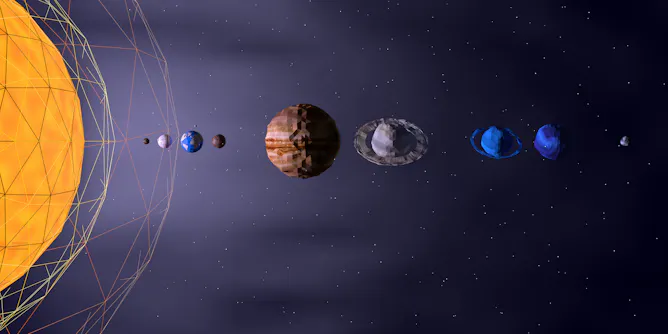
The early solar system was a busy place with plenty of meteorite impacts on the new planets and moons. But finding evidence of such impacts on Earth can be tricky.
Articles on Geology
Displaying 381 - 400 of 453 articles
Earthquake monitoring can now detect a quake and warn people before it arrives.

The molecular clock is helping us deepen our knowledge of evolution and completing the tree of life. But how does it actually work?
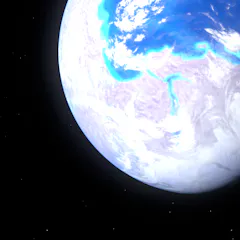
Glaciers once covered most of Earth’s surface and reflected the sun’s heat back into space.
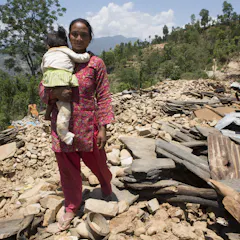
New research shows the earthquake that struck central Nepal in April this year was only a partial rupture of the fault line, meaning another strong quake could be due in future.
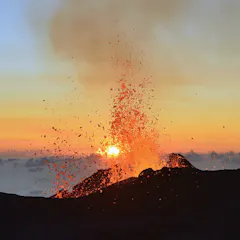
What happens beneath the surface before a volcano erupts? Can we predict when one will blow? And how can typhoons and melting glaciers contribute to big eruptions?
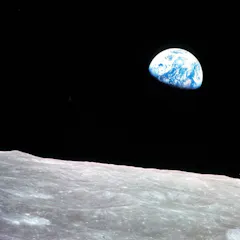
The moon might harbor bits of the Earth that blasted off our planet billions of years ago. These lunar time capsules could hold secrets about conditions here at home back when life was first emerging.
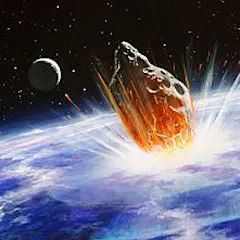
With most species out of the way, remaining plants and animals rush to evolve into the ecological gaps.
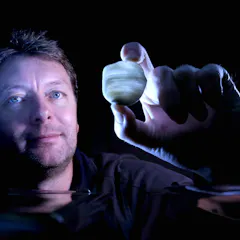
Stalagmites in Scottish preserve 3,000 years of climate history, suggesting human migration is linked to wet and dry periods.

If the biblical flood occurred just a few thousand years ago, that doesn’t leave enough time for the geologic history we see in rocks and fossils.
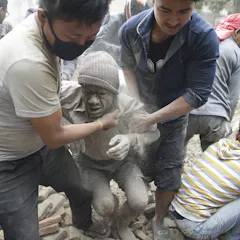
Seismic activity and poor buildings have come together again with fatal consequences.
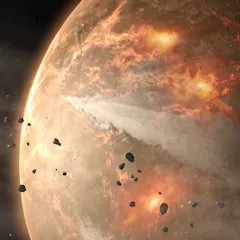
The largest meteorite impact site in the world may be right here in central Australia.
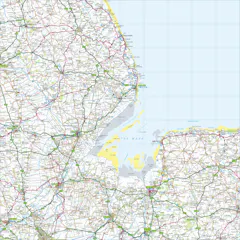
This year marks the 200th anniversary since William Smith published his life’s work, a geological map of England and Wales, in 1815. While “Strata Smith” and his map are well-known among geologists, this…
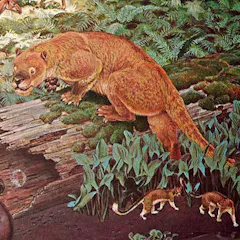
It is often said that humans have caused the Earth to warm at an unprecedented rate. However researchers have discovered another period, some 55m years ago, when massive volcanic eruptions pumped so much…
From the 1950s until recently, we thought we had a clear idea of how continents form. Most people will have heard of plate tectonics: moving pieces on the surface of the planet that collide, pull away…
Just over ten years ago the Nobel Prize-winning atmospheric scientist Paul Crutzen coined the term “Anthropocene” for a globe totally transformed and dominated by humans, a state he suggested we were in…
Volcanic eruptions are as old as the planet itself. They inspire awe, curiosity and fear and demonstrate the dynamic internal activity of the Earth. However, the impact of modern volcanoes pales in comparison…
Three new volcanoes have been discovered in the Newer Volcanics Province (NVP) in Victoria and South Australia, a region…
The debate around Tasmania’s controversial World Heritage extension, under review this week at international talks in Doha, has centred on forests. But the area includes far more than “just” trees — including…
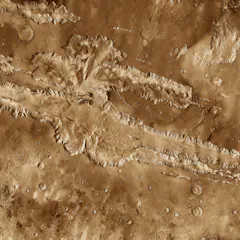
The canyon-like scars which line Mars’ crust are seen by many as evidence for liquid water. But a study now suggests that a different kind of fluid – one much less hospitable to life – may actually have…
Top contributors
-

Professor of Geochronology, Curtin University
-
Professor of Geology, Adelaide University
-
Professor of Palaeobiology, University of Leicester
-
ARC Future Fellow and Associate Professor in Igneous Petrology/Volcanology, The University of Queensland
-
Professor in Earth Sciences, Nanyang Technological University, Singapore, and Emeritus Professor of Mineral Physics, University of Cambridge
-
Professor of Earthquake Science, The University of Melbourne
-
Professor of Geophysics, University of Sydney
-
Associate Professor, Earth and Planetary Sciences, Curtin University
-
Professor of Planetary Geosciences, The Open University
-
Senior Curator of Geosciences, Museums Victoria Research Institute; Monash University
-
Professor in Earth & Climate Science, University of Southampton
-
Harold T. Stearns Professor of Earth Science, Wesleyan University
-
Adjunct professor, UNSW
-
Redmond Barry Distinguished Professor Emeritus, The University of Melbourne
-
Professor of Earth and Space Sciences, University of Washington